

Presenter(s)
Amanda Nicole Delaney
Files
Download Project (266 KB)
Description
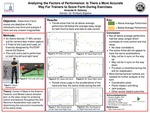
As part of a collaborative project, our overall research aim was to gain a better understanding of factors that contribute to successfully predicting performance in a variable environment. My research concentrated on adding objectivity for evaluating the effectiveness of training exercises and assessments that are performed and normally scored based on an expert’s rating. The Lock and Load exercise, which resembles the bird dog exercise but is done in a high plank position, was the focus of this study. Biomechanical marker data was recorded with an Xsens Awinda 17 sensor suit for comparison to the ratings of form assigned by the trainer. Analyzing the center of mass and maximum acceleration of the individual allowed for examination of how well the person was balanced, controlled, and in sync throughout the test. This data was then used to determine the accuracy of the form ratings given by the certified trainer involved in the project. Results suggest that other sensor-based outcomes may need to be incorporated in training exercises to provide a better picture that equates to the expert’s rating. Analysis of jerk, hip rotation, and coordination plots are the next steps in determining the relationship between the expert’s form rating and the true form.
Publication Date
4-18-2018
Project Designation
Honors Thesis
Primary Advisor
Kim E. Bigelow
Primary Advisor's Department
Mechanical and Aerospace Engineering
Keywords
Stander Symposium project
Recommended Citation
"Analyzing the Factors of Performance: Is There a More Precise Way for Trainers to Score an Individual's Form During Exercises?" (2018). Stander Symposium Projects. 1188.
https://ecommons.udayton.edu/stander_posters/1188