

Presenter(s)
Peijun Hou
Files
Download Project (218 KB)
Description
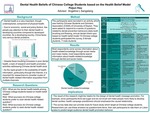
Dental health problem is a serious and underexplored topic in China. This study used Health Belief Model to investigate the health belief of dental health promotion behavior among Chinese college students at University of Dayton. The results indicated that laziness is the biggest barrier for daily brushing behavior, while most of them also lack knowledge about flossing. The barriers to annual dental check-ups include expensive cost and disregarding the importance of oral health. The study also examined the preference of information seeking and scanning channel about dental health-related information. Most respondents come across information about health-related knowledge through social media and mass media, though they prefer to search such information through dentist and social media. Most participants think their dental health-related knowledge is moderate. One the most interesting findings is about self-efficacy, as most of Chinese students answered they have no idea when they were asked self-efficacy related questions such as “What can improve someone’s confidence on flossing daily?”. Consider the concept “self-efficacy” was built under Western culture and society, even though self-efficacy has been shown to be a strong predictor of performance with Western populations, whether self-efficacy can predict performance with non-Western populations is still not clear.
Publication Date
4-18-2018
Project Designation
Graduate Research
Primary Advisor
Angeline L. Sangalang
Primary Advisor's Department
Communication
Keywords
Stander Symposium project
Recommended Citation
"Dental Health Beliefs of Chinese College Student based on the Health Belief Model" (2018). Stander Symposium Projects. 1323.
https://ecommons.udayton.edu/stander_posters/1323