

Presenter(s)
Emily Marie Jones
Files
Download Project (1.4 MB)
Description
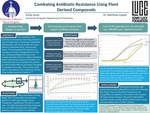
Bacteria have steadily developed defenses against antibiotics since the world’s first fleet of antibacterial drugs was introduced. One strategy that bacteria can use to become multi-drug resistant involves the overexpression of large, membrane-embedded efflux pumps, such as the AcrAB-TolC pump found in Escherichia coli (E. coli) and other Gram-negative bacteria. This large efflux pump gives the bacterium the capability of transporting a wide variety of compounds out of the cell, including antibiotics that we use to combat bacterial infections. The overexpression of these bacterial efflux pumps renders our antibiotics ineffective. I have determined that Yerba mate extract causes accumulation of a fluorescent dye in live bacterial cells and might, therefore, also cause accumulation of clinically relevant antibiotics. I tested the Yerba mate extract for efflux pump inhibition in the presence of antibiotics and found that the extract has antibacterial effect on the bacteria. Further testing should be done to determine the effect of the extract on other cell types. This research could open up a new avenue in the treatment of multi-drug resistant bacterial infections.
Publication Date
4-22-2020
Project Designation
Honors Thesis
Primary Advisor
Matthew E. Lopper
Primary Advisor's Department
Chemistry
Keywords
Stander Symposium project, College of Arts and Sciences
United Nations Sustainable Development Goals
Good Health and Well-Being
Recommended Citation
"Combating Antibiotic Resistance Using Plant-Derived Compounds" (2020). Stander Symposium Projects. 1905.
https://ecommons.udayton.edu/stander_posters/1905