

Presenter(s)
Kaitlyn M. Alleman
Files
Download Project (747 KB)
Description
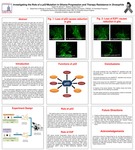
Gliomas are some of the most aggressive types of tumors and have devastating effects for those diagnosed with this cancer. These tumors arise from mutated glia cells in the brain. One of the reasons this type of cancer has a high mortality rate is because of lack of effective treatments. This project aims to study the effect of a p53 mutation on the tumor’s progression and whether this mutation contributes to therapy resistance. p53 mutations are known to occur in gliomas as well as other kinds of cancer. However, its role in gliomas is not well understood. By inducing a p53 mutation into a fruit fly model, the mutation’s possible contribution to the tumor’s progression and therapy resistance can be studied. Furthermore, this tumor present in the fruit fly can be treated with a slew of various chemotherapy drugs (Tyrosine Kinase Inhibitors) to see how the tumor responds to various treatments. This mutation can also be added in with other mutations known to occur in gliomas to test how this combination affects the tumor. Data gathered from this project will give a better insight into the range of mutations present in gliomas. Gaining a better understanding of the many genetic defects found in gliomas can lead to better outcomes for patients.
Publication Date
4-22-2020
Project Designation
Independent Research
Primary Advisor
Madhuri Kango-Singh
Primary Advisor's Department
Biology
Keywords
Stander Symposium project, College of Arts and Sciences
United Nations Sustainable Development Goals
Good Health and Well-Being
Recommended Citation
"Investigating the Role of a p53 Mutation in Glioma Progression and Therapy Resistance in Drosophila" (2020). Stander Symposium Projects. 1966.
https://ecommons.udayton.edu/stander_posters/1966