

Presenter(s)
Charlotte Rose Kenneally
Files
Download Project (6.1 MB)
Description
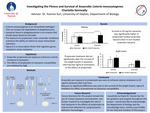
Listeria monocytogenes is a foodborne pathogen capable of surviving and growing under aerobic and anaerobic conditions, with anaerobically grown Listeria exhibiting a compromised growth. Under anaerobic conditions, Listeria often encounters fermentation acid, propionate. The focus of this research project is to determine the effects of propionate on Listeria susceptibility to host-derived antimicrobial enzyme, lysozyme. Moreover, because glycerol is a key carbon source for Listeria in a host cell, the impact of glycerol on lysozyme susceptibility will also be determined. Listeria is grown aerobically or anaerobically, with or without the addition of propionate, and then normalized by optical density values. Bacteria are harvested by centrifugation and resuspended in a prepared stock solution of lysozyme. Live bacteria are quantified by plating for colony forming units at 0, 1, and 4 hours post lysozyme exposure to determine lysozyme susceptibility. These results provide insight into how anaerobic adaptation alters Listeria fitness during infections.
Publication Date
4-20-2022
Project Designation
Independent Research
Primary Advisor
Yvonne Y. Sun
Primary Advisor's Department
Biology
Keywords
Stander Symposium project, College of Arts and Sciences
United Nations Sustainable Development Goals
Good Health and Well-Being
Recommended Citation
"Investigating the Fitness and Survival of Anaerobic Listeria monocytogenes" (2022). Stander Symposium Projects. 2425.
https://ecommons.udayton.edu/stander_posters/2425

Comments
Presentation: 9:00 a.m.-10:15 a.m., Kennedy Union Ballroom