

Presenter(s)
Malabika Bhowmik, Tooba Shafeeque Ahmed Momin, Abiageal Rai Newell
Files
Download Project (1.2 MB)
Description
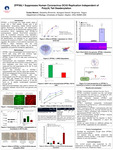
ZFP36L1, a CCCH-type zinc figure protein (ZFP) is recognized for its involvement in RNA stability and its decay via poly A tail deadenylation [removal of the poly(A) tail from mRNA]. This ability allows ZFP36L1 to exhibit antiviral activity against a variety of viruses, including flaviviruses, retroviruses, and alphaviruses. Our preliminary investigation demonstrated the antiviral role of ZFP36L1 against the human coronavirus OC43 (HCoV-OC43) and murine norovirus 1 (MNV1). The overexpression of ZFP36L1 reduced the HCoV-OC43 production, whereas its knockdown significantly enhanced the virus production. We aimed to understand how ZFP36L1 influences viral replication. To gain further insight into the role of poly-A tail deadenylation in the suppression of HCoV-OC43 by ZFP36L1, we knocked down CNOT1, a key regulator of mRNA decay, in ZFP36L1 overexpressed cells. Results showed that the virus titer reduction was not rescued in CNOT1 knockdown cells compared to the overexpressed ZFP36L1 cells. These results indicated that the reduction in HCoV-OC43 replication was independent of poly-A tail deadenylation.We further employed computational analysis, utilizing RNA-protein interaction prediction software and docking simulations, which indicated a significant interaction between ZFP36L1 and the viral nucleocapsid. Further investigations into ZFP36L1's effect on nucleocapsid expression revealed that ZFP36L1 overexpression led to a decrease in nucleocapsid expression suggesting a direct interaction between ZFP36L1 and viral components that may underlie its antiviral activity. We have also performed RNA immunoprecipitation experiments which have shown the interaction between ZFP36L1 and the nucleocapsid. This interaction will further be validated using luciferase assays. Overall, our study showed an additional pathway by which ZFP36L1 suppresses the virus replication.
Publication Date
4-17-2024
Project Designation
Graduate Research
Primary Advisor
Mrigendra Rajput
Primary Advisor's Department
Biology
Keywords
Stander Symposium, College of Arts and Sciences
Institutional Learning Goals
Scholarship
Recommended Citation
"ZFP36L1 Suppresses Virus Replication Independent of Poly(A) Tail Deadenylation" (2024). Stander Symposium Projects. 3657.
https://ecommons.udayton.edu/stander_posters/3657

Comments
Presentation: 1:15-2:30, Kennedy Union Ballroom