

Presenter(s)
Sobit Sapkota
Files
Download Project (1.2 MB)
Description
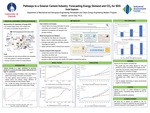
Nepal's cement industry, a major contributor to the nation's economic growth, faces pressing challenges in aligning its expansion with climate and energy sustainability goals. This study employs the Markov Chain Grey Model (MCGM) integrated with scenario analysis to forecast the industry's energy consumption and CO2 emissions through 2030. Findings reveal that under a business-as-usual scenario, energy use is set to surge by 107%, with CO2 emissions rising by220%—an alarming 63% above the target for the 2030 Sustainable Development Goals (SDGs).However, in an optimized scenario incorporating energy efficiency improvements and low-carbon technologies, energy demand could be limited to a 26% increase, with CO2 emissions meeting the SDG threshold. The results highlight the critical need for strategic policy support, advanced technologies, and sector-wide commitment to achieve climate targets and manage energy demand effectively. By enhancing the forecasting precision of the MCGM, this study provides actionable insights for climate policy and sustainable energy strategies, offering a pathway for Nepal's cement industry to contribute meaningfully to national and global climate objectives.
Publication Date
4-23-2025
Project Designation
Graduate Research
Primary Advisor
Jun-Ki Choi
Primary Advisor's Department
Mechanical and Aerospace Engineering
Keywords
Stander Symposium, School of Engineering
Institutional Learning Goals
Scholarship; Scholarship; Scholarship
Recommended Citation
"Pathways to a Greener Cement Industry in Nepal: Forecasting Energy and CO₂ for 2030 SDG Compliance" (2025). Stander Symposium Projects. 3861.
https://ecommons.udayton.edu/stander_posters/3861

Comments
3:00-4:15, Kennedy Union Ballroom