

Presenter(s)
Rana Dey
Files
Download Project (986 KB)
Description
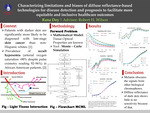
Diffuse reflectance-based technologies have shown potential to significantly advance disease detection and prognosis in dermatology and other clinical applications. However, these technologies also have the potential to exhibit biases, particularly against individuals with darker skin tones, which can lead to disparities in effectiveness of diagnosis and treatment if the sources of the bias are not properly identified and corrected. For instance, patients with darker skin who are diagnosed with melanoma typically receive the diagnosis at a later stage than their white counterparts. Similarly, current hypoxia assessment methods, including pulse oximetry, have demonstrated reduced accuracy in measured blood oxygenation values for individuals with darker skin, contributing to potential misdiagnosis and inadequate treatment. This study aims to investigate and address these types of disparities through computational modeling of light-tissue interaction, as well as the design of tissue-mimicking materials for experimental analysis. This research will inform the development of more inclusive diagnostic technologies, ultimately improving accuracy and facilitating equitable healthcare outcomes.
Publication Date
4-23-2025
Project Designation
Graduate Research
Primary Advisor
Robert H. Wilson
Primary Advisor's Department
Physics
Keywords
Stander Symposium, College of Arts and Sciences
Institutional Learning Goals
Community; Scholarship; Critical Evaluation of Our Times
Recommended Citation
"Characterizing Limitations and Biases of Diffuse Reflectance-Based Technologies for Disease Detection and Prognosis to Facilitate More Equitable and Inclusive Healthcare Outcomes" (2025). Stander Symposium Projects. 3871.
https://ecommons.udayton.edu/stander_posters/3871

Comments
3:00-4:15, Kennedy Union Ballroom