

Presenter(s)
Janna Azzam, Benjamin Franz
Files
Download Project (542 KB)
Description
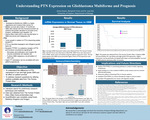
Glioblastoma Multiforme (GBM) is an aggressive and highly invasive brain cancer, characterized by having high cell proliferation and a strong resistance to treatments. One of the most common forms of treatment is surgical resection, this can have detrimental effects on the patient's prognosis as well as be a very invasive treatment. Additionally, the brain microenvironment is strongly impacted by the secretion of certain cytokines and proteins such as pleiotrophin (PTN). Surgical resection has been found to trigger PTN overexpression. Secretion of PTN contributes to angiogenesis and increases tumor invasion. The mechanism takes place by receptor PTPRZ1 promoting PTN- PTPRZ1 paracrine signaling. Receptor PTPRZ1 is specifically expressed in glioma cells and they are a strong indicator of a poor GBM prognosis making it a target of interest to scientists. PTN is an independent prognostic factor when assessing patient prognosis suggesting the importance of research. Studies have found that by blocking PTN-PTPRZ1 signaling, GBM tumor growth was suppressed and a better prognosis was found as well. Our research focuses on how the tumor microenvironment impacts GBM migration patterns using PTN as a biomarker for invasion patterns. To assess migration patterns, we have generated a microfluidic PDMS device consisting of matrigel and microfluidic channels to study two established phenotypes. The non-invasive phenotype is placed far away from the channels in the chamber. The invasive phenotype is placed right against the channels. In our study we will assess the presence of PTN in cell culture using immunofluorescence. Then, to assess the variation in GBM invasion patterns, we will use an anti-PTPRZ1 antibody to disrupt the PTN-PTPRZ1 receptor pathway. It’s expected that in the invasive phenotype, the migration pattern will be much less aggressive with the antibody than without. We hypothesize that the non-invasive and invasive phenotypes will be similar in migration patterns.
Publication Date
4-23-2025
Project Designation
Independent Research
Primary Advisor
Loan T. Bui
Primary Advisor's Department
Biology
Keywords
Stander Symposium, College of Arts and Sciences
Institutional Learning Goals
Scholarship
Recommended Citation
"Investigating PTPRZ1-PTN Inhibition Effects on Glioblastoma Multiforme Migration" (2025). Stander Symposium Projects. 4035.
https://ecommons.udayton.edu/stander_posters/4035

Comments
3:00-4:15, Kennedy Union Ballroom