
Presenter(s)
Vinit Jain, Pratham Yadav
Files
Download Project (725 KB)
Description
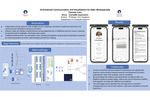
Managing multiple chronic conditions often requires patients to consult different specialists, leading to fragmented care where critical health information may not be effectively communicated between providers. This communication gap poses significant risks, as treatments prescribed by one physician might inadvertently conflict with a patient’s coexisting conditions or medications. To address this challenge, we present a patient-centric digital platform designed to streamline communication between patients and healthcare providers. The application leverages artificial intelligence (AI) to analyze uploaded medical records, identify potential conflicts (e.g., drug interactions, contradictory therapies), and generate personalized checklists of topics for patients to discuss during clinical visits. By automating the synthesis of complex medical data, the tool reduces reliance on error-prone manual note-taking, ensuring patients and doctors prioritize critical health concerns. Feedback from interviews with 4 physicians, highlighted widespread recognition of this issue. Clinicians emphasized that inconsistent information sharing between specialists and patients often complicates care coordination, and they endorsed the application’s potential to bridge these gaps. Doctors noted that AI-generated checklists could standardize patient-provider communication, reducing oversights during consultations and mitigating risks of conflicting treatments.The platform’s second phase introduces an AI-driven visualization engine that dynamically selects optimal data representations (e.g., graphs, timelines) based on the patient’s medical history and current health metrics. This feature aims to minimize cognitive overload by presenting information in formats tailored to enhance comprehension for both patients and providers, allowing more time to focus on treatment plans. Our research underscores the transformative potential of AI in addressing systemic communication challenges in multi-specialty care. By integrating predictive analytics with clinician-informed design, the platform enhances patient safety and fosters collaborative decision-making. Future work will explore scalability across healthcare systems and the impact of adaptive visualizations on treatment adherence. This dual-phase approach positions technology as a catalyst for cohesive, efficient, and patient-centered healthcare ecosystems.
Publication Date
4-23-2025
Project Designation
Independent Research
Primary Advisor
Tom Ongwere
Primary Advisor's Department
Computer Science
Keywords
Stander Symposium, College of Arts and Sciences
Institutional Learning Goals
Community; Practical Wisdom; Vocation
Recommended Citation
"ClarityMD" (2025). Stander Symposium Projects. 4094.
https://ecommons.udayton.edu/stander_posters/4094

Comments
3:00-4:15, Kennedy Union Ballroom