

Presenter(s)
Malabika Bhowmik, Mychaela Janzow, Tooba Ahmed Momin
Files
Download Project (3.5 MB)
Description
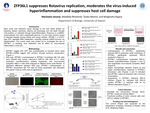
Zinc finger proteins (ZFP) are one of the most abundant proteins in eukaryotes. ZFPs bind with different cellular components such as DNA, RNA, lipids, or other proteins (1). A specific type of ZFP, ZFP36L1, belongs to the CCCH-type ZFP, which has been identified as a regulator of RNA metabolism. It is known to control the turnover of cellular mRNA through poly A tail deadenylation. That is why ZFP36L1 also binds to viral RNA, facilitating its degradation and controlling virus replication. ZFP36L1 can inhibit virus replication by several other pathways, and in the influenza virus, it inhibits viral protein translation. We have found that ZFP36L1 inhibits Coronavirus replication by directly binding to its Nucleocapsid open reading frame. Since virus infection triggers inflammation, we hypothesized that ZFP36L1 could break down the mRNA of pro-inflammatory cytokines, moderating virus-induced inflammation induced by the virus. We have found that the stable overexpression of ZFP36L1 through lentivirus transduction significantly reduces Rotavirus and Norovirus titre and reduces expression of proinflammatory cytokines like IFN-α and TNF-α, while knockdown of ZFP36L1 enhances viral titres and immune responses. Thus, influencing other immune responses is a possibility as the knockdown of ZFP36L1 in RAW 264.7 cells showed more migration when stimulated by bacterial LPS when compared to wildtype and overexpressed cells. Viruses are known to modulate autophagy (a cellular degradative process), which is closely tied to innate immunity. Several viruses are known to influence autophagy and use autophagy machinery for their efficient replication. We will investigate the mechanism of autophagic degradation and ZFP36L1 influence. Our data shows the possibility of a direct relationship between ZFP36L1 and autophagy induction. The main goals of this study are to investigate the role of ZFP36L1 in inhibiting Rotavirus and Norovirus replication, mitigating virus-induced inflammation, regulating immune responses, and understanding its connection with autophagy.
Publication Date
4-23-2025
Project Designation
Graduate Research
Primary Advisor
Mrigendra Rajput
Primary Advisor's Department
Biology
Keywords
Stander Symposium, College of Arts and Sciences
Recommended Citation
"Determine the role of zinc finger protein (ZFP36L1) on host immune response and antiviral activity against RNA viruses" (2025). Stander Symposium Projects. 4096.
https://ecommons.udayton.edu/stander_posters/4096

Comments
3:00-4:15, Kennedy Union Ballroom