

Presenter(s)
Vivian Ahern, Nathaniel Bacon, Joseph Adauctus Cook, Ethan Dexter, Liam Innis, Mark Michalik, Griffin Sullivan
Files
Download Project (2.2 MB)
Description
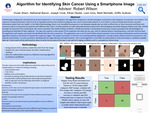
LISCAN (Light Imaging Skin Classification & Analysis Network) is a set of programs and algorithms designed to aid dermatologists and patients with diagnosis of suspicious nevi (moles). This research is being conducted in order to find an equitable and low-cost method to diagnose skin cancer and provide patients in an at-home or clinical setting with prompt, accurate information about their skin health. In the field of dermatology, there is an incredible discrepancy in care between people who are able to afford care or have insurance and those who cannot as well as in outcomes for patients with different skin colors. To allow patients to make informed decisions about their dermatological care while keeping medical costs low, LISCAN provides at-home first-line screening for skin cancer and other skin health-related conditions. LISCAN also assists in preventing unnecessary invasive procedures by dermatologists by providing low likelihood of false negatives. The app only requires a clear photo of the suspicious site taken by any user, with an optional phone mounting device, and with minimal input the application will analyze and report the likelihood that the site is cancerous. The application uses a set of novel Python-based computer vision techniques followed by machine learning algorithms locally on the device to classify the suspicious region. The project currently is in the form of a working Android application, running natively without internet connection or the need for intervention. It is also currently in development for Apple devices and web browsers. The current algorithm is over 90% accurate based on internal testing on a publicly-available data set. Future work will be performed to done to verify the accuracy of the app in sub-optimal imaging conditions and in a prospective clinical study.
Publication Date
4-23-2025
Project Designation
Independent Research
Primary Advisor
Robert H. Wilson
Primary Advisor's Department
Physics
Keywords
Stander Symposium, College of Arts and Sciences
Institutional Learning Goals
Scholarship; Community; Diversity
Recommended Citation
"Algorithm for identifying skin cancer using a smartphone image" (2025). Stander Symposium Projects. 4152.
https://ecommons.udayton.edu/stander_posters/4152

Comments
3:00-4:15, Kennedy Union Ballroom