

Presenter(s)
Tim Jinks
Files
Download Project (127 KB)
Description
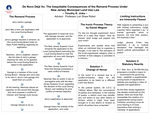
In New Jersey, property owners who seek to develop or alter their property submit applications to either their local planning or zoning board. These land use boards review the applications and vote on their approval. The final decision of a land use board may be appealed to New Jersey Superior Court through a process governed by the New Jersey Municipal Land Use Law. In accordance with this process, if the court determines that the approval or disapproval of the application was flawed in some capacity, the court will remand the application to be heard de novo by original board. While the intention of this process was to ensure fairness in the application procedure, it markedly fails to eliminate bias or provide a true de novo hearing. Board members are expected to perform “mental gymnastics” and participate in a “legal fiction” by disregarding previous hearings in which they have personally participated. This Comment critiques the inherent flaws in the de novo remand process and explores two potential remedies: (1) a change of venue mechanism to transfer cases to a neutral municipality; and (2) a statutory amendment empowering courts to establish temporary supplementary boards. Through a comparative analysis of judicial procedures, land use jurisprudence, and cognitive theory, this Comment demonstrates that remanding cases to the original land use board undermines procedural fairness and due process.
Publication Date
4-23-2025
Project Designation
Graduate Research
Primary Advisor
Lori Ellen Robol
Primary Advisor's Department
School of Law
Keywords
Stander Symposium, School of Law
Recommended Citation
"De Novo Déjà Vu: The Inequitable Consequences of the Remand Process Under New Jersey Municipal Land Use Law" (2025). Stander Symposium Projects. 4192.
https://ecommons.udayton.edu/stander_posters/4192

Comments
3:00-4:15, Kennedy Union Ballroom