

Presenter(s)
Erin E Peiffer
Files
Download Project (477 KB)
Description
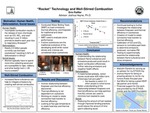
Nearly 3 billion people in the world use biomass stoves for cooking and heating their homes. Due to incomplete combustion, toxic byproducts such as soot, nitrous oxides and carbon monoxide (CO) gasses form. These toxic substances contribute to pollution and can lead to serious health issues over time if inhaled leading to approximately 4 million premature deaths each year. The formation of these toxic substances can be mitigated, in large part, by optimizing the combustion process. This optimization can be achieved, in part, through the introduction of increased turbulence intensity allowing for the so-called “well-stirred combustion regime”. Here we will be exploring the health, environmental, and social effects of biomass combustion in the developing world, the benefits of rocket technology for cooking and agricultural purposes, and the potential implementation of well-stirred combustion regimes to further improve upon this technology.
Publication Date
4-5-2017
Project Designation
Honors Thesis - Graduate
Primary Advisor
Joshua Heyne
Primary Advisor's Department
Mechanical and Aerospace Engineering
Keywords
Stander Symposium project
Recommended Citation
"Rocket Technology and Enabling Well-Stirred Combustion" (2017). Stander Symposium Projects. 863.
https://ecommons.udayton.edu/stander_posters/863