
The Brother Joseph W. Stander Symposium recognizes and celebrates academic excellence in undergraduate and graduate education. This annual event provides an opportunity for students from all disciplines to showcase their intellectual and artistic accomplishments. The Stander Symposium represents the Marianist tradition of education through community and is the principal campus-wide event in which faculty and students actualize our mission to be a "community of learners."
-

Monitoring the impact on biodiversity of a kayak chute constructed in a heavily urbanized section of the Great Miami River near Riverscape in in downtown Dayton, Ohio and an assessment of recreational safety based on levels of fecal coliform bacteria in the surrounding river water.
John David Barnard, Samantha Jean Berkley, Maddi Elizabeth Conway, Audrey Allison Hayes, Emma Claire Hiltner, Madison Spooner Johnson, Suzanne L Lowes, Madeline Rebecca Norman, Emmett Justin Sheehan
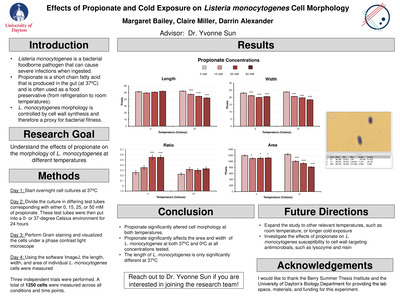
Our objective was to determine how aquatic life responded to the construction of a kayak chute in a heavily-urbanized corridor of the Great Miami River next to Riverscape in downtown Dayton, Ohio. We collected macroinvertebrate samples using sweep net, kick net, and artificial substrate sampling methods. Fish were sampled using electroshocking techniques. Macroinvertebrate samples were preserved in ethanol, sorted, identified, and counted in the lab. Fish were identified in the field and released. Data was also collected on levels of fecal coliform bacteria in the river near the kayak chute to assess recreational safety of kayakers using the feature.
-

Motivation Indicators of Involved Commuter Students at the University of Dayton
Alysha K Rauen
The purpose of this qualitative, phenomenological study is to understand the motivations of commuter students in universities and colleges in the United States who get involved in co-curricular activities, such as recognized student organizations. This study will increase the already very minimal amount of research on commuter students on college campuses and will provide insight that has not been addressed. Understanding these motivations will help professionals better understand this population of students and be able to improve practices to better address their needs. Data was collected through in person interviews (n = 5) between the researcher and students who fit the criteria of being a commuter students and involved in at least one recognized student organization. Themes that emerged from the data were that commuter students are self-motivated to get involved and the distance of their commute does not affect their motivation.
-
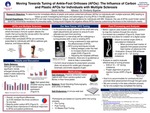
Moving towards tuning of ankle-foot orthoses: The influence of carbon and plastic AFOs for individuals with Multiple Sclerosis
Sarah Elizabeth Hollis
Mobility impairments are reported as the most debilitating symptoms for individuals with Multiple Sclerosis (MS). Fatigue, a major symptom of MS, further affects mobility. Ankle-foot orthoses (AFOs) are one potential solution to alleviate some of these mobility impairments; however, the effectiveness of AFOs for individuals with MS are currently inconclusive and have known downfalls. We took a comprehensive look at both carbon fiber and polypropylene AFOs to gain an understanding of the immediate effects of AFOs for individuals with MS. In collaboration with the University of Dayton’s Doctorate of Physical Therapy Program, data was collected for 10 participants on various balance, gait, and strength/fatigue assessments. Overall, no significant differences existed between the baseline, carbon, or plastic AFO conditions for any assessment outcome (p>0.05); however trends did arise within the static and dynamic balance task results. Many outcome parameters varied among participants, suggesting the importance of individual responses to AFOs and patient preferences in prescribing AFOs. The majority of participants preferred the carbon AFO. All AFOs were off-the-shelf with only slight adjustments to account for fit and alleviate any pain, AFO tuning is believed to help optimize the efficiency of AFOs by adjusting the angle of the shank during midstance and the stiffness of the footplate. The next step in this work is to investigate the effects of AFO tuning in collaboration with area clinical partners. A case study is currently underway to give insight and better understanding to the effects of AFO tuning.
-
MPC for Optimized Energy Exchange Between Two Renewable-Energy Prosumers
Ibrahim Aldaouab
Renewable energy and information technologies are changing electrical energy distribution, favoring a move towards distributed production and trading between many buyers and sellers. There is new potential for trading between prosumers, entities which both consume and produce energy in small quantities. This work explores the optimization of energy trading between two prosumers, each of which consists of a load, renewable supply, and energy storage. The problem is described within a model predictive control (MPC) framework, which includes a single objective function to penalize undesirable behavior such as the use of energy from a utility company. MPC integrates future predictions of supply and demand into current dispatch decisions. The control system determines energy flows between each renewable supply and load, battery usage, and transfers between the two prosumers. At each time step, future predictions are used to create an optimized power dispatch strategy between the system prosumers, maximizing renewable energy use. Modeling results indicate that this coordinated energy sharing between a pair of prosumers can improve their overall renewable penetration. For one specific choice of prosumers (mixed residential-commercial) penetration is shown to increase from 71% to 84%.
-
Multi-Dimensional Lung Segmentation using Deep Learning
Dhaval Dilip Kadia
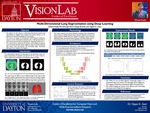
The ultimate goal of science is a safer & healthier society and greater humanity. If the computer analyzes medical reports precisely, then enough time can be allotted to the individual patient; diagnosis can be accurate, time-efficient, cost-effective and labor saving. The objective of this research is performing 3-dimensional semantic lungs segmentation, by applying Deep Learning (DL) based methods on the sequence of Computed Tomography (CT) scan images. The motive is to design the 3-dimensional Neural Network architecture based on current 2-dimensional architecture, that is offering state-of-the-art performance, experimenting and evaluating it for improving its performance. The U-Net is a convolutional neural network that is a decent architecture for biomedical image segmentation, and applicable in volumetric segmentation. The proposed work will use the 3-dimensional patch in Recurrent Residual Convolution Neural Network (RRCNN) based U-Net (R2U-Net), applied on the sequence of CT scan images. These computational methods can replace the conventional methods, and overcome their limitations of time delays, the absence of a doctor, and unavailability of instruments. A large number of high-resolution CT images make numbers of slices, and some of the lesion features are not obvious, which leads the heavy work for doctors. The advantage of 3D imaging over 2D imaging is achieved by processing the higher dimensional data. 3D medical imaging can extract more features and surrounding information; that is helpful for the diagnosis. The output can be further helpful to recognize cancerous tumor with its volume inside the lungs. The proposed work will provide more opportunities to explore different modalities of medical imaging.
-
Multi-Integrated Segmentation Approaches for Permafrost Lakes Observed in Satellite Images
Ming Gong
During the summer melt season, permafrost lakes in the Arctic display a complex geometry. Casual inspection of remote sensing images shows that the lake phase of Arctic landscape undergoes a transition where disconnected lakes evolve into much larger scale connected networks with complex boundaries. Spatiotemporal dynamics of lakes is crucial for the stability of the Arctic climate system. To understand how these features evolve over time, we propose to develop two integrated machine learning image segmentation techniques for lake pattern recognition. Classical machine learning methodologies for image segmentation require handcrafted features that are similar to our visual perception and simple classification strategies to provide accurate boundaries. Conversely, deep neural networks for image segmentation learn these features through different variations of gradient descent to create these boundaries as well. The specific objectives of this research are to implement a classical image segmentation architecture and a deep convolutional encoder-decoder architecture called SegNet and apply each architecture to Landsat satellite imagery obtained from Google Earth Engine in 2016. The study area covers Siberia (both Western and Eastern), Chukotka and Alaska. We compare deep learning segmentation with classical segmentation methodologies for segmenting permafrost lakes to determine the capabilities of each methodology and their effectiveness for lake segmentation in a variety of Landsat imageries.
-
Music Therapists' Knowledge of and Attitudes Toward Sustainability: Instruments
Sarah Christine Whitehouse
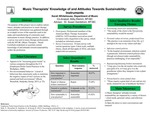
Sustainability has become a common topic of conversation and serious concern in today’s society. The purpose of this project was to explore salient issues, attitudes, and practices in music therapy sustainability. Information was gathered through an in-depth review of the materials employed in the make and manufacturing of instruments commonly used in music therapy practice. In addition, a survey was sent to music therapy professionals with the MT-BC (Music Therapist – Board Certified) credential to ascertain their knowledge of and attitudes toward current issues in sustainability within the profession.
-
Narratives of Lost Meaningfulness: When Contamination Sequences have Humanistic Themes
Joe Edward DeBrosse
Life stories' affective sequences indicate how people feel about the changes in their lives. Contamination is a common affective sequence in which the narrative begins with positive or neutral affect but declines to negative affect. While previous studies showed that contamination sequences predict a variety of poor well-being indices (e.g., McAdams, Reynolds, Lewis, Patten, & Bowman, 2001), whether contamination's accompanying themes—such as humanistic or materialistic concerns—change their predictive utility for well-being is unknown. Based on the low- and turning-point narratives of 211 participants, we examined whether contamination sequences with humanistic themes (e.g., a loss of meaning due to unemployment) differed in their relations to well-being compared to contaminated narratives without humanistic themes (e.g., a loss of prestige due to unemployment). We predicted that contamination sequences would interact with humanistic themes to predict significantly lower levels of well-being. Though the data showed a trend toward this interaction, contaminated humanistic narratives were exceptionally rare and the interaction was not statistically significant. In addition, we refined the standard measure of contamination sequences into three categories, finding that contamination sequences only predict well-being when they begin with positive, not neutral, affect. A third, new category, bad-to-worse contamination, predicted the lowest levels of well-being.
-
Native and Non-Native English Teachers
Rowaida Hamad S Alhabis
Over the years, English has rapidly grown to the extent of outrivaling languages such as French which were previously prestigious. English’s accelerated development arises from the fact that it can be easily learned. Non-native speakers often opt to learn English as their second language. Consequently, this language has emerged as the preferred communication medium in most institutions, organizations and professional circles worldwide. Globally, everyone is striving to improve their competence in English. In their efforts, the majority often opt to enhance their expertise through the assistance of native speakers. Due to the enormous number of English Learners worldwide, it is obvious that most English teachers are non-native English speakers, and should not be looked down upon. According to David John Brining, non-native English teachers are faced by uncertainties when speaking the language they have to teach, and may therefore take on an aggressive attitude towards teaching the language (50). They become obsessed with the grammar and ignore minor but significant elements like linguistic appropriateness. However, he adds that non-native speakers are the best teachers since they can easily communicate with non-native students, as they have been through the process of learning English as a second language. In addition, Enric Llurda disagrees by pointing out that a lot of non-native English speakers have adopted English as their L1, and with the exemption of an accent, there is merely a distinction between them and native English teachers (118). The preference of native English speaking teachers is fuelled by the notion that they are inherently superior to their non-native counterparts. This presumption frames the focus of interest in this examination. The research specifically challenges the notion that native speakers are inherently superior teachers of English, compared to their non-native counterparts, through a detailed review of selected studies and an analysis of primary information collected from surveys. I hope to convince students that professionals who teach English as their second language are equivalently competent as their native colleagues.
-
Natural Language Processing: A Look Into How Computers Understand Human Language
Brad Richard Sorg
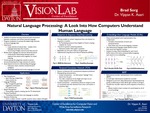
The semantic interpretation of the human language is very complex and diverse making natural language processing an interesting task for researchers and engineers. Natural language processing is a subfield of machine learning focusing on enabling computers to understand and process human languages. Although computers do not have the same intuitive understanding of natural language like humans do, recent advances in machine learning have enabled computers to perform many useful things with natural language like text classification, language modeling, speech recognition, and question answering. Computers are able to accomplish these tasks by learning the deep contextual representations of words including both the syntax and semantics. Through the use of recurrent neural networks, long short-term memory units, temporal convolution networks, and different language embedding models, computers have made significant strides in their ability to interpret and understand human language. With large volumes of textual data available and the need to structure the unstructured data source that is human language, the area of natural language processing will continue to be of interest.
-
New Natural Gas Site Locating in the Marcellus Shale Region PA
Ryan P Young
Natural gas is an important resource for many various reasons. In the current study, I aim to identify the best suited location for a new well using various factors and restraints. This resource is stored thousands of feet beneath the Earth’s surface, specifically in shale bearing layers. One shale unit in particular, the Middle Devonian Marcellus Formation, is of particular interest. It extends approximately six-hundred miles, covering large areas of the Appalachian Basin including Pennsylvania, West Virginia, Ohio, and New York. The area underlain by the Marcellus Formation is nearly 240,000 square kilometers (Kargbo et. al., 2010). However, most of the natural gas is located underneath Pennsylvanian land and therefore this state will be the focus of the study. Recent advancements in the extraction of this resource have led to an exponential increase in this industry. New techniques known as hydraulic fracturing and horizontal drilling have greatly influenced the efficiency of the process and therefore economic prosperity. Just in Pennsylvania alone, 2008 estimates show the creation of more than 29,000 jobs and $2.3 billion dollars in revenue (Kargbo et. al 2010). A previous study by Meng (2014) revealed significant landscape variables as driving mechanisms in well-site location. Higher elevation and wetlands were shown to be the most prone to natural gas sites while steeper slopes were correlated with lower probabilities. I will apply his findings and the use of GIS techiniques to identify the most suitable location for a new fracking site. For each of the variables, a suitability layer will be created. Once all of these layers are created, they will be combined in order to acquire an overall suitability score to determine the best suited location.
-
Nitrate contaminant tracing in surface and groundwater in the Great Miami River Watershed: Environmental Isotope Approach
Rachel Kristine Buzeta
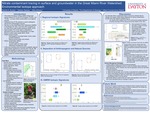
The global population has increased exponentially causing several challenges surrounding sustainability, including greater food production needs. To meet these demands and boost agricultural productivity, more efficient practices and fertilizers are used. Synthetic fertilizers and other nutrient sources have resulted in water quality degradation and pollution. Much of the Great Miami River Watershed’s streams and aquifers in southwestern Ohio are affected by nitrate contaminants originating from anthropogenic sources including synthetic and organic fertilizer used for agriculture, human wastes (domestic, industrial, and municipal wastes), and urbanization. High nitrate concentrations cause ecological disturbances across all trophic levels. Nitrate levels greater than 10 mg/L also pose a danger to human health, if the contaminant reaches drinking water sources. Water quality monitoring stations report nitrate concentrations in surface and groundwater, but a nitrate contaminant source has not been identified. Here we used isotope ratios of nitrogen (δ15N) and oxygen (δ18O) in nitrates to identify sources for surface and groundwater. Initially we fingerprinted the isotopic composition of the main nitrate contaminant sources in the watershed. Our results show a distinct low δ15N for commercial synthetic fertilizers (0.4±4‰) and high δ15N for animal and human waste (13.0±1.3‰). Further sampling along the Great Miami Mad, and Stillwater River provides insights into contaminant sources contributing to elevated nitrate levels in each river. In general, the δ15N from river samples collected during the low river flow lies within a range of human and animal waste, whereas δ15N values of groundwater suggest that the nitrates might have been derived from soil organic matter or synthetic fertilizers. This research provides a regional baseline for nitrate contaminant source tracing and helps to better inform state and local water quality and nutrient management planning.
-
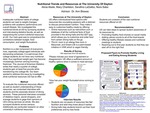
Nutrition Trends and Resources at the University of Dayton
Alicia Marie Abele, Mary Grace Charleton, Serafino Anthony LaGalbo, Nora Catherine Sabo
It is no secret that American college students often live off of restricting budgets and inconsistent schedules, both of which can contribute to poor nutritional habits and food choices. According to the Journal of the American Dietetic Association, “25 percent of college students gained more than 5 pounds over the course of eight weeks while transitioning to a college lifestyle. However, a lack of calories can also lead to fatigue and difficulty concentrating at school.” The Center for Disease Control also emphasizes this correlation between student nutrition and academic achievements. Due to the immense importance of nutrition, we investigated the relevance of this trend at the University of Dayton (UD). Our strategies involved researching the current nutritional resources at UD as well as surveying students and interviewing dietetics faculty. Our main goal was to comprehend the correlations between age, living situations, budget, food consumption and weight fluctuations. Our poster will demonstrate these nutritional trends among students and provide suggestions on how to improve dietary habits for the university as well as the students. In addition, we created a flyer for UD students to help spread awareness of the nutritional resources that are available on campus.
-
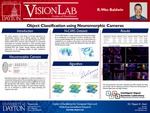
Object Classification using Neuromorphic Cameras
Wes Baldwin
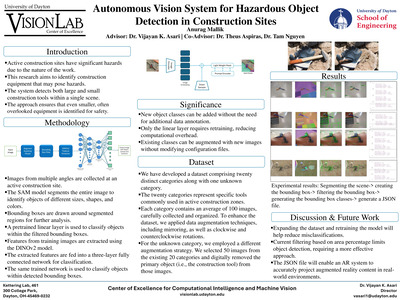
This poster presents recent work in the implementation of dimensionality reduction for neuromorphic camera data using time-surfaces. Neuromorphically inspired cameras can operate at extremely high temporal resolution (>800kHz), low latency (20 microseconds), wide dynamic range (>120dB), and low power (30mW). Time-surfaces are an ideal tool to leverage machine learning on event camera datasets as they assist in noise removal while retaining a high degree of spatial and temporal information. Combining time-surfaces with transfer learning is advancing state-of-the-art performance for object classification.
-
Paddle Pro Design
Rose J Schaffer, Allison Shaw, Abigail Marie Ward
The group set out to design a product that makes a creek more accesible for children who are differently abled. A kayak paddle assistive device, the Paddle Pro, was designed that would be able to help those with minimal hand and core strength be able to paddle. This device can also be used as a training mechanism to help young children learn how to paddle a kayak, especially if it is their first-time kayaking. The Paddle Pro is a t-stand that attaches to the base of a kayak. It has a suction cup base with PVC pipe attachments that will provide support to the paddle. The ball and socket joint is connected to a “steering wheel” style attachment which provides a wide range of motion in order to create the right form for paddling a kayak. In addition, the group added Velcro hand straps that helped provide support to children with minimal hand strength.
-
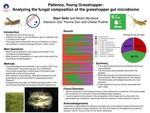
Patience, Young Grasshopper: Identifying the fungal composition of the grasshopper microbiome
Melani Muratore, Staci N Seitz
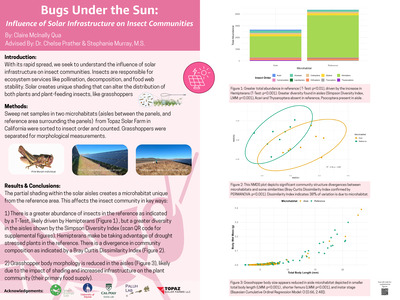
Microbes inhabit many corners of the Earth, including the intestines of all animals. These intestinal microbes, collectively called the “gut microbiome,” provide numerous nutritional and regulatory functions for the animals they live in and thus play an important role in animal health. The fungal communities in insects, specifically, play a diverse, but important role in insect physiology, as well as insect control. The overall goal of this project is to identify the fungal communities in grasshoppers to enrich our knowledge in insect fungal microbiome. Questions that we wanted to answer were: “what is the composition of the fungal communities in the microbiome of grasshoppers?” and “what drives the composition of the fungal communities in the microbiome of grasshoppers?” In this study, we investigated the composition of the fungal community inside grasshoppers. The grasshoppers were collected in the summer of 2017 from a Texas prairie as part of a multifactorial micronutrient experiment. DNA was extracted from the grasshopper gut and submitted for sequencing by Zymo Research. After analyzing the sequencing results, we identified two fungal phyla that were present in all samples: Ascomycota and Basidiomycota. Within Ascomycota, the class Dothideomycetes is most prevalent. Within Basidiomycota, the classes Tremellomycetes and Ustilaginomycetes are most prevalent. Dothideomycetes are typically found as saprobes, or decomposers, that break down dead leaf matter. They are also commonly found on living plants, acting as pathogens or endophytes. Tremellomycetes are a type of pathogenic fungus that acts as a parasite toward insects and plants. Ustilaginomycetes, known as “smut fungi,” act as a parasite toward vascular plants. All of these classes of fungi are directly involved with plant matter. Further statistical investigation will be done to determine the drivers of the diversity of these fungal communities and their significance.
-
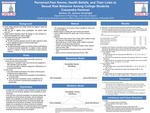
Perceived Peer Norms, Health Beliefs, and Their Links to Sexual Risk Behavior Among College Students
Cassandra L Hartman
Research has shown an increase in risk behaviors (e.g., binge drinking, risky driving, or unprotected sex) during emerging adulthood, a developmental period between the ages of 18 and 25 (Arnett, 2000). Sexual risk-taking is of particular concern due to negative consequences (e.g., unintended pregnancy, contracting a sexually transmitted infection) of this behavior becoming more prevalent, especially among college students (e.g., Turchik & Garske, 2009). The current study investigated how peer norms and personal beliefs about health may work together to explain engagement in sexual risk behavior among college students. It was hypothesized that in the context of strongly held health beliefs (e.g., high perceived susceptibility), the relationship between perceived peer norms surrounding sexual risk behavior and one’s engagement in risk behavior would weaken, while in the context of weakly held health beliefs (e.g., low perceived susceptibility), the relationship between perceived peer norms and ones engagement in risk behavior would strengthen. Further, it was hypothesized that the relationship between perceived peer norms surrounding sexual risk behavior and one’s engagement in risk behavior would be explained by low levels of health belief variables. One hundred and fifty six undergraduates (48 male, 108 females) anonymously completed questionnaires online about personal beliefs about health, personal and perceived peer engagement in sexual risk behavior, and demographics. Hierarchical multiple regression using SPSS tested if the positive association between perceived peer norms and sexual risk behavior was moderated by privately held health beliefs. Bootstrapping (Preacher & Hayes, 2008) was used to test mediation hypotheses. No support was found for health beliefs to moderate or mediate the association between peer norms and sexual risk behavior. There was a strong and consistent direct effect of peer norms on sexual risk behavior across all analyses.
-
Perceiving Place: A Social Design Case Study
Annie Anne Brinkman
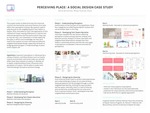
Space is one of the most basic foundational systems for living things. No matter what happens in the world, it happens in a spatial setting. The specific design of that setting or place plays a large role in the lives of those within it. Other factors within place—factors that might inform design choices—also affect perception of place. Broad consensus exists in scholarly literature about the general role that history, culture, environment and social factors play into the perception of place. However, a confirmatory analysis of this model, especially in regards to the specific categories influencing perception, has yet to be conducted. Therefore, the purpose of this study is to expand upon and further explore the notion of such categories in space analysis. I am looking to find if the application of this method will reveal varying differences in internal and external perceptions, and the level to which they may or may not vary. I am interested in further exploring the ways in which such knowledge can then lend itself to the creation of more informed and effective neighborhood-based design, especially centered on bridging potential gaps in understandings of place with Dayton, OH. It is hoped that this research will educate not only designers, urban planners, and community leaders, but also the broader public as to what is affecting the spaces they are functioning within. Success with this approach will provide a powerful social model for advancing communication across various levels of perception, as well as cultures and languages.
-
Personality Risk and Protective Factors Moderate Associations of Relationship Contingent Self-Esteem with Mental Health and Relationship Outcomes
Frane Francis Santic
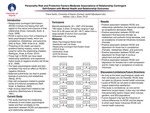
Relationship Contingent Self-Esteem (RCSE) involves one basing their self-regard on the nature and outcome of their relationship (Knee, Canevello, Bush, & Cook, 2008). RCSE is said to occur from a thwarting of basic psychological needs, including competence, relatedness, and autonomy (Deci & Ryan, 2000, Knee et al., 2008). When these needs are not fulfilled, issues such as feelings of incompetence, a lack of feeling of control, and issues with connecting with other individuals can occur (Hadden, Rodriguez, Knee, & Porter, 2015). Further, those high in RCSE can have lower relationship satisfaction and experience higher levels of negative emotion felt (Knee et al., 2008). The objective of the proposed study is to examine how certain personality risk and protective factors that are correlates of the basic psychological needs influence the relationship between RCSE and relationship satisfaction and the experience of negative emotion (i.e., depression). The study draws from a large sample of married alumni from a private Midwestern US university. Participants were asked to complete a survey containing a range of measures that examine attachment styles, need fulfillment, and other personality factors, as well as what level of depression and satisfaction participants are currently feeling in their lives. Based on moderation analyses, the basic psychological needs were not found to moderate the relationship between RCSE and relationship satisfaction, with the exception of low competence in male participants. For both males and females, low levels of the autonomy and relatedness, as well as high levels of self-alienation, accepting external influences, and anxious attachment were found to moderate the positive association between RCSE and depression. Low levels of self-compassion, competence, and authentic living were found to only moderate the positive association between RCSE and depression for female participants.
-
Photoisomerization of Azobenzenes Inserted Into A Supramolecular Aggregate
Caroline O Piekarski
The purpose of this research project was to develop photomolecular systems that contain photoresponsive properties. Light provides a convenient and sustainable source of “green” energy for manipulating and powering nano materials and biomaterials. The primary molecules focused on in this experiment were two azobenzene derivatives: azobenzene 4,4’-dicarboxylic acid (ADA) and 4-dimethylaminoazobenzene-4’-carboxylic acid (M0423). Some azobenzene chromophores undergo cis-trans isomerization when irradiated with UV and visible light. Of the derivatives chosen, only ADA showed photoisomerization capability in its non-aggregated form. A series of dilutions and titrations were performed in order to induce and observe the formation of homo-aggregates of ADA and M0423, and hetero-aggregates containing both molecules. Aggregate formation was monitored using both UV-Vis absorption and circular dichroism spectroscopy. The experiment showed that both ADA and M0423 form aggregates in acidic conditions. Moreover, both ADA and M0423 are achiral but their 1:2 aggregate showed a quite intense CD signal indicating the formation of a chiral assembly despite the absence of any chiral template. The azobenzene-based systems were irradiated with UV and visible light in order to investigate their photodynamic properties. Irradiation experiments showed that the homo-aggregate of ADA is not able to photo-switch while the hetero-aggregate shows some photo-switching capabilities. Future studies will involve the analysis of additional derivatives and an array of hetero-aggregate to better understand their structure and its correlation with photo-isomerization.
-
Photoluminescence study of Ga-free and Ga-containing Sb-based superlattices for mid-infrared applications
Logan Edward Cordonnier
The goal of this project was to compare the quality of the Ga-free superlattices, InAs/InAsSb, to those of the Ga-containing structures, InAs/GaSb, for possible use as mid-infrared detectors. By using a 532 nm laser, two experiments were conducted. In one experiment, the temperature was fixed at 5 K and the laser power was varied between 10 and 2000 mW. In the other experiment, the laser power was fixed and the sample temperature was varied. The data was analyzed to determine various material parameters. The values of these parameters provided valuable information about the quality and the differences between these two structures. Based on the results of this type of sample characterization, it was clear that the Ga-containing superlattices outperformed the Ga-free ones.
-
Photometric and Chemical Kinetic Studies of Singlet Oxygen Quenching by Native and Acid-Blue β-Carotene: Implications for the 515nm Effect in Photosynthesis
Claire Elise Hendrickson, Ashlee Wertz
β–carotene (βC) is an orange pigment present in green plants, where it plays a protective role against the harmful effects of light. It does this by deactivating “singlet oxygen”— a toxic oxidizing species generated during photosynthesis. During photosynthesis, βC temporarily converts from its “native orange βC” state to a “pink βC” state. We hypothesized that pink βC will quench singlet oxygen less efficiently than native orange βC. To test this hypothesis, we chemically modeled pink βC with “blue βC–TCA complexes”, created by reacting βC with trichloroacetic acid (TCA). The singlet oxygen quenching efficiency of native βC and βC–TCA complexes was characterized in two ways. First, in the summer of 2017, we measured the rate of degradation of the singlet oxygen substrate DPBF in the presence of native βC and βC–TCA complexes. Second, in the summer of 2018, we used a near–infrared photometric detector to measure the intensity I1270 near–infrared 1,270 nm light emitted by singlet oxygen in the presence of native orange βC and blue βC–TCA complexes. Surprisingly, our DPBF–based and I1270–based results all indicate that native orange βC and blue βC–TCA complexes quench singlet oxygen with roughly equal efficiency. In the summer of 2019, I will use the Chemistry Department’s computational Gaussian software to characterize the sensitivity of the triplet state of βC (3βC) to the presence of electrically polarized environments such as those present in βC–TCA complexes and in pink βC. Because 3βC likely plays a crucial role in the deactivation of singlet oxygen, and because βC–TCA complexes are structurally similar to pink βC, these studies will provide new insights into the role of pink βC in photosynthesis.
-
Picard's Successive Approximation vs. Banach's Contraction principle
Leah Marie Squiller
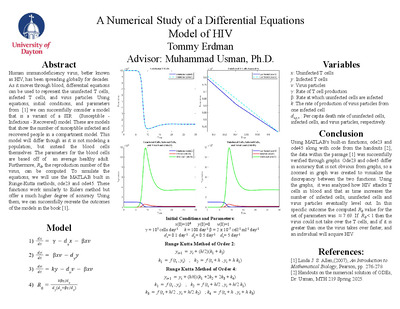
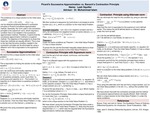
The existence of a unique solution to the initial value problem: x’(t)=f(t,x) x(t0,)=x0 , can be obtained employing Banach’s contraction principle or Picard’s successive approximation method. Generally, the norm that is used in the contraction principle is the supremum norm that requires a condition that is not needed in the successive approximation method. Therefore, it seems as if the successive approximation method is a superior method. The objective of this project is to show that these two methods are equally efficient. This is due to the fact that the condition that was needed in the contraction principle can be eliminated by using a different norm that is equivalent to the supremum norm.
-
Place-Based Community Engagement and the Development of Self-Authorship in Undergraduate Women of Color
Ajanti Simone George
A central goal of higher education professionals is to promote self-authorship within the students that they serve; that is, helping students develop their internal capacity for discerning who they are in relation to their identity, values and social exchanges. Place-based community engaged learning challenges colleges and universities to assess the degree to which their espoused values of citizenship and activism at the institutional level are aligned with their actions; it is a multi-layered approach that requires institutions to reexamine policies that are rooted in oppression and maximize reciprocity. Understanding the historical context surrounding a university in relationship to community engaged efforts is especially important as institutions pursue racial equity and a more diverse student body. More specifically, understanding the experiences of women in color in higher education is key to uncovering the ways in which their racial identity plays a role in their unique interpretation of community engaged efforts and how they subsequently learn to negotiate their own values and beliefs rather than assimilate to the majority. The purpose of this qualitative phenomenological study is to better understand the impact that participation in place-based community engagement has on the development of self-authorship in self-identified undergraduate women of color at the University of Dayton. Grounded in the constructivist paradigm, this study is intended to further the profession’s knowledge about how practitioners can partner in student learning as they grow in their own awareness of self, with a nuanced understanding of a diverse sub-population.
-
Possible pharmacologic glioma treatment in Drosophila model
Jenea Imani Adams, Kaitlyn M Alleman, Luke Alan Bressler, Karishma Sanjay Gangwani, Kathleen Theresa McCaslin, Katie Katherine Parker, Kirti Snigdha, Claire C Sullivan
Glioma is a lethal brain cancer, and current treatment strategies have limited effects by extending life only by a few months. Thus, efforts should be made to discover better inhibitors of glioma growth. Ideally such inhibitors will suppress the progression of glioma by (a) inhibiting the underlying molecular pathways activated in glioma, or (b) prevent rapid proliferation of the glia and other cells that encompass the glioma tumor. We have developed a glioma model by co-activating PI3K and Ras/MAPK specifically in the Drosophila CNS glia. The Drosophila glioma cause the larval brain to appear enlarged due to rapid increase in the stem cells and their glial and neural progeny. These tumors cause the larvae to enter a prolonged larval phase, and eventually kill the organism. We are conducting a chemical screen using Tyrosine kinase inhibitors (Selleck Biochem.) in which we feed early third instar (72h old) larvae 10 or 300uM chemicals in DMSO and then see effects on glioma growth, and survival in mature third instar stage (120h old). Using these metrics, here we present data from our screen pertaining to drugs from rows A, B, C, and D of our library. Once we identify potential glioma inhibitors in the primary screens, we will validate them in secondary screens.