
The Brother Joseph W. Stander Symposium recognizes and celebrates academic excellence in undergraduate and graduate education. This annual event provides an opportunity for students from all disciplines to showcase their intellectual and artistic accomplishments. The Stander Symposium represents the Marianist tradition of education through community and is the principal campus-wide event in which faculty and students actualize our mission to be a "community of learners."
-

Hospital Elder Life Program: Overcoming Barriers to Implementation
Jacob Gregory Chisholm, Drew K. Price
One of the most common conditions experienced by patients in long term care facilities is hospital acquired delirium. Hospital acquired delirium can present as incoherence, declining cognition, and rapidly shifting attention. The HELP program (Hospital Elder Life Program) at Miami Valley Hospital was implemented as a volunteer-led effort to combat hospital acquired delirium. This program consists of patient-volunteer interaction often through mind activities or conversations aiming to diminish the occurrence of hospital acquired delirium in geriatric patients, allowing the patients to return home much faster. However, there were many barriers that needed to be overcome to implement such a program. The various financial and labor obstacles that were overcome includes donation funding, recruitment of volunteers, and regulatory compliance. All of these needed to come together to have a successful program. This poster documents the barriers to implementation of the HELP program at other hospitals and care facilities as well as offers suggestions to overcoming these barriers.
-

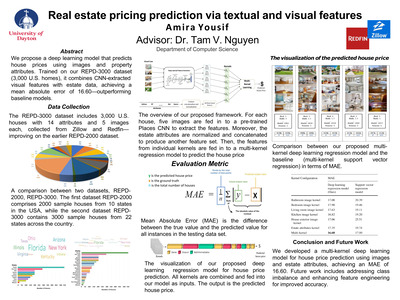
House Price Prediction using Machine Learning
Sai Surya Vaddi, Amira A. Yousif
In this research, we investigate the usage of machine learning in predicting the house price based on related tabular data and images.To this end, we collect 2000 sample points from across different cites in the United States. For each house, we label 14 tabular attributes and 5 images (exterior, interior-living room, kitchen, bedroom, bathroom). Following the feature extraction, we evaluate different machine learning methods on the newly collected data.
-

How Does a Pandemic Affect the Alcohol Consumption among College Students?
Anastacia N. Gathof
This study examined how the COVID-19 pandemic had affected the alcohol use of college students. The data in this study examined if there is a decrease or increase in alcohol use and if COVID-19 has affected these rates. Data were gathered via online surveys from participants who are senior college students at the University of Dayton. This study conducted results and were analyzed using Qualtrics. Other factors that were discussed include effects of alcohol including behavior changes and interpersonal challenges, the impact on education as well as access to alcohol and effects of campus closure. Results explore how often college students had access to alcohol during the campus closure and how much they consumed.
-

How does Dissociative Identity Disorder Impact the Creation of Art?
Aiden Gibbons Beck
Dissociative Identity Disorder (DID) is a mental health condition where a person will have two or more personalities or alters. No two people with DID are exactly alike, for example some of them will be able to communicate with the rest of their system (group of alters) whenever they desire and others will have dissociative amnesia between their alters whenever they switch. People with DID in the art world are able to bring multiple different perspectives and styles from each of their alters into their art to create a portfolio that is completely unique. Diversity in art is critically important to telling the stories of marginalized people and neurodiversity in art is no different. We need to make sure that those with mental health conditions such as Kim Noble and Harli Tree have a place to share their struggles and paint a picture of who they are metaphorically and literally. My poster will document how artists with DID create art and the difficulties that come along with it.
-

How Has Covid-19 Affected Depression Levels in Long-term Care Facility Residents?
Caitlin Mae Sheridan, Audrey Elizabeth Steiert
According to the World Health Organization (WHO), depression is the most common mental health disorder for people over the age of 60, affecting more than 15% of that population (Egeljić-Mihailović et al., 2021). Social participation, which is defined as “connecting with people and the community,” is one of many factors that helps to prevent depression (Egeljić-Mihailović et al., 2021). During the Covid-19 pandemic, long-term care facilities for the elderly took safety measures to slow the spread of the virus, including limiting visitors and suspending residential activities (Levere et al., 2021). As caregivers in long-term care facilities during the pandemic, we observed changes in residents’ behaviors and attitudes while they were isolated in their rooms. Several studies conducted during this time period showed that the increased isolation and lowered social participation led to increased depressive symptoms (Abbasi, 2021; Levere et al., 2021). According to Levere et al., the prevalence of depressive symptoms in nursing home residents increased by 15% compared to before the Covid-19 pandemic (2021). To help decrease the loneliness of residents while still following safety protocols, Joyce Simard and Ladislav Volicer suggest having family members and friends stay in touch with residents virtually and providing residents with in-room activities (2020). The purpose of this poster is to discuss the impact of COVID-19 on the mental health of long-term care facility residents and to highlight suggestions that might lessen the risk of depression during the times of isolation.
-
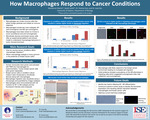
How Macrophages Respond to Cancer Conditions
Sarah E. Lamb, Mackenzie Taylor Martin
This project investigates the relationship between human macrophages and breast cancer cells. This project analyzes these differences through the measurement of macrophage migration through artificial channels under different cancer conditions. Macrophages are immune cells that travel around the body and engulf foreign particles. Macrophages can recognize cancer cells as foreign invaders and destroy these dangerous cells. This macrophage migration data preliminarily show that cancer condition media produces a unique macrophage migration response, suggesting that biomarkers released from cancer cells influence macrophage behavior. This project further investigates the differentiation of monocytes into specific macrophage phenotypes based on the expression of specific biomarkers. The most common macrophage phenotypes include an M1 phenotype which promotes an inflammatory response and initiates an immune system attack and an M2 phenotype that promotes angiogenesis and starts an anti-inflammatory response. Macrophage phenotypes were identified using fluorescence imaging. In this project, the most commonly identified migrating macrophage phenotype was the M2 phenotype which was identified by the CD163 marker. This project presents preliminary findings of macrophage and breast cancer interactions that can be extrapolated to what happens clinically in the immune response of a cancer patient and possibly lead to the discovery of new cancer therapies.
-

How Nursing Home Healthcare Providers View Their Work Through a Human Rights Lens
Laney Kay Brucken
The purpose of this study is to examine how nursing home staff view their work through a human rights lens, how they see human rights protections and violations in their everyday work, and how this may have an effect on the healthcare providers and impact on the residents. The study seeks to answer the research questions, do healthcare providers within nursing homes view human rights framework through their work, and if so, how? How is burnout and inadequate staffing related to this and how does it affect the quality of care of patients? The goal is to analyze the perspectives and experiences of nursing home staff surrounding the human rights framework and determine what effect this has on the quality of care of residents.
-

How to improve our image quality underwater?
Hao Lun Wu
In most cases, our imaging system, light sources and objects, are situated in air which only causes small distortions or absorption of light. However, when a system is placed underwater or in air which contains lots of tiny particles disturbing our environment, images show poor visibility and serious degradation. So it is important to develop some way to overcome this, otherwise we are not able to fully gain information about the object. In this paper, we propose a method using structured light and flood light to enhance underwater images. During our research, we illuminate the object with a stripe of light and flood light, recording it using a CCD camera. After processing the recorded images we can eliminate most of the distortion in our image which gives more detail and an image of higher quality. This technique can be applied in different areas such as underwater photography, submarines, and autonomous underwater vehicles, etc. Our system greatly improves the clarity of the image and highly enhances the safety and accuracy of underwater detection. Additionally, besides the underwater applicability our methods have excellent prospects in extreme weather such as fog, heavy snow, and sandstorm, etc. Compared with other methods such as ranged gated imaging or tiling imaging, structured light imaging not only gains better quality of image but also reduces the costs significantly.
-

How to Reduce Dental Anxiety
George Kenneth Hudak, Danielle N. Murman
Dental anxiety is a common occurrence in a dental office and can lead to patient avoidance of dental care and deterioration of oral health (Bell, 2012). Dental anxiety is associated with the thought of visiting the dentist for preventive care and over dental procedures (Agras, 2016). It has been cited as the fifth most common cause of anxiety (Zinke, 2018). According to Colgate Oral and Dental Health Resource Center, 30 to 40 million Americans avoid trips to the dental office due to fear (Colgate, 2013). However, there are demonstrated ways a patient, as well as their practitioner, can reduce anxiety in a dental office. The purpose of this poster is to describe the prevalence of dental anxiety and summarize current research on ways that a practitioner can lessen dental anxiety at a dental office.
-

Human Cardboard Cutout Recognition
Vijay Kumar Varma Ganaraju
As we are reaching the higher levels in autonomous driving, we are moving away from LiDAR and RADAR and towards Vision-only based prediction. And there are a lot of challenges with it. One of the important ones is predicting the objects when the vehicle is idle. Vision-only based systems predict using 3D reconstruction of the environment by moving over the space and triangulating the objects around it using multiple cameras. By NOT moving over the space, the 3D reconstruction is handicapped and it has to rely on 2D models. Therefore, the challenge is if a truck/bus is in front of the autonomous vehicle, it does not know if the human is real or just a poster on the truck/bus and could make grave mistakes. The goal of this research is to resolve this issue by creating a AI model which can classify real humans and fake humans (Cardboard cutouts) by analyzing the light patterns and variance.
-

Human Trafficking in the Midwest
Lila Acott, Natalia Llanos, Austin Riddle, Jaimey A. Todde
Human trafficking has been a major issue in the United States and continues to be a major issue today. Ohio is within the top ten states in the U.S with the highest rates of human trafficking and since the start of the Covid-19 pandemic the rates of human trafficking within the state has continued to rise. With our presentation we hope to educate and raise awareness about how human trafficking happens such as the basic facts and what warning signs to look out for. We hope to help mitigate future cases of human trafficking by promoting better situational awareness and providing resources for suspected human trafficking. Our main goal is to educate young adults, students, families and anyone else who could possibly be affected by human trafficking in order to help protect the community from this rising issue.
-
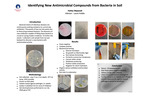
Identifying New Antimicrobial Compounds from Bacteria in Soil
Hailey Elizabeth Wypasek
Bacterial strains of infectious diseases are continuously evolving resistance to current day antibiotics. Thousands of lives are lost yearly due to these drug-resistant bacteria. The discovery of new antibiotics capable of killing these bacteria is crucial to saving modern medicine. To further this search, I collected a soil sample from my own backyard to discover a new bacteria with antimicrobial activity. To identify the bacteria I collected, I performed a series of microbiology research techniques, including serial dilution and plating. The isolate I chose grows on R2A media and presented antimicrobial activity against B. subtilis, the safe relative of an ESKAPE pathogen. I further performed gram-staining, gel electrophoresis, and a variety of biochemical tests on the bacteria. The bacteria is gram-negative, catalase positive, non-lactose fermenting, and gelatinase producing. It can be characterized as circular, flat, dull, nonpigmented, and opaque. I will continue performing more tests on my isolate in order to effectively analyze it. I seek to identify my bacteria and extract its active antimicrobial components in hopes of discovering a possible new antibiotic.
-

Identifying the effects of anaerobic exposure on Listeria monocytogenes infection of the central nervous system
Rebecca Marie Rudd
The foodborne pathogen Listeria monocytogenes is capable of crossing the gastrointestinal epithelium and invading macrophages and non-phagocytic cells. As an intracellular pathogen, L. monocytogenes replicates inside the host cell cytosol to be transported throughout the bloodstream and avoid any extracellular immune defenses. In this mechanism, the bacteria can reach and cross the blood brain barrier, resulting in bacterial meningitis that can be severe in immunocompromised patients. In this project, the goal of the research is to determine how anaerobic exposure, a typical process during the intestinal phase of infection, affects L. monocytogenes invasion of the central nervous system. Neuro-2A cells, acting as the model host cell for neuronal cells, are grown and infected with L. monocytogenes pre-exposed to anaerobic or aerobic conditions for different lengths of time. The 10403s strain, a neurotropic strain, and a cardiotropic strain are used to identify strain-dependent variations. Intracellular growth is measured to determine whether bacteria anaerobic adaptations alter the infection outcome. From these results, we will identify intestinal conditions that can potentially influence L. monocytogenes neural invasion to better understand this particular pathogenic process.
-

Identity, Persistence and Exit in STEM: Understanding the Student Experience
Abigail Stover and Sierra Johnson
Sierra Johnson, Abigail Stover
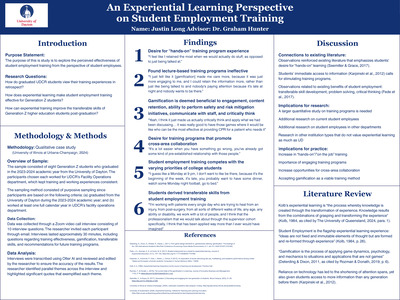
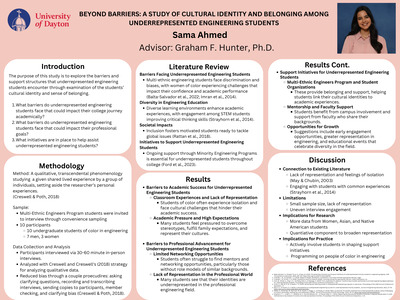
The experience of historically underserved and excluded identities in Science, Technology, Engineering, and Math (STEM) undergraduate majors lacks research despite an increased effort to diversify the workforce. A lack of women-identifying individuals, people of color, and intersecting identities impacts the sense of belonging and trajectory of individuals in STEM fields. The current case study seeks to understand the experience of historically excluded and historically underserved students who are currently majoring in or who previously majored in STEM fields at a private Midwestern university. An anonymous Qualtrics survey of 371 participants of both current and former STEM students found patterns in desires for additional academic and community based support, mental health challenges, and the impact of one’s identities on their STEM experience. Similarly, 62 focus group participants reaffirmed barriers both in the classroom and outside of the classroom to student success, difficulties caring for one’s well-being, and a tense racial climate. The study addresses policy implications for the University as well as recommendations for supporting both current STEM students and former STEM students. These policy implications and recommendations come from both the students and the researchers, after analyzing the data.
-

Image Emotion Dataset
Meghana Ayyalasomayajula
This research aims to identify the harmony between human emotions (through facial expressions) and annotated emotions (the emotion associated with the image). This work can benefit different applications such as child development, rehabilitation centers, and others. In this work, we mainly focus on the data collection and annotation. We first collect a dataset of natural scenes based on the keywords and the compilation of existing datasets. We then integrate the facial expression recognition component, to capture the user's expression during the data annotation. Then, we evaluate the harmony between the annotated emotions vs. the recorded human expressions.
-

"I May Not Know Where I am Going, But I Know Where I've Been": A Personal Narrative and Celebratory Journey of Life's Everchanging Uncertainties Through the Essentiality of Art
Mercedes Mercedes Franklin
I see my identity as an artist as something instinctually interconnected to my personal life and to my existence as a whole; As such, the art that I produce is always, and has always been, a product of whatever I am experiencing in my life, serving as a sort of visual memoir that reflects whatever moment I may be in, in whatever form that ends up needing to take. Taking this into consideration, it would be impossible for me to explain my academic and artistic journey without a timeline of my personal life running parallel and I hope to share my journey through academics and invite you into my art practice through the framework of questions I ask myself when it comes to piecing my story together: “ Where Have You Been?”, “Where Are You Now?”, and “Where Are You Going?”. These questions have framed the backbone for how I’ve developed the structure of my narrative, and in turn, my art, into one consolidated cohesive thought and was also the idea behind some of my most recent work which I presented for our senior art show. These questions continue to be a vital instrument as I continue to work through understanding my time in college and what these past seven years have meant for me as an artist and how they have built me up through the act of tearing me down. I hope to share my journey and my life because it’s something that's become an essential for me, personally, as a way to understand, cope, learn, and grow from the unexpectancies of life and the challenges you can grow from through the practice of art. My goal is to inspire others because art has truly been all I've had to get through everything and it's something that has saved my life.
-

Immigration and Art: Exploring Social and Political Impacts
Ekua Asuon Bransah
For my poster, I will focus on immigration and how artists have used their craft to reflect immigration realities. This will center mainly on the U.S. immigration process and investigate the social and political complications that come with it. The goal is to show an authentic story of immigrants and explore how artists have called out America's fault in handling immigrant populations. I will draw from binational artists like Tanya Aguiniga and her video “Borderlands," to get a personal artist's perspective. My poster will also feature Tom Keifer's art and how he started his collection of items confiscated from immigrants that had been thrown away. Lastly, my poster will feature artist Cintia Segovia and some of her pieces relevant to the immigrant experience.
-
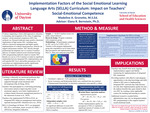
Implementation Factors of the Social Emotional Learning Language Arts (SELLA) Curriculum: Impact on Teachers’ Social-Emotional Competence
Maddie Ann Gronotte
In recent years, evidence supporting a whole-child approach to education—one that considers not only academic proficiency but also development of social-emotional competence (SEC) as important outcomes of education for students—has mounted. As the benefits of supporting student SEL skills have become more widely known, recognition of the value of supporting teachers’ SEC has surfaced, too. Research indicates a range of positive classroom implications for teachers’ having high SEC, including more effective management of student behaviors and higher quality implementation of evidence-based practices. Existing research demonstrates that schools can support teachers’ SEC directly through SEL-focused professional development opportunities, but it is unclear if teachers’ delivery of student-centered SEL programming indirectly results in similar improvements in SEC. Using a program evaluation with a comparison group design, the present study examined the impact of classroom delivery of the Social Emotional Learning Language Arts curriculum on teachers’ SEC and whether factors such as implementation quality and perceptions of the curriculum predicted SEC levels. Results of a survey of (n = 64) K-6 teachers revealed no significant relationship between SELLA implementation and self-reported SEC level, and neither perceptions of the curriculum nor implementation quality significantly predicted teacher SEC. Nonetheless, the findings of this study contribute to an emerging research base exploring practical, effective, and efficient ways that schools can support teacher SEC. Implications for practice and suggestions for future research are discussed.
-
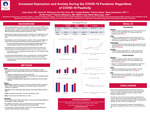
Increased Depression and Anxiety During the COVID-19 Pandemic Regardless of COVID-19 Positivity
Cady Ujvari
Background: Recent studies have reported increased rates of mood and anxiety disorders in COVID-19 patients after acute illness, possibly resulting from inflammation, which is linked to depression and childhood trauma. Increased rates of anxiety and depression have also been observed at the population level following past viral outbreaks (e.g. SARS-CoV-1, MERS) and pandemic associated stress could also impact mental health. Thus, the present study compared depression, anxiety, and perceived stress scores in university students who tested positive for COVID-19 to those who never contracted the disease, and to scores prior to the pandemic. Methods: University students completed self-report measures of depression, anxiety, and perceived stress before (N=150) and during (N=334) the COVID-19 pandemic. The pandemic sample also completed measures of COVID-19 positivity, symptoms, and recovery. One third of the sample tested positive for COVID-19 (N=109). Three x (pre-pandemic, COVID-19 positive, COVID-19 negative) x two (male, female) ANOVAs examined differences in depression, anxiety, and perceived stress. A two (COVID-19 positive, COVID-19 negative) x two (male, female) ANOVA compared PTSD severity.Results: There were significant group effects for depression (F(1,477)=3.06, p=.048, partial η2=.013), anxiety (F(1,477)=3.03, p=.049, partial η2=.013), and perceived stress (F(1,376)=5.62, p=.004, partial η2=.029). Post-hoc analyses indicated that depression and anxiety were higher in the COVID-19 positive (all p’s .584). In contrast, perceived stress was higher in the pre-pandemic group compared to those who were COVID-19 positive (p=.033) and negative (p=.011). PTSD severity did not differ between the COVID-19 positive and negative groups (p=.645). Females were more depressed (p=.036), anxious (p<.001) and stressed (p=.006) than males but did not differ in PTSD severity (p=.305). Discussion: These results suggest that rates of depression and anxiety have increased during the pandemic regardless of COVID-19 positivity. Reduced stress during the pandemic may reflect reduced extracurricular commitments due to university activity restrictions. Future research should examine if these results generalize beyond university students.
-
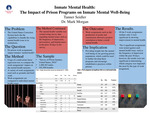
Inmate Mental Health: The Impact of Prison Programs on Inmate Mental Well-Being
Tanner Wayne Seidler
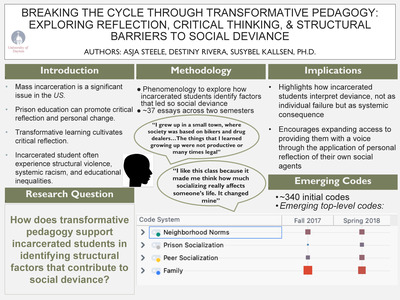
Inmate mental health is often overlooked; however, the rights and mental well-being of any individual under the government's custody are crucial to understanding the current state of our correctional system. Within this secondary data analysis of a national sample of inmates, the research question at hand is: Does the type of job assignment during incarceration impact an inmate's overall mental well-being? In an attempt to better understand the question, a multivariate linear regression test was conducted to compare individual work assignments such as farming and janitorial duties with different types of feelings such as depression and anxiety. The results found that, in some instances, work assignments do play a role in the overall well-being of the inmate. This information could be used to develop prison work programs that could impact the day-to-day life of incarcerated individuals for the better.
-
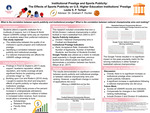
Institutional Prestige and Sports Publicity: The Effects of Sports Publicity on U.S. Higher Education Institutions’ Prestige
Leslie Terlizzi
Colleges invest millions of dollars in sports programs; however, I would like to explore if the investment in these programs goes beyond sports revenue. The U.S News & World Report (USNWR) college ranking is based on a multidimensional methodology utilizing a weighted combination of nine broad indicators. Student retention, acceptance rate, and number of applicants are USNWR indicators which continue to fluctuate every year, but what if we took a closer look at external factors that could be affecting college ranking. Students attend a specific institution for a multitude of reasons, but USNWR college ranks play an important role as students select their preferred institutions. The purpose of this study is to explore the relationship between the quality of an institution’s sports program and institutional prestige. More specifically, we aim to find if there is a correlation between sports publicity and institutional prestige, and if a national championship win affects the USNWR college rankings. This quantitative study includes national championship winning institutions as a sports publicity indicator and seeks to determine the impact on a successful sports program and college ranking. Insights from this study can be used to inform higher education institutions as they evaluate the advantages of investing in a sports program and assist administrators in predicting an increase or decrease in factors that affect college rank.
-

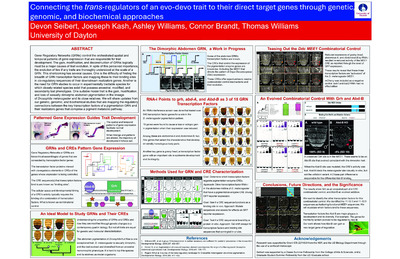
Interaction between dorsal patterning gene, dve and Dpp signaling during Drosophila eye development
Anuradha Venkatakrishnan, Katie Perry, Saba Qureshi, Neha Gogia
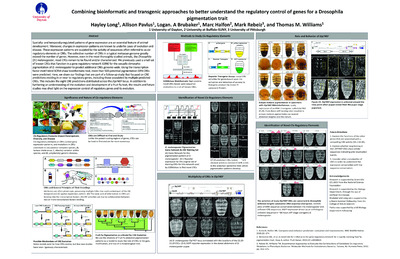
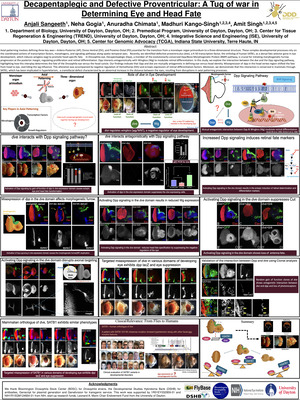
Morphogens are associated with a multitude of developmental processes, including organ patterning and the control of organ size. During development, axial patterning is crucial for the transition of a monolayer organ primordium into a three-dimensional organ. It involves the delineation of antero-posterior (AP), proximo-distal (PD) and dorso-ventral (DV) axes. During Drosophila eye development, DV axis formation is the first lineage restriction event and is tightly regulated by various signaling cues and transcription factors. Any errors in this process result in developmental birth defects. Previously, we identified defective proventriculus (dve) as a new dorsal eye fate selector or patterning gene. dve regulates eye development by regulating wg, a negative regulator of eye development. Apart from wg, Dpp signaling pathway is important for retinal differentiation. We hypothesize that dve, a transcription factor, regulates the Decapentaplegic (Dpp) signaling pathway, which is comparable to bone morphogenetic protein (BMP) signaling in mammals, during eye development. Here, we explored the interaction between dve with Dpp signaling pathway. We will investigate the role of dve in the dorsal eye and whether dve requires Dpp signaling to specify eye and head fate to form an organ of balanced size and shape. We have utilized the GAL4-UAS system to modulate Dpp signaling in the dve domain. So far, we observe that downregulation of Dpp siggnaling in the dve domain (dve>brk) results in eye suppression while upregulating Dpp levels in dve domain (dve>dpp) results in an enlarged eye field. Additionally, we found that upregulating Dpp in the dve domain reduced Wg expression and conversely, downregulating Dpp in the dve domain resulted in ectopic induction of Wg. This study may have a significant bearing on growth, signaling and patterning defects and help in understanding the etiology behind genetic birth defects in the eye.
-

International Studies Senior Capstone Projects: Comparative Perspectives on Forced Disappearances, Irregular Migration, and Human Rights Education in El Salvador
Maureen Mae Barrett, Alexander J. Finney, Alexandria Noel Foos, Jayla Rayann Holzinger, Joel R. Howe, Sierra Electra Kochersperger, Elena C. Ramos, Teresa E. Schonder, Aryana A. Sutton, Jillian M. Tedeschi, Audrey Brooks Yost
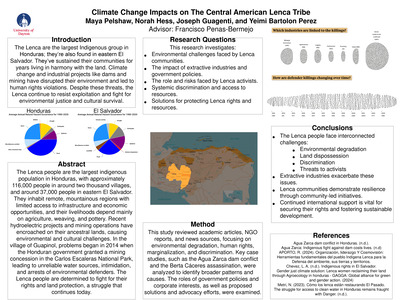
Students in the senior capstone seminar worked in groups to produce reports for Counterpart International’s Rights and Dignity Project in El Salvador. Funded by USAID, the Rights and Dignity Project collaborates with local organization partners in El Salvador to protect human rights and promote justice, equity, and inclusion, especially for the most vulnerable groups in society. With the purpose of assisting the Project’s development of new programs, the students conducted research focused on three main areas: support for victims of forced disappearances in the past and present, promotion of human rights education in the school curriculum, and the link between human rights violations and irregular migration. After examining the historical and current context of these issues, the students explored how they have been addressed in other countries in Latin America and Asia. They then analyzed their findings and considered how lessons drawn from the comparative case studies can be applied to the Salvadoran context. In this presentation the students will discuss their main conclusions.
-

Intersection of Dorsal-Ventral Patterning and Growth Regulatory Pathways in the Drosophila eye
Rohith Nanjundaiah
The developing eye of Drosophila is a well-established model for studying developmental genetic processes and growth regulation. The developmental genetic networks discovered in Drosophila are highly conserved in all animals including higher mammals. Axial patterning precedes differentiation in the Drosophila eye which begins from a ventral equivalent state. The dorsal fate is established by onset of expression of the GATA-family transcription factor Pannier (Pnr), and other dorsal-specific genes like Iroquois (Iro-C) family proteins. Our long-term goal is to understand the molecular basis of Dorsal-Ventral patterning and growth in the eye by interactions of the dorsal selector genes and growth regulatory genes. We recently identified dorsal proventriculus (dve) as a candidate for dorsal-ventral eye patterning. Preliminary data from our lab also suggests that Dve may interact with the Hippo growth regulatory pathway to control patterning and growth of the eye. We tested the interactions between Hippo pathway and dorsal-ventral patterning using the GAL4-UAS system. We tested if these pathways act independently to control eye patterning and growth or act via shared targets and regulatory interactions. In this context we wanted to address the effect of overexpressing Yki (the effector of the Hippo pathway) during larval development specifically in the dorsoventral domains of the imaginal discs using UAS-Gal4 system. We have studied effects in the wing and eye imaginal discs. Results will be discussed.
-
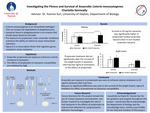
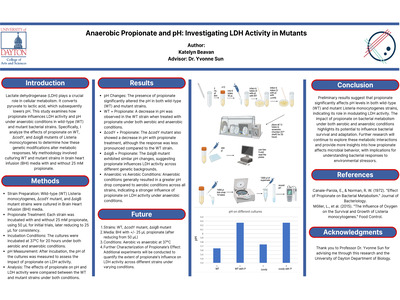
Investigating the Fitness and Survival of Anaerobic Listeria monocytogenes
Charlotte Rose Kenneally
Listeria monocytogenes is a foodborne pathogen capable of surviving and growing under aerobic and anaerobic conditions, with anaerobically grown Listeria exhibiting a compromised growth. Under anaerobic conditions, Listeria often encounters fermentation acid, propionate. The focus of this research project is to determine the effects of propionate on Listeria susceptibility to host-derived antimicrobial enzyme, lysozyme. Moreover, because glycerol is a key carbon source for Listeria in a host cell, the impact of glycerol on lysozyme susceptibility will also be determined. Listeria is grown aerobically or anaerobically, with or without the addition of propionate, and then normalized by optical density values. Bacteria are harvested by centrifugation and resuspended in a prepared stock solution of lysozyme. Live bacteria are quantified by plating for colony forming units at 0, 1, and 4 hours post lysozyme exposure to determine lysozyme susceptibility. These results provide insight into how anaerobic adaptation alters Listeria fitness during infections.