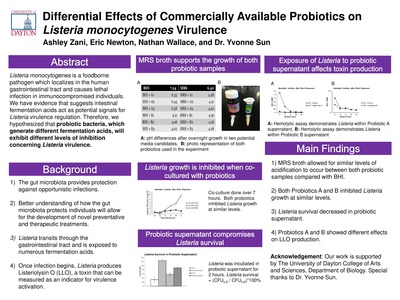


Research Posters of the Yvonne Sun Lab
-
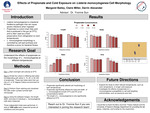
Adaptations of Listeria Monocytogenes in Cold Environments
Listeria Monocytogenes is a bacterium which adapts and multiplies quickly under cold temperatures. L. monocytogenes infections, called listeriosis, oftentimes only cause a mild sickness in immunocompetent individuals, but to high-risk populations, listeriosis can result in a more severe sickness and sometimes death. The adaptability of L. monocytogenes under cold temperatures makes the regulation and control of the bacteria in cold storage challenging. Through my research, I will be investigating the factors that contribute to the effectiveness of L. monocytogenes in cold temperatures. My first objective was to observe the surface modifications of L. monocytogenes in cold temperatures. I did this by examining the cell shape of L. monocytogenes at three different temperatures for three different time increments. It was seen that the rod shape of L. monocytogenes has become more circular in colder temperatures. Furthermore, we investigated how this circular shape may affect how white blood cells attack L. monocytogenes. My second objective was to determine the fitness of L. monocytogenes in cold temperatures. I measured the fitness of this bacterium by its sensitivity to lysozyme and bacteriocin. The results from my Berry Summer Thesis Institute research will help us understand how L. monocytogenes is effectively growing in cold temperatures. These findings can then be used to create new preventative measures against L. monocytogenes, which will protect many people from potentially becoming infected by L. monocytogenes.
-
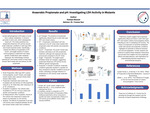
Anaerobic Propionate and pH: Investigating LDH Activity in Mutants
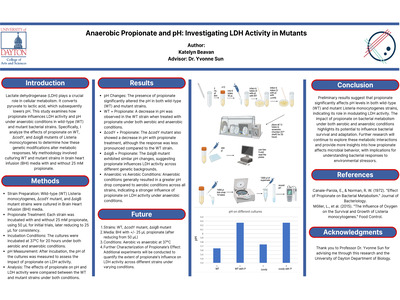
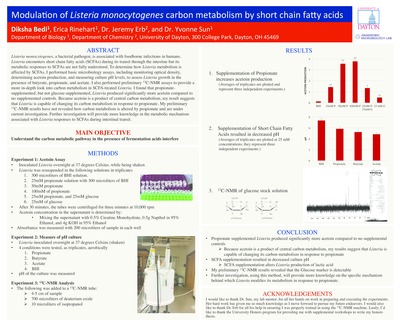
Lactate dehydrogenase (LDH) plays a crucial role in cellular metabolism. It converts pyruvate to lactic acid, which subsequently lowers pH. This study examines how propionate influences LDH activity and pH under anaerobic conditions in wild-type (WT) and mutant bacterial strains. Specifically, I analyze the effects of propionate on WT, ∆codY, and ∆sigB mutants of Listeria monocytogenes to determine how these genetic modifications alter metabolic responses. My methodology involved culturing WT and mutant strains in brain heart infusion (BHI) media with and without 25 mM propionate. The samples were incubated at 37°C under aerobic and anaerobic conditions for 20 hours. By measuring pH changes, we assessed how propionate affects LDH activity in different genetic backgrounds. Preliminary results indicate that the presence of propionate alters pH levels in both WT and mutant strains, suggesting its impact on LDH function. I hope to further understand these metabolic interactions and provide insight into bacterial adaptation and survival. Future work will focus on further characterizing these effects and continue to establish how propionate effects the microbial metabolism.
-
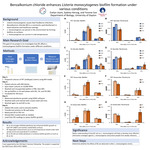
Benzalkonium chloride enhances Listeria monocytogenes biofilm formation under various conditions
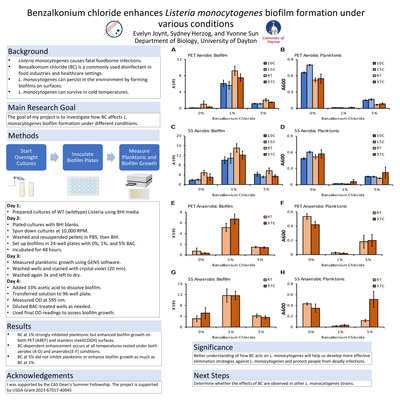
Listeria monocytogenes is a bacterial foodborne pathogen that can cause severe invasive infections with high mortality rates. To protect vulnerable populations from L. monocytogenes infections, there is a stringent cleaning, disinfecting, and surveillance process in place in the food facilities. However, outbreaks as well as recalls of potentially contaminated food products continue to occur regularly. L. monocytogenes can persist in the environment because of its ability to survive various harsh conditions, including low temperatures, and to form biofilms on food-contact surfaces. To eliminate L. monocytogenes, benzalkonium chloride (BC) is one of the major disinfectants used in the food industry. However, multiple studies have shown mechanisms of L. monocytogenes developing resistance to BC, potentiating the future need for higher concentrations of BC. In this study, we investigated the effects of higher BC concentrations on L. monocytogenes biofilm formation. Using the standard crystal violet staining method, we observed that at concentrations (1% or 5% [wt/vol]) that inhibit planktonic growth, biofilm formation was significantly enhanced, compared to no BC controls, regardless of oxygen availability, surface materials, and temperatures. These results suggest that higher concentrations of BC will not be an effective strategy to remove L. monocytogenes biomass from surfaces and could potentially create additional adhesion sites for other biofilm-forming bacteria in the same environment.
-

Design and Application of a 3D-Printed Measuring Device to Study Impacts of Environmental Factors on Listeria monocytogenes Catalase Activity
Catalase is an enzyme found in the foodborne pathogen Listeria monocytogenes to help combat reactive oxygen species, particularly hydrogen peroxide. Appropriate production of catalase can help protect Listeria monocytogenes both outside the host against various environmental stresses and inside the host against immune defenses. In this study, I designed a 3D-printed device to measure catalase activity (patent to be filed) and investigated how different environmental signals regulate catalase activity in Listeria monocytogenes. I found that anaerobically grown L. monocytogenes had no catalase activity even after transitioning to aerobic conditions for long periods of time. Propionate, a common food additive, and an intestinal metabolite, exhibited an inhibitory effect on catalase activity. Moreover, catalase activity was also observed in biofilms formed in the presence but not in the absence of benzalkonium chloride (1%), a common disinfectant. These results introduced a new tool for catalase activity measurement as well as highlighting the various factors that can influence L. monocytogenes catalase activity.
-

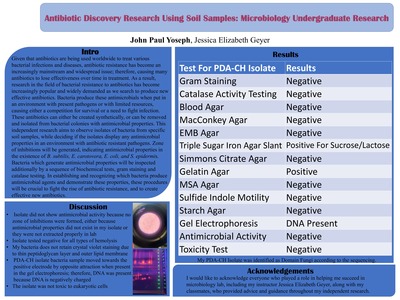
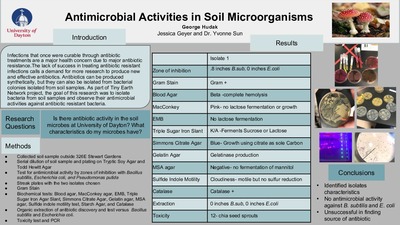
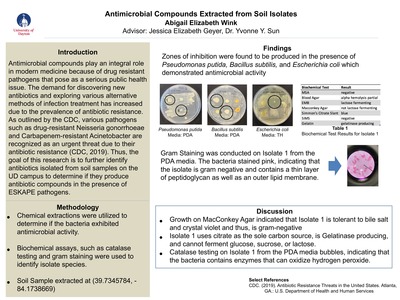
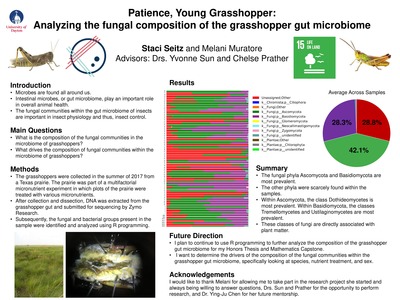
Diverse bacteria from the skin of Eastern Red-backed Salamander (Plethodon cinereus)
Amphibians are facing a significant biodiversity crisis. In the last few decades, these animals have been decimated by two fungal pathogens, Batrachochytrium dendrobatidis (Bd), and Batrachochytrium salamandrivorans (Bsal). Curiously, the most common amphibian species in the northeastern United States, the Eastern Red-backed Salamander, (Plethodon cinereus), appears to be largely resistant to Bd infections and also does not appear to be greatly affected by Bsal. The factors that contribute to this resistance are not fully understood. In this study, we collected P. cinereus skin swab samples from a total of three locations (Caesars Creek, Hills and Dales, and Taylorsville) surrounding Dayton, Ohio. Suspensions from the swab samples were plated to isolate bacteria. From a total of 27 skin swab samples, we obtained a total of 107 bacterial isolates. Many of the isolates are identified as bacteria commonly found in soil. Interestingly, some isolates are closely related to environmental clones where no cultivation of the organisms has been reported. In a preliminary test, the antimicrobial activity of the bacterial isolates was tested against Listeria monocytogenes, E. coli, Salmonella enterica, and Saccharomyces cerevisiae. Findings from this study will help elucidate the role of skin microbes in the protection against pathogens for P. cinereus and ultimately provide insight into amphibian conservation.
-

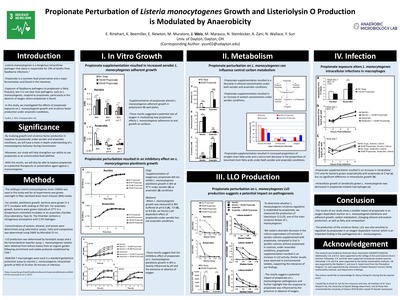
Effects of propionate on Listeria monocytogenes fitness and pathogenesis in cold temperatures
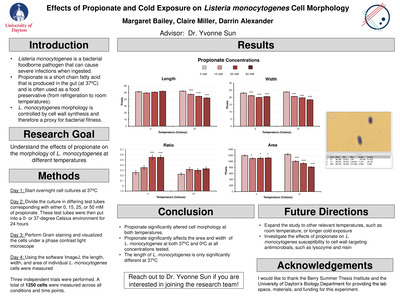
Listeria monocytogenes is a foodborne bacterium that has been repeatedly shown to have the ability to grow and survive under cold conditions, potentially increasing the risk of food contamination. To prevent food spoilage during cold storage, antimicrobial agents, such as propionate, are frequently added to inhibit microbial growth. As a result, L. monocytogenes could be exposed to propionate at refrigeration temperatures. However, how propionate affects L. monocytogenes fitness under cold conditions and subsequent infection is not currently known. In this study, we investigated the effects of cold propionate exposure on L. monocytogenes susceptibility to nisin (a common food additive) and lysozyme (a host degradative enzyme) as well as pathogenesis through listeriolysin O production and intracellular infections in RAW264.7 macrophages. In general, optical density of L. monocytogenes cultures did not decrease over a 7-day period incubation in the cold. However, the presence of propionate (25 mM) resulted in a significant decrease in OD after 7 days in the cold. Moreover, cold exposure altered L. monocytogenes cell morphology and increased susceptibility to nisin without changing susceptibility to lysozyme. While the presence of propionate did not affect LLO production during cold storage, cold pretreatment significantly increased bacterial entry into the macrophages. In summary, both cold temperature and propionate seem to influence L. monocytogenes fitness and pathogenesis to varying degrees, highlighting the need to better understand synergistic activities between cold temperatures and food additives. Additional work is needed to further elucidate mechanisms underlying the observed responses and provides recommendations for food safety.
-
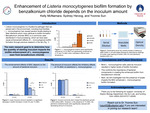
Enhancement of biofilm in Listeria monocytogenes by benzalkonium chloride depends on the amount of the inoculum
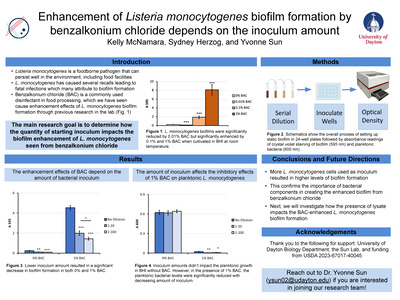
Listeria monocytogenes is a food-borne pathogen that is typically isolated in food environments. Benzalkonium chloride (BAC) is a common cleaner that is used in both medical and food-processing environments. How BAC impacts Listeria monocytogenes biofilm formation is not entirely known. Previous data from our lab has shown that concentrations of BAC higher than 0.1% enhances biofilm formation of Listeria monocytogenes. We hypothesized that bacterial lysing is the main reason for this enhancement. To test our hypothesis, we used different starting concentrations of Listeria monocytogenes culture and expected that higher bacteria inoculum would result in higher biofilm formation. Using a standard microplate biofilm assay and crystal violet staining, we showed a concentration-dependent formation of biofilm where higher amounts of Listeria monocytogenes led to higher biofilm formation, regardless if BAC was added. The BAC enhancement of biofilm formation was reduced with less L. monocytogenes inoculum. These results suggest that the bacterial abundance is a highly relevant factor in the effects of BAC on bacterial biofilm formation.
-

High Concentrations of Benzalkonium Chloride Enhance Listeria monocytogenes Biofilm Formation
Listeria monocytogenes, a foodborne pathogen frequently detected in food processing environments, continues to cause product recalls and outbreaks despite strict cleaning protocols. Benzalkonium chloride (BAC), a widely used disinfectant, is effective against L. monocytogenes, but the ability of L. monocytogenes to form biofilms can reduce the efficacy of BAC by protecting the bacterial cells within the biofilm matrix. In this study, we used a standard microplate biofilm assay to investigate the impact of biofilms on L. monocytogenes susceptibility to BAC. Crystal violet staining revealed that exposure to higher BAC concentrations (≥0.1% [wt/vol]), either during or after biofilm formation, resulted in significantly increased biofilm levels regardless of different temperatures, surface types, and oxygen levels. This increase was not due to direct chemical interactions between crystal violet and BAC but required the presence of L. monocytogenes cells. Despite the observed biofilm augmentation, BAC inhibited both biofilm-associated metabolic activity as well as colony-forming units. Microscopic and survival assays suggested that the enhanced biofilm formation resulted from bacterial lysis, which led to cellular aggregation and greater surface adhesion. Overall, these findings indicate that elevated BAC concentrations, whether from direct application or environmental accumulation, can lead to the deposition of biofilm materials even in the absence of viable L. monocytogenes cells. This accumulation may facilitate the persistence of pathogens by promoting subsequent biofilm development by L. monocytogenes or other microbes. As a result, optimizing BAC concentrations and ensuring the removal of residual BAC are crucial for effective cleaning and disinfection strategies in food processing environments.
-

Investigating macrophage interactions with Listeria monocytogenes grown at different temperatures with or without propionate
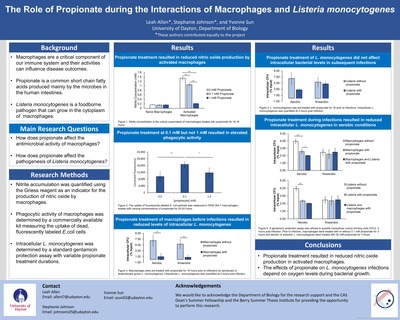
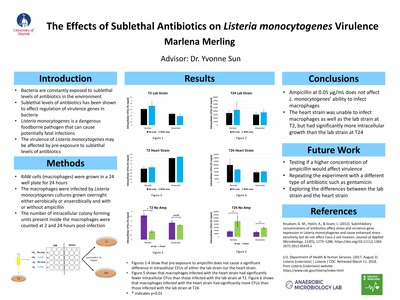
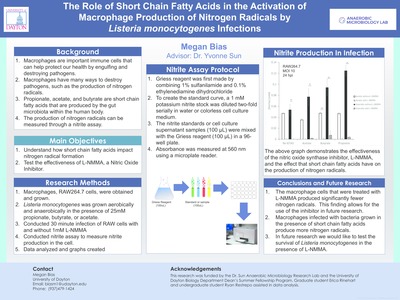
Listeria monocytogenes is a Gram-positive, intracellular pathogen responsible for the deadly foodborne illness listeriosis. L. monocytogenes expresses different virulence factors in response to different environmental factors, influencing how L. monocytogenes interacts with the host immune system. One of the first immune defenses that L. monocytogenes encounters in the body is the phagocytic macrophage. Macrophages can exhibit different shapes or antimicrobial functions depending on the activation state (M1 vs M2). It is currently unclear how the environment in which L. monocytogenes is grown affects the functions of infected macrophage. We hypothesize that macrophage can distinguish between L. monocytogenes grown in 0 degrees C conditions and 37 degrees C conditions, with and without the presence of the short-chain fatty acid propionate, and respond accordingly. This hypothesis was tested by exposing naïve or M1-activated macrophages to L. monocytogenes grown under these different conditions, and quantifying outputs indicative of macrophage activity. Macrophage outputs that were measured included nitric oxide (NO) production using a standard colorimetric assay and cell morphology using an image analysis software (Image J). Propionate pre-treatment or different growth temperatures in L. monocytogenes did not cause a significant difference in NO production by the infected macrophages. However, NO productions were significantly higher in activated macrophages infected by L. monocytogenes grown at 0C with propionate and 37C without propionate, compared to infected native macrophages. Circularity values of infected macrophages at 24 hours post infection were also compared. These results showed that while temperature and propionate independently did not impact macrophage responses, they could have a synergistic effect when combined. Further investigations are needed to dissect the specific mechanisms.
-
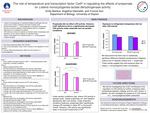
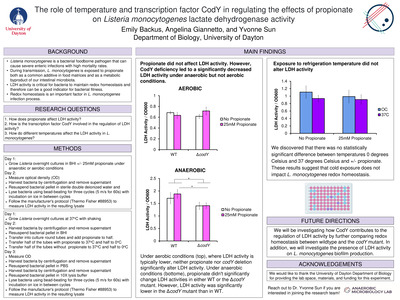
The Role of Temperature and Transcription Factor CodY in Regulating the Effects of Propionate on Listeria monocytogenes Lactate Dehydrogenase Activity
Listeria monocytogenes is a bacterial foodborne pathogen that can cause severe enteric infections with high mortality rates. During transmission, L. monocytogenes is exposed to propionate both as a common additive in food matrices and as a metabolic byproduct of our intestinal microbiota. However, how L. monocytogenes adapts to propionate exposure is not fully understood. In this study, we investigated how propionate exposure regulates the activity of lactate dehydrogenase (LDH). LDH activity is critical for bacteria to maintain redox homeostasis and therefore can be a good indicator for bacterial fitness. Therefore, bacteria grown under different conditions with or without propionate were harvested and lysed. LDH activities were quantified in the resulting lysates using Pierce LDH Cytotoxicity Assay Kit. To investigate how L. monocytogenes LDH activity is regulated by propionate under different environmental conditions, we analyzed the effects of temperature on wildtype L. monocytogenes LDH activity. We compared the results of 0 degrees Celsius, with or without propionate, and then 37 degrees Celsius, with or without propionate. We discovered that there was no statistically significant difference between any of the temperatures and with or without the presence of propionate. Moreover, to explore the molecular mechanism underlying the regulation of LDH activity, we compared the results between wildtype L. monocytogenes and a mutant strain lacking the transcription factor CodY. We found that while propionate didn't significantly change LDH activities, the lack of CodY resulted in a significantly lower LDH activity. These results highlight the potential role of CodY in activating LDH production.
-
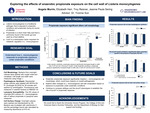
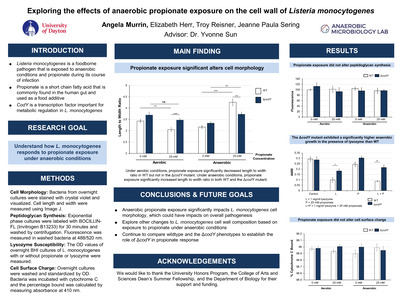
Exploring the effects of anaerobic propionate exposure on the cell wall of Listeria monocytogenes
Listeria monocytogenes is a food borne pathogen that causes serious infection, especially in immunocompromised, elderly, and infant populations. The gram-positive facultative anaerobe is exposed to many different conditions during its path of infection, and studying its ability to survive in these conditions can be helpful in learning how to prevent its spread. Anaerobic propionate exposure is frequent during Listeria transmission and infection but little is known about the ways in which Listeria fitness is impacted. To investigate Listeria fitness, we first measured cell morphology by comparing cell length to width ratio between bacteria grown with or without propionate. To further look into cell wall homeostasis, we also tested lysozyme susceptibility, peptidoglycan synthesis, and cell surface charge. We found that exposure to propionate changes the length to width ratio of Listeria cells in both anaerobic and aerobic conditions. Further research discovered that propionate exposure protects Listeria from degradation by lysozyme under anaerobic but not aerobic conditions. Tests for peptidoglycan synthesis and cell surface charge can provide further insight into reasons for the change in cell morphology. Overall, the impact of anaerobic propionate exposure on Listeria indicates changes in its cell wall but further research is necessary to understand the full implications.
-

Identifying the effects of environmental conditions on L. monocytogenes fitness and pathogenesis modified by transcription factor CodY
L. monocytogenes is a pathogen with the capability of causing severe illness in individuals who consume contaminated foods. Many foods have been found to harbor the bacterium, but dairy products, produce, and other prepackaged foods are particularly susceptible to contamination. Contaminated foods are exposed to a variety of environmental conditions during packaging, processing, consumption, and digestion, all of which play an essential role in modulating the survival and pathogenesis of L. monocytogenes. Conditions of particular interest include cold storage, presence of food additives, and activity of antimicrobial enzymes such as lysozyme. My honors thesis research has focused on elucidating how L. monocytogenes fitness is regulated by these and other conditions and how the transcription factor CodY is involved in these processes. Most notably, our results suggest that CodY is involved in L. monocytogenes susceptibility to lysozyme. Our findings contribute to our understanding of how this dangerous pathogen responds to conditions relevant during transmission and infection.
-

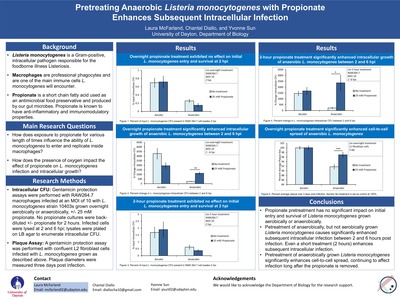
Impact of anaerobic propionate exposure on early intracellular infections by Listeria monocytogenes
Listeria monocytogenes is an intracellular pathogen that can cause enteric infections with high mortality rates. During intestinal transit, L. monocytogenes is exposed to anaerobic conditions enriched with fermentation acids such as propionate. Through previous research in the lab, we have seen that anaerobic exposure of propionate enhances Listeriolysin O (LLO) production in wildtype L. monocytogenes but not the delta codY mutant. How L. monocytogenes responds to anaerobic propionate exposure is not yet fully understood. Since we see this enhancement of LLO production due to anaerobic propionate exposure, we wanted to determine if anaerobic propionate exposure could enhance intracellular infections, particularly phagosomal escape. We performed 2-hour cell culture infections with RAW 264.7 macrophage cells as well as wildtype and delta hly mutant L. monocytogenes strains to determine the initial entry and survival. We found that propionate pretreatment enhanced initial entry and survival of wildtype L. monocytogenes but not the delta hly mutant. This led us to our next approach where we performed 4-hour cell culture infections with wildtype and delta codY mutant L. monocytogenes strains to determine its ability to perform actin co-localization. We found that propionate rescued the delta codY mutant defect in actin-colocalization. These results indicate that anaerobic propionate exposure has effects on L. monocytogenes pathogenesis, but more research is needed to determine how this occurs.
-
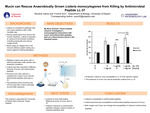
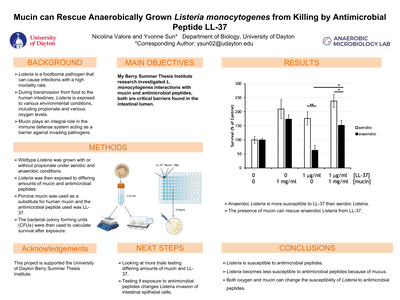
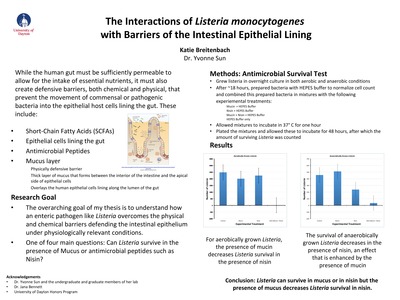
Mucin Can Rescue Anaerobically Grown Listeria monocytogenes from Killing by Antimicrobial Peptide Ll-37
Listeria monocytogenes is a foodborne pathogen that can cause infections with a high mortality rate in the United States. Therefore, learning more about the interactions between this pathogen and our immune defenses could greatly strengthen our ability to protect high-risk communities. During transmission from food to the human intestines, L. monocytogenes is exposed to various environmental conditions, including propionate, a common food additive as well as a fermentation product by our gut microbiota, and various oxygen levels. How these environmental factors influence L. monocytogenes fitness and pathogenesis is not fully understood. My Berry Summer Thesis Institute research investigated L. monocytogenes interactions with mucin and antimicrobial peptides, both are critical barriers found in the intestinal lumen. L. monocytogenes was grown with or without propionate under aerobic or anaerobic conditions and then exposed to mucin and antimicrobial peptides. Then, I measured the bacterial colony forming units (CFUs) to calculate survival after exposure. My preliminary results showed that anaerobically grown bacteria were more susceptible to antimicrobial peptide LL-37 than aerobically grown bacteria. However, the presence of mucin rescued anaerobic, but not aerobic, bacteria against LL-37. These results highlight the need to further investigate the role of oxygen in L. monocytogenes fitness and pathogenesis under relevant conditions.
-

Regulation of catalase activity in Listeria monocytogenes by various environmental factors
Listeria monocytogenes is a bacterial foodborne pathogen that can lead to serious and potentially deadly gastrointestinal infections specifically in immunocompromised populations. In fact, Listeria infection is the third leading cause of death from food poisoning in the United States. During transmission, Listeria produces catalase to detoxify reactive oxygen species that can form as a byproduct of metabolism and immune defense in infected hosts. Furthermore, catalase production is critical to Listeria fitness and survival. In this study, I investigated how catalase production was regulated by propionate and oxygen. Propionate is a short chain fatty acid commonly found in the human gut microbiome and in food as an additive. Propionate exposure, whether in food matrices or in the intestinal lumen, typically takes place under anaerobic conditions. To measure catalase activity, hydrogen peroxide and Triton X-100 were added to anaerobic and aerobic cultures of Listeria with and without propionate. The catalase produced by Listeria breaks down the hydrogen peroxide releasing oxygen bubbles, which are then trapped in the Triton X-100 detergent. The height of the bubbles can then be measured to visually display and compare the catalase production under each experimental condition. These results will help us understand how Listeria regulates its catalase production.
-
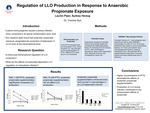
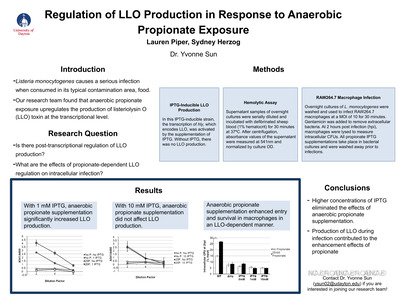
Regulation of LLO production in response to anaerobic propionate exposure
Listeria monocytogenes causes a serious infection when consumed in its typical contamination area, food. This bacteria can be extremely dangerous to sensitive populations, such as pregnant women, newborns, the geriatric population along with immunocompromised individuals. Listeria infections involve a coordinated expression of various virulence factors in response to changes in the environmental conditions. Our research team found that anaerobic propionate exposure upregulates the production of listeriolysin O (LLO) toxin at the transcriptional level. However, it is not clear whether there is a post-transcriptional regulation on LLO production. In this study, we used an IPTG-inducible LLO strain to answer the question. With 1 mM of IPTG as the transcriptional inducer, we found that anaerobic propionate significantly increased LLO production compared to no propionate control. However, with 10 mM of IPTG, the enhancement effects from propionate were absent. We then used a cell culture model of infections to test the infection outcomes of IPTG induction with or without propionate and found that propionate treatment did not result in enhanced infections. Therefore, while additional experiments are needed to confirm the effects of IPTG on transcript levels, there are likely post-transcriptional regulations to help Listeria respond to anaerobic propionate exposure.
-
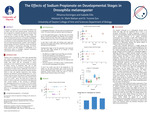
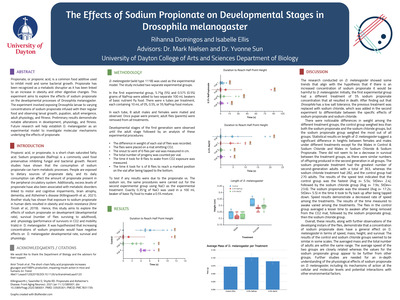
The Effects of Sodium Propionate on Developmental Stages in Drosophila melanogaster
Propionate, or propionic acid, is a common food additive used to inhibit mold and some bacterial growth. Propionate has been recognized as a metabolic disruptor as it has been linked to an increase in obesity and other digestive changes. This experiment aims to explore the effects of sodium propionate on the developmental processes of Drosophila melanogaster. The experiment involved exposing drosophila larvae to varying concentrations of sodium propionate infused with their regular food and observing larval growth, pupation, adult emergence, adult physiology, and fitness. Preliminary results demonstrate notable alterations in development, physiology, and fitness. Future research will help establish D. melanogaster as an experimental model to investigate molecular mechanisms underlying the effects of propionate.
-
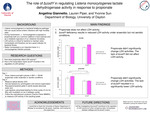
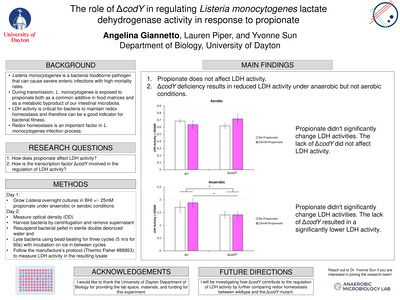
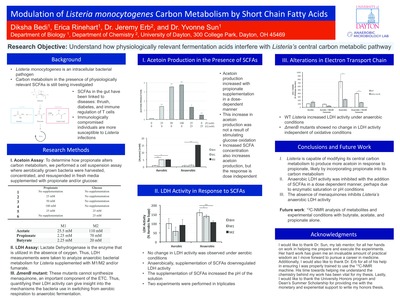
The role of CodY in regulating Listeria monocytogenes lactate dehydrogenase activity in response to propionate
Listeria monocytogenes is a bacterial foodborne pathogen that can cause severe enteric infections with high mortality rates. During transmission, L. monocytogenes is exposed to propionate both as a common additive in food matrices and as a metabolic byproduct of our intestinal microbiota. However, how L. monocytogenes adapts to propionate exposure is not fully understood. In this study, we investigated how propionate exposure regulates the activity of lactate dehydrogenase (LDH). LDH activity is critical for bacteria to maintain redox homeostasis and therefore can be a good indicator for bacterial fitness. Therefore, bacteria grown under different conditions with or without propionate were harvested and lysed. LDH activities were quantified in the resulting lysates using Pierce LDH Cytotoxicity Assay Kit. Moreover, to explore the molecular mechanism underlying the regulation of LDH activity, I compared the results between wildtype L. monocytogenes and a mutant strain lacking the transcription factor CodY. We found that while propionate didn't significantly change LDH activities, the lack of CodY resulted in a significantly lower LDH activity. These results highlight the potential role of CodY in activating LDH production.
-

Anaerobic propionate exposure and its effect on the pathogenesis of Listeria monocytogenes
Listeria monocytogenes is a prevalent food-borne pathogen, and a clear understanding of its pathogenesis can enhance our capability to treat infections. L. monocytogenes is ingested through contaminated foods, enters the intestinal lumen, and is able to spread throughout the rest of the body. The intracellular life cycle of L. monocytogenes requires the regulated expressions of a variety of virulence genes. We previously found that exposure to short chain fatty acids (SCFAs), fermentation byproducts present in the intestines, resulted in significant changes in L. monocytogenes pathogenesis. This research, divided into two major projects, aimed to understand the relationship between L. monocytogenes, its host, and the exposure to SCFAs. Project one evaluated the effect of prior anaerobic exposure of SCFAs, specifically propionate, on strain 07PF0776, a cardiotropic clinical isolate. Hemolytic assays were used to measure the activity of secreted LLO as an indication of bacterial virulence. This project also assessed intracellular growth and actin polymerization of L. monocytogenes in cardiac myoblast cells and macrophages. To further investigate the mechanism underlying L. monocytogenes response to SCFAs, project two explored the role of CodY, a transcription factor in response to levels of branched chain amino acids, in the opposing effects of propionate on LLO production. By comparing the culture supernatant LLO activities in strain 10403s and a mutant with a codY gene deletion (ΔcodY), I discovered that CodY was required for the increase in LLO production in response to anaerobic propionate exposure. Together, the results of these projects provide further evidence for the relationship between SCFA exposure and L. monocytogenes pathogenesis. Ultimately, these findings can be utilized to improve the understanding of L. monocytogenes and develop effective prevention and treatment methods.
-

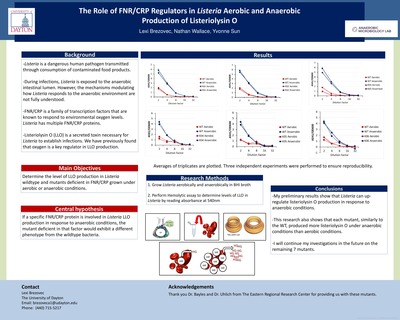
Branched Chain Amino Acids in the Regulation of Listeria monocytogenes Toxin Production
Listeria monocytogenes is a human pathogen with many virulence genes that contribute to infections. The expression of these genes is highly coordinated in response to different environmental signals. For example, the transcription factor CodY plays an important regulatory role in virulence gene expression in response to branched chain amino acids (BCAAs), including leucine, isoleucine, and valine. In addition to BCAAs, propionate is also a key environmental signal that can influence L. monocytogenes virulence gene expression. In fact, anaerobic exposure to propionate resulted in an increase in the production of the toxin listeriolysin O (LLO). We hypothesized that CodY was involved in mediating the upregulation of LLO production in response to anaerobic propionate exposure. To test this hypothesis, hemolytic assays were performed to measure and compare LLO activities in wildtype L. monocytogenes and a CodY-deficient mutant (ΔcodY) grown under various conditions. After testing different media types and using different data analysis methods, our results showed that CodY was not required for the upregulation of LLO production by anaerobic propionate exposure. However, CodY may be involved in the upregulation of LLO production by anaerobic exposure to propionate and isoleucine. In conclusion, the role of CodY in L. monocytogenes response to propionate might be more complicated than anticipated. There are likely other mechanisms that are involved in association with the CodY/BCAA regulatory pathway in mediating the regulation of virulence genes in L. monocytogenes.
-

Cell-Membrane Hydrophobicity of L. monocytogenes is Modulated by Propionate and Oxygen Levels
Bacterial hydrophobicity is a key envelope property relevant to pathogenesis and adhesion to surfaces in various food processing and healthcare settings. How hydrophobicity is modulated by environmental conditions is often unclear. In this project, we investigated how two relevant environmental signals, propionate and oxygen, influence bacterial hydrophobicity. Our model organism is Listeria monocytogenes, a Gram-positive foodborne pathogen capable of causing infections with high mortality rates. Despite stringent sanitation procedures, L. monocytogenes persists in the food processing environment and often causes costly food recalls as well as outbreaks. It is unclear whether the cell-surface hydrophobicity of L. monocytogenes contributes to the persistence and how the hydrophobicity may be modulated by environmental signals. Therefore, using various non-polar, organic reagents and a modified procedure from Salas-Tovar et al., the cell-surface hydrophobicity of L. monocytogenes strain 10403s under both aerobic and anaerobic conditions was analyzed. Preliminary results suggest that the types of non-polar reagents used in the study can influence the hydrophobicity estimates. Furthermore, bacteria grown in aerobic conditions exhibited a higher level of hydrophobicity than those grown in anaerobic conditions. Bacterial cultures grown in the presence of a 25 mM concentration of propionate also exhibited a higher level of hydrophobicity than those grown without propionate. These results suggest that hydrophobicity of L. monocytogenes can be modulated by oxygen levels as well as propionate.
-

Determining the effects of propionate and low temperatures on L. monocytogenes survival and pathogenesis
Listeria monocytogenes is a pathogen with the capability of causing severe illness in individuals who consume contaminated foods. Many foods have been found to harbor the bacterium, but dairy products, produce, and other prepackaged foods are particularly susceptible. These foods and others are commonly stored in cold temperatures to limit most bacterial growth. However, previous research has shown that L. monocytogenes has unique adaptations that promote its growth in low temperatures. To counter the negative effects of cold temperatures, L. monocytogenes alters its membrane composition to maintain its integrity. Alterations to the cell membrane of L. monocytogenes are also an effect of propionate, a common food additive and short chain fatty acid found in the human intestinal tract. In past research, propionate has been proven to reduce L. monocytogenes growth and pathogenesis by decreasing membrane fluidity. However, the effects of both cold and propionate on L. monocytogenes pathogenesis are not known. To address this knowledge gap, my research investigates and analyzes how cold temperature and propionate affect the ability of L. monocytogenes to infect and grow within eukaryotic cells. I have found that propionate has no significant influence on the optical density of L. monocytogenes cultures grown between 4°C and 10°C in both aerobic and anaerobic conditions measured over four days. To further examine the effects of cold temperatures and propionate on L. monocytogenes, I will use cell culture-based infection models to measure L. monocytogenes pathogenesis and cell-cell spread in macrophage, fibroblast, and intestinal epithelial cells.
-

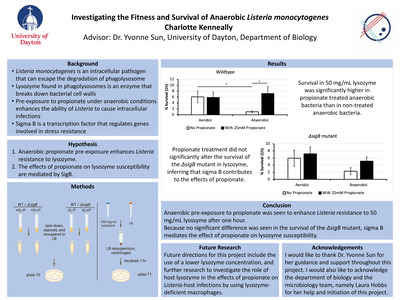
Determining the Effects of Propionate on Listeria monocytogenes Susceptibility to Lysozyme
Listeria monocytogenes is a harmful pathogen transmitted through contaminated food. Listeriosis, the infection associated with L. monocytogenes, is rare but potentially fatal, with a twenty to thirty percent mortality rate. For that reason, the lack of safe strategies to prevent infections can be detrimental. Current infection preventative strategies rely on stringent food surveillance and recalls, but we want to determine alternative tactics to further protect the public from L. monocytogenes. More specifically, we want to identify environmental factors that can compromise the ability of L. monocytogenes to cause infections before the pathogen reaches the intestines. For example, propionate is generally recognized as safe by the FDA and is used as an additive in various food products. Our lab has previously demonstrated that propionate exposure in L. monocytogenes can lead to changes in growth and pathogenesis. To determine how propionate exposure affects L. monocytogenes survival and fitness in the gastrointestinal tract, my thesis project therefore studies the effects of propionate on L. monocytogenes resistance to the lysozyme found in our saliva. If propionate enhances L. monocytogenes lysozyme resistance, the use of propionate in food products might contribute to L. monocytogenes survival during transmission between food and our gastrointestinal tract. However, if propionate decreases L. monocytogenes resistance to lysozyme, it could be beneficial to use propionate as an efficient infection preventative strategy. To better understand the functions of propionate in L. monocytogenes lysozyme resistance, I performed a literature review in the following areas: the importance of oral health, antimicrobial mechanisms in the oral cavity, lysozyme, and Listeria monocytogenes.
-

Determining the Role of Propionate and SigB on Benzalkonium Chloride Resistance in Listeria monocytogenes
Listeria monocytogenes (L. monocytogenes) is a deadly food borne pathogen that causes listeriosis infection in humans with a high mortality rate from meningitis or sepsis. L. monocytogenes can form biofilms in food processing environments and becomes resistant to antimicrobial agents such as benzalkonium chloride (BC) and other quaternary ammonium chlorides (QACs). BC is used for cleaning and disinfection of food processing areas and is known to disrupt cell membranes of L. monocytogenes, causing cytosol leakage and the degradation of proteins and nucleic acids. Previous research shows that QAC resistance is associated with the upregulation of certain efflux pump genes (mdrL, brcABC, qacH, and emrE). Moreover, biofilm formation can also contribute to QAC resistance and subsequent persistence of L. monocytogenes in the environment. In addition, propionate is a commonly used food additive for flavoring and spoilage prevention that can potentially regulate L. monocytogenes biofilm formation. Biofilm formation and the expression of efflux pumps can both be regulated by the stress response sigma factor SigB in L. monocytogenes. However, it is not clear whether propionate affects this regulatory pathway. Therefore, my Honors Thesis research aims to investigate whether propionate can be used to increase L. monocytogenes susceptibility to BC and to determine the role of transcription factors, such as SigB, in conferring BC resistance. Results indicate that BC decreases planktonic growth in the presence of propionate in aerobic conditions, but not anaerobic conditions. Additionally, the growth of the ΔsigB mutant is significantly reduced by BC under anaerobic but not aerobic conditions. These results highlight that SigB as well as the presence or absence of oxygen all play critical roles in regulating L. monocytogenes susceptibility to BC. Therefore, environmental conditions and genetic composition of L. monocytogenes can both contribute to the efficacy of our antimicrobial efforts in the food processing industry.
-

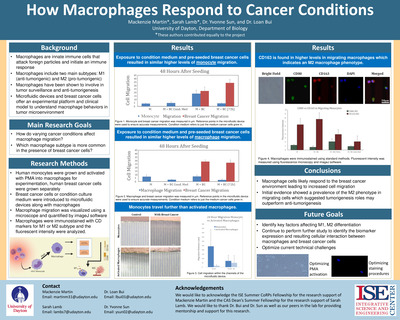
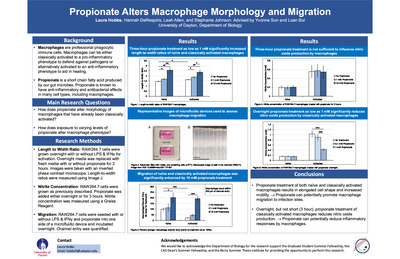
Determining the role of propionate in macrophage M1 and M2 activation
Macrophages are one of the many essential cells of the innate immune system that help to protect the body from dangerous pathogens such as Listeria monocytogenes. L. monocytogenes is a foodborne pathogen that can cause infections, especially in the elderly, immunocompromised, and pregnant women. The antimicrobial activities of macrophages that are utilized to respond to pathogens such as L. monocytogenes include phagocytosis, inflammatory responses, and the production of antimicrobial compounds such as nitric oxide. These activities need to be regulated carefully to avoid causing unintentional damages. Typically, macrophages exist in a naive, nonactivated state, or can be activated classically (M1) and alternatively (M2) by different cytokines. Furthermore, propionate, a major gut metabolite, can also influence macrophage activities. To better understand how propionate affects macrophage antimicrobial activities, I investigated how the morphology of macrophages at various activation states are altered by propionate treatment. Using cell culture-based assays, I observed that propionate elongates nonactivated, M1, and M2 activated macrophages, indicating that propionate may modulate a macrophages response to infection. Additional experiments were performed to assess how propionate treatment of nonactivated and activated macrophages impacts infection with L. monocytogenes, glucose consumption, and cell motility. The findings from this research will help to identify ways in which propionate can enhance macrophage ability to respond and fight dangerous pathogens such as L. monocytogenes.