
The University of Dayton Libraries are gradually digitizing selected rare works — some of which are the only extant copy — to make them available to readers and researchers worldwide.
The rare materials, contained in three repositories — University Archives and Special Collections; the U.S. Catholic Special Collection; and the Marian Library — number in the tens of thousands; as such, the digitization process will be gradual and selective, using criteria including visual interest; unique characteristic such as annotations; fragility; current curricular connections; and scholarly appeal.
To arrange a visit to the University of Dayton Libraries to see the materials in person, contact the repository (or repositories) noted in the records:
- Marian Library: [email protected]
- University Archives and Special Collections: [email protected]
- U.S. Catholic Special Collection: [email protected]
-
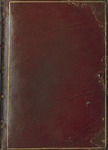
Book of Hours (Use of Rouen)
Master of the Ango Hours, active 1515-1531
Illuminated manuscript by the Master of the Ango Hours, approximately 1520-1530.
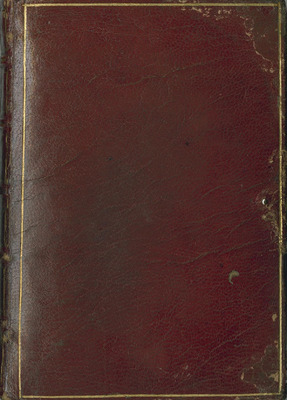
145 vellum leaves, 20 lines per page, ruled in red; written in brown ink with red rubrics. Includes 14 large miniatures with gold borders; 20 smaller miniatures throughout. Binding is late sixteenth or early seventeenth French red morocco with gilt tooling.
Contents: Calendar -- Sequence of the Gospels -- Passion sequence -- Obsecro te, O intemerata and other prayers to the Blessed Virgin Mary -- Hours of the Virgin (Use of Rouen) in the mixed form with the Hours of the cross and the Hours of the Holy Spirit -- Seven penitential psalms and litany -- Office of the dead (Use of Rouen and Avranches) -- Memorials to the saints -- Stabat mater and other prayers.
Description by Les Enluminures, Ltd., bookseller, notes "The two girls in Renaissance costume attending St. Elizabeth in the miniature on leaf 38v may be the [original] owner's daughters."
Titled supplied by cataloger.
This manuscript was donated to the Marian Library by Stuart and Mimi Rose.
-
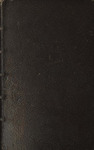
Heures a l'usage de Rouen
Catholic Church
112 leaves. 19 woodcut and metal-cut full-page illustrations; borders illustrating religious and secular subjects with captions in French. Initials and line endings in gold on red or blue background.
Antoine Vérard, publisher; Chambolle-Duru, binder.
The letters Ro at the bottom of pages in some sections denotes the Use of Rouen, a variation specific to that region.
See Hilary Maddocks, “A book of hours by Anthoine Vérard in the University of Melbourne Library,” University of Melbourne Collections 16 (June 2015):15-24 about a similar copy in the University of Melbourne Library, providing background on the publisher, artists, and book trade in early 16th century Paris.
Books of hours were a popular form of private devotion for lay people. Some, which were richly illustrated and illuminated, were luxury items and a symbol of status. The books followed the monastic tradition of reciting the Divine Liturgy in eight sessions throughout the day. Many prayers, litanies of saints, and calendars were standard texts, but its central text was the Hours of the Virgin, also known as the Little Office of the Blessed Virgin Mary.
Title supplied by cataloger. Imprint and date from H. Bibliographie der Livres d'Heures (2. Aufl.).
-
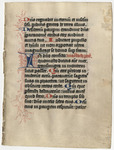
Vellum leaf from a medieval manuscript connected to Otto Ege
Catholic Church
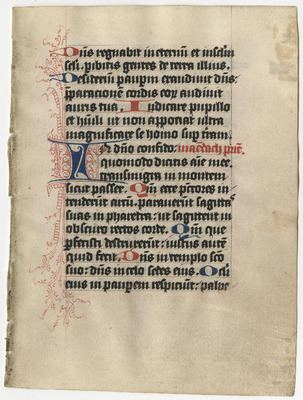
Manuscript leaf on vellum: 175 mm x 132 mm (112 mm x 69 mm)
18 lines of black gothic script with red and blue initials, rivers-style pen flourishing in red.
Leaf from a devotional manuscript containing a psalter, broken up and sold by Otto Ege and his wife Louise, with his label identifying it as number 43 from his collection. Ege sold other leaves from this manuscript as leaf 43 in his Fifty Original Leaves from Medieval Manuscripts portfolios. This leaf contains Psalms 9:37 through 11:5 (Septuagint numbering).
Identified by Ege’s label as a from a book of hours, although most of the 30+ known leaves from this manuscript contain psalms with Dutch rubrics for recitation according to Bridgettine use, with leaves at University of Vermont and Boston University containing text from the Bridgettine liturgy.
-
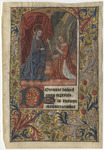
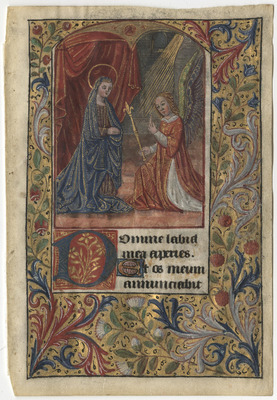
Annunciation: manuscript leaf from a book of hours
Catholic Church
Manuscript leaf on vellum: 166 x 110 mm, color illustrations, illuminations
Annunciation miniature from Matins, the first hour of the Office of the Virgin. From a book of hours produced in the mid-15th century. Floral border on shell gold surrounds miniature of Gabriel kneeling before Mary on recto; floral border on left side of verso outlined in red next to 16 lines of gothic script in black ink with illuminated initials and line-fillers.
-
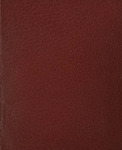
Calendar from Book of Hours; use of Paris
Catholic Church
Manuscript on vellum (13 unnumbered leaves), bound: color illustrations, illuminations; 167 x 135 mm, bound to 172 x 140 mm
Calendar of saints' feast days from a French Book of Hours, use of Paris, which was evidently intact in the late 18th century when the descriptive note on the original first flyleaf was handwritten and dated 4 February 1792 by one 'Rouxeau', priest of Le Loroux-Bottereau. Rouxeau is assumed to be Julien-Pierre Rouxeau (1734-1811); the calendar as currently bound includes the 19th century bookplace of H. Arthur Baker.
Date is estimated from the 18th century owner's handwritten comment: "Ces heures, aussi belle qui anciennes, sont ecrites a la main vers la fin du 14e siecle."