

Presenter(s)
Mackenzie Martin
Files
Download Project (212 KB)
Description
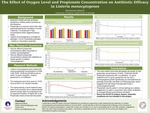
Listeria monocytogenes is an intracellular pathogen known for causing the infection listeriosis, a common foodborne illness associated with many packaged cold foods, raw meats, and dairy products. While anyone exposed to contaminated foods or products is at risk of infection, listeriosis significantly impacts the immunocompromised, pregnant women, children and the elderly with a high mortality rate. This project documents and analyzes the effect of aerobic or anaerobic conditions as well as propionate concentration levels on the efficacy of the antibiotics gentamicin and ampicillin in inhibiting cell growth in Listeria monocytogenes. We observed that the presence of propionate, compared to no propionate control, significantly decrease the aerobic growth of Listeria monocytogenes with 10 ug/mL ampicillin or 10 ug/mL gentamicin. These results suggest that the presence of propionate may enhance the antibiotic efficacy against Listeria monocytogenes under aerobic conditions.
Publication Date
4-22-2020
Project Designation
Independent Research
Primary Advisor
Yvonne Y. Sun
Primary Advisor's Department
Biology
Keywords
Stander Symposium project, College of Arts and Sciences
United Nations Sustainable Development Goals
Good Health and Well-Being; Life On Land
Recommended Citation
"The Effect of Oxygen Level and Propionate Concentration on Antibiotic Efficacy in Listeria monocytogenes" (2020). Stander Symposium Projects. 1894.
https://ecommons.udayton.edu/stander_posters/1894