

Presenter(s)
Samantha Johnson, Ryan W. Reihart
Files
Download Project (7.5 MB)
Description
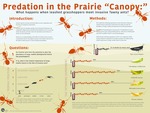
Biological invasions have become a global concern, as invasive species are one of the leading causes for loss of biodiversity. Invasive ants, for example, often rapidly reach numerical dominance in invaded ecosystems, which results in a reduction in the abundance and diversity of native ants and small, non-ant arthropods. Because invasive ants are small, relatively few studies have considered the potential effect of invasive ants on the abundance of large, mobile aboveground insects. Here, we report evidence of grasshopper predation and the diet of an invasive ant, Nylanderia fulva, in a coastal tallgrass prairie. While working at the University of Houston’s Coastal Center in July 2016, we observed a large number of dead grasshoppers that were covered by N. fulva. To determine if grasshopper mortality was due to predation by N. fulva, we conducted a tethering experiment. We tethered 40 grasshoppers, 10 individuals of 2 grass feeding species and 10 individuals of 2 mixed feeding species, with a modified “leash” that was secured to the ground. Within the first 4 hours of the experiment, we found that 50% of the grasshoppers were dead and were covered by N. fulva. Following this experiment, we conducted a stable isotope analysis in 2017 to determine the trophic position and relative importance of grasshoppers in the diet of N. fulva. Across 20 different colonies of N. fulva, we found that workers had little variation in their average δ15N (mean ± SD; 5.44 ± 0.49), δ13C (-21.78 ± 0.86), and trophic position (2.29 ± 0.14). These results indicate that N. fulva are omnivores, but obtain most of their N from basal resources, like plants. Our data demonstrate some of the complexities of the diets of invasive ants and highlight their potential to reduce the abundance and richness of large, mobile insects like grasshoppers.
Publication Date
4-22-2021
Project Designation
Graduate Research
Primary Advisor
Kathleen A. Kargl, Chelse M. Prather
Primary Advisor's Department
Biology
Keywords
Stander Symposium project, College of Arts and Sciences
United Nations Sustainable Development Goals
Climate Action; Life On Land
Recommended Citation
"Predation in the prairie “canopy”: What happens when leashed grasshoppers meet invasive tawny crazy ants?" (2021). Stander Symposium Projects. 2116.
https://ecommons.udayton.edu/stander_posters/2116