

Presenter(s)
Clara B. Beatty, Kristen Victoria Windebank
Files
Download Project (166 KB)
Description
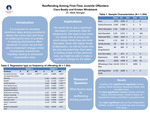
The aim of this study is to find out what factors lead to reoffending among juveniles. The goal of this project is to bring the crime rates down for juveniles, so they can grow up to be successful. Our hypothesis is that a juvenile running away from home, among other home life complications will affect and increase the chance of a juvenile re-offending; the null hypothesis states that running away from home, among other home life complications will not affect nor lower the chance of a juvenile re-offending. The research initially suggested that with clear incentives not to commit crimes, the youth will have no reason to commit said crimes and the crime rates and recidivism rates will slow. In running a negative binomial distribution we found that the subject’s gender, their family structure, levels of depression, and their education level are significant factors in predicting the likelihood of recidivism.
Publication Date
4-17-2024
Project Designation
Capstone Project
Primary Advisor
Mark A. Morgan
Primary Advisor's Department
Criminal Justice and Security Studies
Keywords
Stander Symposium, College of Arts and Sciences
Recommended Citation
"Reoffending Among First-Time Juvenile Offenders" (2024). Stander Symposium Projects. 3490.
https://ecommons.udayton.edu/stander_posters/3490

Comments
Presentation: 9:00-10:15, Kennedy Union Ballroom