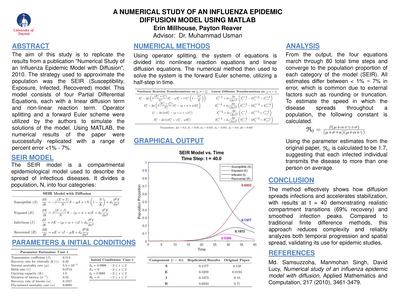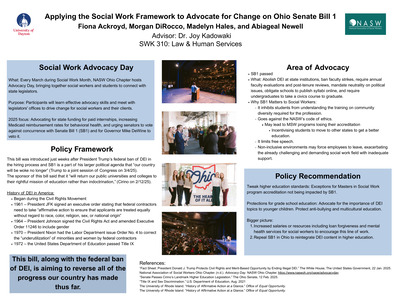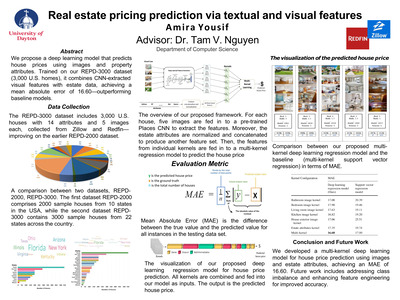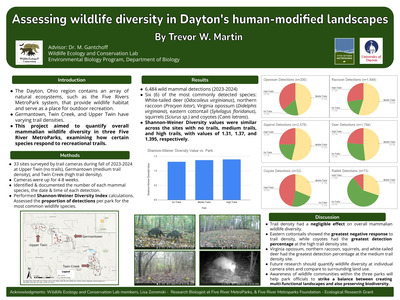

The Brother Joseph W. Stander Symposium recognizes and celebrates academic excellence in undergraduate and graduate education. This annual event provides an opportunity for students from all disciplines to showcase their intellectual and artistic accomplishments. The Stander Symposium represents the Marianist tradition of education through community and is the principal campus-wide event in which faculty and students actualize our mission to be a "community of learners."
-
Dress Code Inside and Outside of the Classroom
Caroline G Fahey, Jordan Lee Trenkamp
This presentation will analyze dress code effects of academics, influence of the surrounding environment, and the argument for each position on the policy. Clothes are often a form of self-expression that help describe a person’s personality and culture. This presentation will explore reasons for dress code policies and conditions people feel a dress code is unreasonable and why.
-

Drivers of Post-Fire Regeneration in Larch Forests of Northeastern Siberia
Eric Bradley Borth
The Arctic is warming at an alarming rate, a phenomenon which has been causing more frequent and severe wildfires in boreal forests. The Cajander larch (Larix cajanderi) forests of Siberia are particularly important because they cover an immense area of carbon-rich permafrost soil, one of the largest terrestrial carbon sinks. The fate of this belowground carbon is intimately tied to the structure of these larch forests. Due to the fact that forest structure is largely determined by the establishment of new seedlings after forest fires, we seek to learn more about how these changes in fire regimes may change the factors that drive seedling establishment. We examine 6 Cajander larch stands in northeastern Siberia that have been burned in the past 15 years. We evaluate the importance of microsites that favor larch establishment (deemed “safe sites”), a concept that has been anecdotally recorded, but not rigorously studied. We analyze the strength of seedling preference by comparing the percentage of seedlings that establish on safe sites to the percentage of the land area that is covered by safe sites. This analysis is being carried out in burned sites with varying seed availability to determine whether seed limitation affects safe site preference. Based on our current data, we hypothesize that seed availability will be the most important driver of regeneration, and that safe sites will be more important where there is greater seed limitation. These results will help us understand the patterns of change in larch forests in the face of climate change.
-
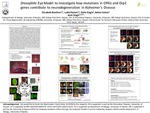
Drosophila Eye Model to Investigate How Mutations in OPA1 and Drp-1 Genes Contribute to Neurodegeneration in Alzheimer’s Disease
Elizabeth Ann Borchers, Neha Gogia, Lydia Christine Payton, Ankita Sarkar
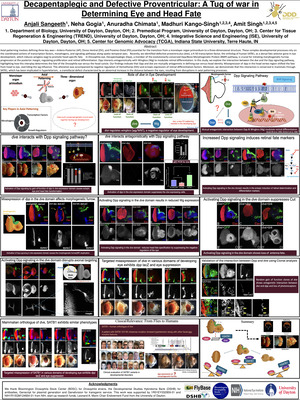
Alzheimer’s Disease (AD) is a progressive neurodegenerative disorder with no known cure to-date. This disease is caused by the extra-cellular accumulation of amyloid-beta 42 (Aβ42) peptides, which ultimately leads to results in neuronal cell death. In our study, we have used Drosophila melanogaster (a.k.a fruit fly) as our model organism (as its genome is highly conserved with humans and any insights generated here can be extrapolated to humans), and have developed transgenic fly model of AD where human Aβ42 peptides can be misexpresssed specifically in differentiating photoreceptor neurons using GAL4/UAS system, without affecting the reproductive ability and life span of flies. One of the hallmarks of AD is generation of Reactive Oxygen Species (ROS) which triggers neuronal cell death. We have found that (1) there is a strong correlation between increased ROS levels and mitochondrial fragmentation and increased levels of ROS and that (2) a fine balance between both mitochondrial fusion, fission events is essential for normal mitochondrial/cellular functions. Any perturbations, in these process results in increased ROS levels which triggers neuronal death. In our study, we have found two dynamin related GTPases (1) opa1 and (2) drp1, which can regulate mitochondrial fusion and fission events respectively. Mutations in opa1 (an early stop signal), produces small unstable mitochondrial proteins, and increases ROS levels in neurons. Thus, we hypothesize that opa1 and drp1 are involved in regulating Aβ42 mediated neurodegeneration. To test our hypothesis, we misexpressed opa1 and drp1 in Aβ42 background (using GAL4/UAS system) and checked for resultant phenotypes in the eye. Our results showed that (1) up-regulating and downregulating opa1 rescues Aβ42 mediated neurodegeneration only in female flies and in male flies eyes respectively, (2) down-regulating drp1 rescues Aβ42 mediated neurodegeneration only in female flies, while (3) up-regulating drp1 did not result in any eye rescues phenotypes. This study has significant bearings on mitochondria’s role in neurodegeneration. Keywords: Alzheimer’s Disease, Neurodegeneration, Reactive Oxygen Species, Mitochondrial fragmentation
-
DROSOPHILA MELANOGASTER IMAGINAL DISC MODEL TO IDENTIFY AND DETERMINE THE REGENERATION POTENTIAL OF NOVEL NOTOPHTHALMUS VIRIDESCENS (RED-SPOTTED NEWT) GENES.
Amr Abdulkarim Alghamdi, Abijeet Singh Mehta
Notophthalmus viridescens possess amazing capabilities to regenerate their organs but molecular-genetic mechanism driving regeneration have been hindered due to lack of genetic tools. However, Drosophila imaginal discs, the primordia for adult fly structures, exhibit stem cell like potency and serve as powerful genetic tools to address fundamental problems in regeneration. Using this system, we demonstrated the regenerative role of 5 novel newt proteins. These proteins, having new sequence motifs, have no counterparts in public databases, were identified by denovo assembly of newt transcriptome combined with proteomic validation. Using transgenic approach these genes were misexpressed in Drosophila, and RNA seq was performed on mRNA sample from third instar larva. Gene ontology terms related to development, apoptosis and cell cycle were highly enriched in the group of differentially regulated Drosophila transcripts. To determine their regenerative potential, we misexpressed candidate genes in the early eye mutant background. Surprisingly, these genes exhibit robust potential to replace missing tissues by inducing compensatory proliferation and blocking cell death. Mitotic index fold change being 6 ± 1.5, and frequency of phenotype rescue was 70%. Using Retinal determination (RD) gene expression we demonstrated that rescued mutant undergo proper differentiation. We found highly conserved Wingless/Wnt, and Jun-N-terminal kinase (JNK) signaling pathway components were downregulated to promote rescue in the domain where candidate genes were misexpressed. These pathways have been implicated in tissue regeneration in Drosophila. We further wanted to test if candidate genes can globally trigger regeneration in all tissues, and to address this question we used an established model for regeneration in wing imaginal disc. Our preliminary data from this model demonstrates that regeneration potential of candidate genes is not confined to the type of tissue or developmental stage. We therefore have identified a novel component of regeneration tool kit in newt that can trigger regeneration response in other organisms by employing highly conserved signaling pathways. In future, these studies can have a significant bearing in the field of tissue repair and maintenance. Keywords: Candidate genes, Newts, Drosophila, Regeneration, Imaginal Discs.
-
Dynamic Analysis of Alternative Mechanical Press Linkages
Hardik Hasmukhbhai Viradiya
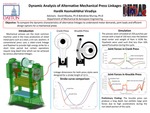
The goal is this project is to compare the dynamic characteristics of alternative linkages for a mechanical press. Mechanical presses are the most common machine used in the mass production of sheet metal parts. Forming sheet metal parts, such as a car door or a tin can, involves striking a flat piece of metal with a die that shapes the part and punctures holes. A conventional press uses a slider-crank linkage and flywheel to provide a high energy strike for a short time period. A motor delivers torque to a flywheel that in turn, provides the rated capacity (tonnage) during the strike. Certain operations, such as deep drawing, require a longer dwell time than is possible with the slider-crank design. Various alternative linkages are proposed that have the ability to provide long dwell times. A dynamic analysis of each linkage is essential to understand motor demands, joint loads, and efficient design options. The linkage analyses are performed using SolidWorks multi-body dynamic simulation software.
-
Economic Restructuring in Dayton
William David Rice
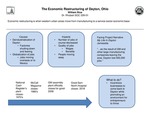
Dayton Ohio use to be a huge and growing blue-collar community. In the past 30 years, several large factories have moved away, leaving former employees struggling to find new jobs. Drawing on Facing Project Narratives in Dayton and social science literature, this project will examine the causes and effects of economic restructuring that occurred between 1980 and the 2000s. In addition, this poster will provide an overview of efforts to overcome the unintended consequences of economic restructuring in Dayton.
-

Educating ELLs Beyond the Regular Classroom
Frances Michaela Rogan
Currently, there are around five million ELLs in the public school system of the United States. To be successful, many English Language Learners (ELLs) may need additional opportunities for instruction outside of the regular school day. After observing at El Puente, an after-school program for ELLs, I wanted to learn more about what makes the programs effective for ELLs. I conducted a review of the research literature to determine which strategies make the after-school programs for ELLs successful. In order to effectively support ELLs after-school, the programs need to utilize the student’s primary language, engage the parents/families in the process, have the instructors collaborate, allow time to practice what is taught, conduct the after-school session at a school but in an informal environment, and create unique ways of learning.
-
Effect of tyrosine kinase inhibitors on Drosophila glioma model
Kaitlyn M Alleman, Oscar Antonio Barnes Valldejuly, Dudley Kiefer Campbell, Claire Marie Feller, Karishma Sanjay Gangwani, Michael Moran Gilbert, Katie Katherine Parker, Kirti Snigdha
Glioma are glia-derived primary brain tumors with very poor prognosis. The standard of care is surgery followed by radio- and chemo/immuno-therapy, or combinations thereof, however, all patients with glioma ultimately die. Thus, there is a need to test if recently approved drugs can inhibit the growth and progression of this tumor. We have developed a Drosophila glioma model based on the two genetic/ oncogenic pathways known to be most frequently activated in patients viz., the Ras/MAPK pathway and the PI3K pathway. Inhibitors of these two pathways do not help to limit the progression of glioma. Therefore, it is thought that other oncogenic pathways induce glioma growth and progression. We designed a chemical screen involving drugs targeting Tyrosine kinases (Selleck Biochem Chemical library) – key enzymes that are activated by oncogenic pathways. The chemical screen involves feeding glioma containing larvae 10uM and 300uM drugs from the library at early third instar stage, then allow these larvae to grow and mature to the third instar stage (120h of development), and then dissect the brain to study effects on glioma growth and track survival on days 5-7 when other glioma positive larvae die. Here, we present our progress from this screen focusing on chemicals A2-A11.
-
Efflux Pump Inhibition in Multiple Antibiotic Resistant Bacteria
C.J. Roger Moellering
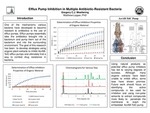
Over the past few decades, bacteria have become resistant to multiple antibiotics due to humans misusing and overusing antibiotics. Over-expression of bacterial efflux pumps has been identified as a key player in bacterial drug resistance. Over-expression of these pumps essentially allows bacteria to transport antibiotics from their intracellular space to their extracellular space before the antibiotics can effectively act on the organisms. To combat multiple drug resistance in bacteria, this research aimed to find natural, plant-derived inhibitors of an efflux pump in E. coli called the AcrAB-TolC pump. Cinnamon, cranberry, pumpkin seeds, thyme, black tea, and oolong tea were chosen for testing for inhibition of this pump. These items were ground, dried, and put in an extractor to isolate polar compounds which were eventually introduced into a bacterial fluorescence assay. Ultimately, the oolong tea was the only extract tested that led to a positive fluorescence reading, reflecting potential inhibition of the AcrAB-TolC pump. Isolation and purification of the active compound within oolong tea still an ongoing area of investigation.
-
Electrokinetic Desalinization of Kaolin Soil with Acetic Acid
Ronald Christopher Knapp
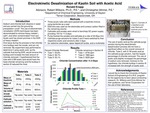
Sodium and chloride both dissolve in water and are carried into the ground by precipitation runoff. This runoff pollutes the soil, negatively impacting wildlife and vegetation. The use of electrokinetic remediation (EKR) techniques has been demonstrated to remove salt, heavy metals, and other contaminates from soil. One issue during the process is that chloride ions buildup near the anode, and are not removed. This experiment was performed to determine if using acetic acid as the cathode fluid during EKR would remove this buildup and increase the total amount of chloride removed. Three acrylic tubes were packed with kaolin clay with an initial concentration of 8000ppm NaCl. Each tube used tap water as the anode purge solution. The cathode purge solution was initially tap water; after two days, the purge solution for Tubes 2 and 3 were switched to 0.1M acetic acid and 0.5M acetic acid, respectively. The electrodes were flushed at a rate of 50.00μL/min. The tubes were hooked up to a DC power source providing 15V for 11.5 days. Ion selective electrodes, a spear-tipped pH probe, and a handheld multi-meter were used to collect data. 55.8% of the chloride ions were removed from Tube 1, 56.7% from Tube 2, and 53.1% from Tube 3. Tube 3 also had the greatest concentration of chloride ions remaining near the anode at 9220ppm. As the concentration of acetic acid increased, the amount of chloride remaining near the anode increased. The use of acetic acid did not affect the overall removal of chloride ions.
-
Electronic communication and social media in organizations
Shuo Du, Patrick Flynn Duggan, Micaela H Foley, James M Gates, Michael Dean Glaser, Katie Elizabeth Hathaway, Cameron Michael Hendershot, Daniel Patrick Kelly Jennrich, David Philip Kelley, Tillie Jean Kummerer, Carl J Legrett, Xiaoli Li, Kevin James Lynch, Mario Mathew Manta, Heather Elizabeth May, Ashley Elizabeth Mercs, Stephanie Adele Moline, P.J. Anthony Randazzo, Jack William Reilley, Jack D Schafer, Robert Conway Smyjunas, Xuanheng Wang, Conor Patrick Wood
Students in ENG 372 Business & Professional Writing classes participated in a virtual business professional project that involves almost 600 students in 96 teams from 14 universities in 7 countries. All teams were asked to identify an organization that has a robust online presence, such as a web page, Facebook page, Twitter feed, customer blog, and so on. Then the team analyzed the quality of these mechanisms in terms of building and maintaining the organization’s reputation. They identified major conclusions about this company’s online presence. Finally they wrote a report that introduces the organization and its online communication tools, provides an analysis of its online presence, and offers recommendations for improvements. They evaluated the company’s reputation (built in or bolted on) and provided evidence for their conclusions. The report identified whether the organization is conveying its core values through its social media use and provide recommendations how the company can improve its online presence that address each of the conclusions. This project emphasizes the development of critical-thinking, cross-cultural communication in global contexts, and virtual collaboration and team-building skills.
-
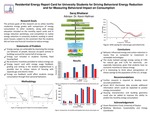
Energy GPA in Student Neighborhood
Saroj Bhattarai
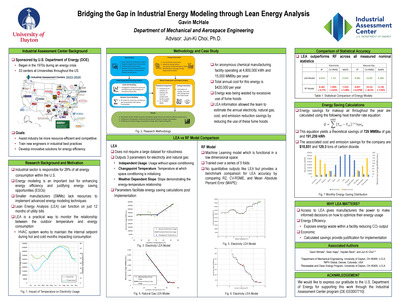
The University of Dayton houses almost 90% undergraduate student in on-campus residence. The university charges a fixed amount to every student for a semester, that amount covers the utility bills for that semester and no penalty charges even if they waste energy. This may lead to unnecessary use of energy like turning light on when the residence is empty and setting the thermostat set point constant every time. These behaviors can be controlled if an incentive is offered to the students that motivate them to use energy efficiently. This is possible in UD due to unique nature of university housing with separate gas and electric meter. A mathematical model is developed in R-software using the historical electrical and gas usage data from utility provider DP&L and Vectren respectively. This model helps to disaggregate the weather dependent and weather independent energy use. The actual energy use is compared with the baseline, heating and cooling energy use of the student residence. A report card is developed to provide the student with the feedback about their energy usage status and their residence’s energy saving level in the student neighborhood. This energy performance report card is sent to every resident via email which contains energy grade for natural gas, electricity and overall energy grade, residence rank in student neighborhood for energy saving, winning residence, and tips for improving the energy grade in the successive months. The residents of the winning residence are awarded a t-shirt and an article of the winning residents in a flyer news as a part of this program to incentivize them. After the implementation of this program, 5 to 10% of carbon emission saving is achieved through natural gas saving and some carbon emission saving in available from electricity saving due to change in student behavior toward energy use.
-
Epitaxial titanium nitride on sapphire: Effects of substrate temperature on microstructure and optical properties
Hadley Anna Smith
Titanium Nitride (TiN) is a mechanically-robust, high-temperature stable, metallic material receiving considerable attention for resilient plasmonics. In this work, we fabricated six hetero-epitaxial TiN films on sapphire using controllably unbalanced reactive magnetron sputtering. We examined the effect of substrate growth temperature on the plasmonic and crystalline quality of the film. Optical properties of all films were obtained from spectroscopic ellipsometry; plasmonic quality factors were determined from the real and imaginary parts of the dielectric function. We determined crystallinity using X-ray diffraction and surface morphology using atomic force microscopy. X-ray diffraction showed (111) TiN peaks with Pendellösung fringes indicating consistent hetero-epitaxy. Atomic force microscopy showed smooth surfaces with RMS surface roughness ranging from 0.2-2.6 nm. Based on this characterization, we determined that the substrate deposition temperature of 550˚C yielded (111)-oriented hetero-epitaxial TiN with minimal surface roughness. We found that 550˚C also gave highest plasmonic quality factors for all wavelengths, approaching the values of today’s best plasmonic materials (such as Au and Ag). Further, the Q-factors at wavelength 1550 nm inversely correlated with calculated lattice constants indicating stoichiometric tuning of plasmonic properties. Our results indicate that the plasmonic response of TiN is directly linked with structural quality and stoichiometry of the film.
-

Ethical Issues in Journalism: Minimizing Harm when Reporting on Children
Meg Elizabeth Gramza, William Lawrence Wharton
Meg Gramza explores the ethical challenges the press faces when reporting on sex trafficking, especially when victims are children. She recommends how journalists can meet their obligation to report truth and do so thoroughly, while minimizing risks of additional harm to the victims. William Wharton explores the ethics involved in photographing children who have been victims of crime and how photojournalists can avoid adding to children’s trauma.
-

Ethic Issues in Journalism: How Much is Too Much to Report?
Tyler Kent Jones, Kelsey Elizabeth Kramb
Tyler Jones looks at the public's right to information about government, journalists’ duty to serve the public, and government's need to keep secrets in the national interest. Jones examines when, how and to what extent journalists should disclose classified material. Kelsey Kramb looks at the ethical minefields that arise during breaking news events. She examines how the reporters can adhere to journalistic values and ethics in situations where truth is not always immediately apparent. When and how much information should journalists disclose in such cases?
-
Ethic Issues in Journalism: Interviewing Victims
Molly Marie Clayton, Elizabeth C Dolehide, Caitlin Rebecca Marshall
Molly Clayton, Elizabeth Dolehide and Caitlin Marshall examine ethical challenges that arise when journalists interview people who have been involved in tragic events, children who have been victims of crime, and people who have been sexually assaulted. The interviewing process can be cathartic for the interviewees, but it also can provoke traumatizing memories. Clayton, Dolehide and Marshall look at journalists’ interviewing techniques in these specific situations, explore the potential problems, and suggest ways that journalists can be more sensitive in their interviews while still meeting their obligations to report the truth and serve the public.
-

Ethic Issues in Journalism: Maintaining Journalistic Independence
Christopher James Lareau, Emily M Lawton
Christopher LaReau examines sports journalism and conflicts that arise when journalists report on hometown and favored sports teams. He identifies how journalists can maintain their objectivity in order to report fully and truthfully. Emily Lawton examines the challenges that arise when news organizations’ business interests become news. She identifies how journalists can maintain their journalistic integrity while reporting on their own employers.
-

Ethic Issues in Journalism: Reporting Truth while Respecting Privacy
Elizabeth Grace Elward, Mari Margaret Fazio
Mari Fazio looks at how the press covers private individuals who have been thrust into the public limelight through, for example, natural disasters. Fazio addresses how journalists can report the news and still respect people’s privacy. Elizabeth Elward considers the long-standing debate in journalism on when, if ever, the press should identify victims of sexual assault. Elward explores the ethical issues involved, especially in light of today’s openness, and what might be the best course of action today.
-
Evaluation of a School-Based Tier Two Anxiety Intervention: The Worry Box Technique
Katrina Olimpia Aguenza Lazarte
School practitioners frequently learn about intervention strategies on websites, blogs, and social media, yet these strategies often lack empirical support. One such technique, the worry box, is a cognitive–behavioral strategy that may be implemented as a Tier 2 intervention for students with anxiety. This poster presentation will share the results of a study that examined the effectiveness and feasibility of the worry box technique for children with anxiety in a school setting.
-
Examining the Experience of Choosing a Major among First-Year, First-Generation, Undecided Undergraduates at the University of Dayton
Adam Thomas Solomon
Over half of all students who withdraw from college do so within their first year, resulting in a first-year attrition rate of over 25% at four-year institutions, and roughly 50% at two-year institutions (Cuseo, 2005). Undecided students and first-generation students represent two populations who are at the greatest risk of attrition. Since the 1980s, both populations of students have increasingly become the focus of study in the retention literature, and yet little has been written about the intersection of these two student characteristics. This qualitative, phenomenological study attempts to address this intersectionality by highlighting the experience of decision-making around choice of major among first-year, first-generation, undecided undergraduates at the University of Dayton. Data collected via one-on-one interviews with participants reveal their extrinsic and intrinsic motivations for choosing a particular course of study, how they conceptualize choosing a major based on post-college aspirations, concerns about being undecided, and key figures who helped guide them through the process of choosing a major.
-
Examining the Stability of the Purrsonality of Felis catus, the Domestic House Cat.
Taylor Nicole Chambers, Alexander N Lawriw
People have a tendency to believe that their beloved furry felines have their own unique personalities. However, according to the traditional definition of personality, a set of characteristics that are stable across both time and different circumstances, this may not entirely be true. Previous research into this area has resulted in dimensional groupings of cat personality traits similar to those found within the well-known human equivalent, the Big Five (Feaver, Mendl & Bateson, 1986; Karsh & Turner, 1988; Bennett, Rutter, Woodhead & Howell, 2017; Ha & Ha, 2017). While the number of labels and dimensions discovered typically differs, these studies have all come to the conclusion that cat personality traits do exist, and that they vary from individual to individual. Yet, none of these studies have intentionally examined the stability of these traits, a key component of overall personality. The current study addresses this issue by asking primary caregivers of cats to rate, on a scale from one to five, how well 29 adjectives (taken from Bennett et al, 2017) describe their cat in three different situations and at two periods of time. The 29 adjectives rated by the participants were scored on the six dimensions of cat personality (playfulness, nervousness, amiability, dominance, demandingness, and gullibility) following the method of Bennett el al. (2017). Separate repeated measure ANOVAs were conducted with either situation or time as the independent variable. A Bonferroni adjusted α level of .05 / 6 = .00833 was used. Significant effects of situation were found for playfulness, nervousness, amiability, dominance and demandingness. Gullibility was not statistically significant. Significant effects of time were found for amiability, dominance, and demandingness. Playfulness, nervousness, and gullibility were not statistically significant at the Bonferroni corrected α level. In conclusion, while certain personality traits were found to be stable either across time or across situations, others were not; therefore, overall personality was not stable.
-
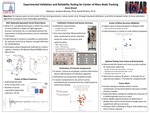
Experimental Validation and Reliability Testing for Center of Mass Body Tracking
Kevin Michael Brand
Determining and then tracking the center of mass is difficult for a connected system of segments, such as a human, animal, or humanoid robot. Available techniques to perform these operations are complicated, time-consuming, or expensive. The technique known as Statically Equivalent Serial Chain (SESC) modeling promises to be inexpensive, using only an Xbox Kinect and a Wii Balance Board for equipment, and quick because only a modest number of subject poses are needed. Although SESC models have previously proven to reasonably estimate the center of mass (CoM) of systems of bodies from a limited number of experiments, recent validation testing shows the capacity for significant improvement. This research aimed to improve upon current testing protocols, reduce sensor error through improved calibration, and refine the algorithm employed to produce more meaningful parameters. As the CoM is an important parameter in gait analysis, SESC methods are prominent when considering in-home rehabilitation techniques that are versatile enough to improve potentially offset CoM problems for people of differing body types and sizes. Due to this significance, the research performed continued the development of the SESC technique toward its use in individualized rehabilitation protocols.
-
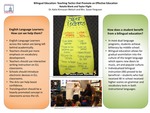
Exploring Issues Pertaining to Bilingual Education
Natalie Elizabeth Blank, Taylor Lou Flight
This presentation will discuss the tactics and overall benefits of bilingual and immersive education. In addition, cost and accessibility of these types of programs will be discussed.
-
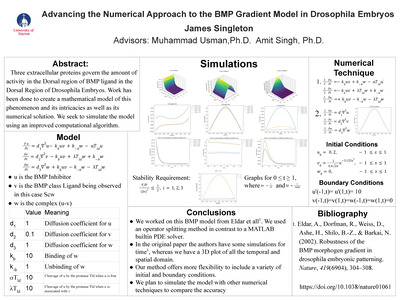
Exploring the impact of El Niño and La Niña on δD and δ18O patterns in global precipitation using ArcGIS software
Amber Johnson
This study aims to determine the impact of El Niño Southern Oscillation (ENSO) events on the environmental factors (including temperature, latitude, elevation and precipitation amount) controlling stable isotopes in precipitation utilizing regression models in the ArcGIS software. Stable isotope ratios (δD and δ18O) of precipitation have been documented to be directly dependent on changes in temperature and precipitation amount in temperate and tropical regions of the world, respectively (Dansgaard, 1964). During El Niño and La Niña Southern Oscillation events, many regions of the world experience changes to temperature and precipitation amount, with some regions becoming cooler and wetter, others becoming warmer and drier, and many others experiencing patterns in between (Trenberth, 1997). Using ArcGIS, global maps will be created showing the variation in δ18O, temperature, latitude, elevation and precipitation amount for six selected years corresponding to strong El Niño, strong La Niña, and normal climatic conditions. Regression models will be performed by climate zone of the world (temperate, tropical, polar) to determine the relationship between environmental factors and δ18O. For normal years, the relationship between temperature and δ18O in temperate regions should be approximately linear (R2~1) and a positive trend, while the relationship between precipitation amount and δ18O in tropical regions should show a negative trend. The δ18O ratios in regions of the world that become cooler and wetter during ENSO events could be more depleted than during normal years, while regions that become warmer and drier will have more enriched ratios than during normal years. This project has immense significance in its potential to predict future patterns of δ18O globally during ENSO events, impact groundwater mass balance models, influence resource allocation in regions heavily impacted by ENSO events, and produce more accurate isotope-based paleoclimatic reconstruction models.
-
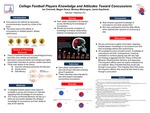
Exploring the knowledge and attitudes toward concussions among college football players
Ian James Chennell, Megan Irene Grace, Marissa Ann Melaragno, Jamie Grace Squillante
There have been increasing concerns on the issue of concussion in the world of football. The concussion effects are becoming more evident as the players get older and the more technology grows. Because of this, we wanted to look into the knowledge level and attitudes about concussions. Our study looks at multiple college football players and what their knowledge level and attitudes are about concussions. We will measure this by conducting interviews and administering surveys based on "Rosenbaum Concussion Knowledge and Attitudes Survey (RoCKAS)". We also took aspects of the Planned Behavior Theory and related them to our findings. The Planned Behavior Theory looks at an individual's drive and motivation to engage in a specific behavior. Specifically, we are interested in seeing if the knowledge level or attitudes about football among college football players would play a part in their athletic performance.