
-
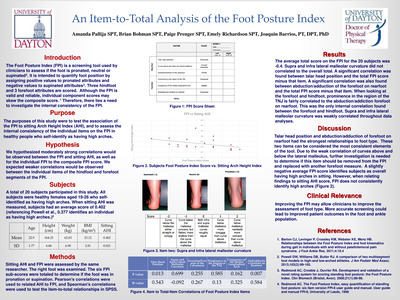
The Relationship Between Dorsiflexion Mobility and Achilles Stiffness
Philip Anloague, Emma Collett, Sarah Monnier, Megan Garro, Tyler Stiers, Brandon Chan, Kendra Kahle, Hailey McPherson, and Joaquin Barrios
Purpose: The biomechanical properties of muscles and tendons are important in rehabilitation and sport performance but are not routinely assessed. Recently, the MyotonPro device has been used in the assessment of a specific aspect of soft tissue stiffness, the resistance in deformation to an external force, at the Achilles tendon. Interestingly, it remains unclear if this stiffness is related to decreased ankle joint dorsiflexion mobility, and further if limb dominance affects this relationship. Indeed, dorsiflexion mobility has been linked to lower extremity injury risk such as anterior knee pain and anterior cruciate ligament injury. Therefore, the primary purpose of this study was to assess the strength of correlation between Achilles tendon stiffness as assessed with the MyotonPro and weight bearing dorsiflexion (WBDF) mobility. We secondarily aimed to assess if the relationship varied by limb dominance. We hypothesized that a moderate strength correlation would be observed bilaterally.
Subjects: 28 healthy participants (27 right limb dominant, 22 females, age = 24.1±2.1 years, height = 1.70±0.9 m, weight = 70.4±12.1 kg) completed all testing.
Methods/Materials: Dominance was determined by asking subjects which leg they typically use when kicking a ball. Using parameters from the literature, the MyotonPRO was set up to deliver a 15 ms duration impulse under constant precompression force of 0.18 N. The subject was prone on a plinth with the feet hanging freely over the edge. With the tendon relaxed, three measures were taken with the probe applied over the most central point of the tendon, level with the medial malleolus. Next, WBDF was measured with the subject facing a wall with the test leg forward and the contralateral limb in-line behind the subject with the heel raised. The subject flexed the knee and brought the center of the patella as close to the wall as they could without raising the heel. Tibial advancement was measured with a digital inclinometer over the anterior midpoint of the tibia. Pearson product moment correlations were calculated for both limbs.
Results: The correlation coefficients between Achilles tendon stiffness and WBDF were r=-0.54 and -0.35 (p< 0.05) for the non-dominant and dominant limbs, respectively.
Conclusion: A direct relationship between Achilles tendon stiffness and WBDF mobility was observed, such that higher stiffness values were associated with decreased motion.
Clinical Relevance: The use of instrumentation to characterize the stiffness of the Achilles tendon using the principle of resistance to deformation from an external force is a recent advancement in the area of soft tissue assessment. These data suggest that greater stiffness and decreased ankle mobility are related. Given the interest in dorsiflexion mobility in the areas of injury risk and sport performance, clinicians may benefit from direct assessment of Achilles stiffness.
-
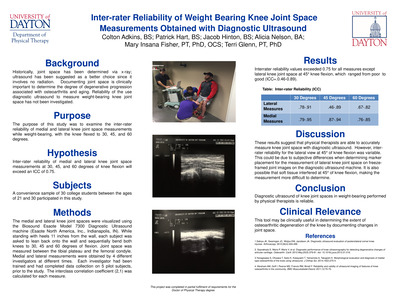
A Criterion Reference Validity Study for the Modified Thomas Test for Hip Extension Mobility Using Three-Dimensional Motion Capture
Joaquin Barrios, Anne Breeding, Hannah Dressman, Emily Howard, Justin Mitchell, Elizabeth Schueler, and Lauren Thomas
Purpose: Hip region extension mobility is commonly assessed in physical therapy practice, most commonly performed using the modified Thomas test (MTT). The validity of the MTT using 3D motion capture methods has been evaluated in only a study evaluating only healthy young males. Further, this study utilized a blood pressure cuff at 60 mm Hg under the lumbar lordosis to control the pelvis and trunk, further modifying the MTT and limiting clinical translation. Therefore, the purpose of this ongoing 3D motion capture study was to acquire criterion reference data for the traditional modified Thomas test without use of blood pressure cuff and in a more heterogeneous sample including both males and females as well as those with a history of knee surgeries. We hypothesized that moderate strength correlations would be observed between the tests.
Subjects: 17 participants with knee extension deficits per goniometric screening (11 females, 10 post-surgical, height = 1.75±0.11 m, weight = 80.5±12.5 kg, age = 22.8±1.9 years) completed all testing.
Methods/Materials: An established 3D anatomical marker set was used to establish the position and orientation of the pelvis, thigh, shanks and foot segments in static standing. In order to track the pelvis segment during the MTT, the associated tracking marker set was altered such that the iliac crests rather than a sacral marker were used. For the MTT, the traditional method by Kendall and McCreary was used. In brief, the participant stood perched on the edge of a plinth and then reclined with assistance. They grasped the contralateral limb in full flexion. The examiner then lowered the cantilevered test limb into maximal hip extension for the goniometric measure angle measure. The 3D data and the goniometer data were acquired during the same trials. Pearson product moment correlation coefficients were used for the criterion validation assessment.
Results: The correlation coefficient between the goniometric and reference 3D joint angle during the MTT was r = 0.42.
Conclusion: A moderate strength correlation was observed for the traditional MTT with criterion reference data from a 3D Euler angle data.
Clinical Relevance: The use of MTT in traditional clinical practice should be questioned. Further modifications and/or alternative assessments for hip joint extensibility should be explored.
-

Concurrent Validation of a Reverse Wall Lunge Test Position to Assess Hip Joint Extension Mobility
Joaquin Barrios, Anne Breeding, Hannah Dressman, Emily Howard, Justin Mitchell, Elizabeth Schueler, and Lauren Thomas
Purpose: Hip joint extension mobility is commonly assessed for restriction in clinical practice, most often with the modified Thomas test (MTT). However, the MTT is not without challenges, particularly in regards to achieving and standardizing the proximal pelvis and trunk positioning. The lone 3D validation study on the MTT used a blood pressure cuff under the lumbar lordosis in an attempt to achieve standard positioning, which is not always clinically pragmatic. Therefore, we propose assessing hip extensibility with a novel reverse wall lunge test (RWL) described below, essentially as an upright weight-bearing version of the MTT that also standardizes proximal pelvis, trunk and upper body positioning. The purpose of this ongoing 3D validation study is to concurrently correlate and compare criterion reference hip extension angle data for the RWL and the traditional MTT. We hypothesize that a correlation coefficient at least at the 0.80 level would be observed.
Subjects: 17 participants (11 females, 10 post-surgical for knee disorders, height = 1.75±0.11 m, weight = 80.5±12.5 kg, age = 22.8±1.9 years) provided informed consent and completed all testing.
Methods/Materials: 3D motion capture procedures were used to acquire criterion data for both the RWL and MTT test positions. For the MTT, in brief, the participant stood perched on the edge of a plinth and then reclined with assistance. They grasped the contralateral limb in full flexion. The examiner then lowered the cantilevered test limb into maximal hip extension. For the RWL, the patient was in a half kneel position in front of a wall. The lead limb’s distal foot and knee were placed in contact with the wall, as were both bent elbows with the upper arms in a horizontal orientation. These contact points were used to provide positional standardization of the pelvis and trunk in a highly reproducible as well as functional position. The trail leg was then maximally extended for the assessment of hip extension mobility. Pearson product moment correlation coefficients were generated and Bland-Altman plots were assessed.
Results: The Person product moment correlation coefficient between the hip extension angles during the MTT and the RWL test was r = 0.866. Bland-Altman plot assessment showed a mean bias of 4.2 (95% CI = 1.4 - 7.1) degrees greater hip extension with the RWL.
Conclusion: As hypothesized, a strong correlation was observed between the hip extension data from the tests. The mean bias from the Bland-Altman assessment suggested that the RWL achieved greater maximal hip extension than the MTT.
Clinical Relevance: The RWL test appears to be a valid alternative to the MTT. The RWL test also appears to elicit greater maximal hip extension than the MTT. Clinicians may consider using the novel RWL test position to assess hip extensibility.
-
Efficacy of Abdominal Curl up Task As Abdominal Exercise for Diastasis Recti Abdominis for Ehlers Danlos Syndrome
Julia Black, Ariana Bostwick, Sierra Darlington, Brooke Sizemore, and Betsy Donahoe-Fillmore
Purpose/Hypothesis: Ehlers Danlos Syndrome (EDS) is a connective tissue disorder characterized by the inappropriate functioning and synthesis of collagen, elastin, and fibrillin in the body, affecting many systems including the musculoskeletal system. In hypermobility-type EDS, individuals can present with instability at various locations in the body and may result in joint dislocations and pain. This can result in difficulty activating the abdominal muscles. The purpose of this study is to determine if a focused 3 to 6 month rehabilitation program improves inter-rectus distance (IRD), abdominal strength, and body image in women diagnosed with EDS.
Number of Subjects: Women (n=24) 33-62 years (mean 45 years) were randomized into an intervention group (EX) (n=11) or a control group (CON) (n=13).
Materials and Methods: Outcome testing occurred at baseline, 12 and 24 weeks. The IRD was measured at rest and with curl-up at the level of umbilicus with digital calipers. Abdominal strength was assessed with manual muscle testing (MMT) as described by Kendall. EX was instructed in exercises performed 3x/week, 5 repetitions each: strengthening (Preactivation transversus abdominis (TrA) with curl-up exercise with verbal and palpation cues to monitor the tension in the linea alba), breathing education including lower rib mechanics and engaging the TrA, and postural education. CON was not provided with exercise. An intention to treat analysis using last measure carried forward was conducted. Groups were compared at baseline for age, BMI, time since last birth, and activity level using independent samples t-tests. IRD was analyzed with a repeated measures ANOVA and strength via Friedman’s ANOVA. Significance was 0.05, a priori.
Results: Participants were similar at baseline on age, BMI, time since last birth, and activity level as measured by the IPAQ questionnaire. The umbilical IRD at rest and with curl-up improved from baseline (33.64 (6.9) and 29.82 (5.76) respectively) at 12 (25.36 (4.8), p=.001; 21 (5.71), p=< .001) and 24 weeks (15.55 (5.09) and 11.09 (4.01), p< .001) only in EX. IRD at rest and with curl-up improved in EX compared to CON at both 12 (p=.003 and < .001) and 24 weeks (p=< .001). Strength improved in EX from baseline (2.64 (.381)) to 12 (3.36 (.51), p=.021) and 24 weeks (3.91 (.7), p=.006), and compared to CON (3.33 (.65)) at 24 weeks (p=.038).
Conclusions: There were significantly improved IRD at rest and with curl-up in the intervention group at 12 and 24 weeks in comparison to control. Meaningful strength changes require a longer intervention of 24 weeks rather than 12.
Clinical Relevance: This program challenges the conventional treatment of DRA by incorporating the curl-up exercise and emphasizing the importance of utilizing linea alba tension and transverse abdominis activation. The comprehensive approach aims to optimize outcomes for individuals with DRA.
-
The Effect of Recumbent Stepping on Leg Muscle Activity in Individuals With Multiple Sclerosis
Caroline Buchheit, Jack Castetter, Jessie Lakamp, Morgan Vollmer, and Kurt Jackson
Purpose/Hypothesis: Recumbent steppers are commonly used for improving cardiovascular and muscular endurance in neurological populations. Prior research has shown that using specific verbal cues and a foot strap can significantly alter lower extremity muscle activity and recruitment in healthy individuals during recumbent stepping. The purpose of this case series was to measure lower extremity muscle activity during recumbent stepping under a variety of stepping conditions in persons with multiple sclerosis.
Number of Subjects: 3 adults (2 F, 1 M; age 40 -54) with multiple sclerosis (MS) with varying levels of lower extremity motor function and disability.
Materials and Methods: During a single session, electromyography (EMG) was used to measure muscle activity of the tibialis anterior (TA), medial gastrocnemius (MG), rectus femoris (RF), biceps femoris muscles (BF), and vastus lateralis (VL) for 30 seconds at a constant resistance and step rate during six different stepping conditions: 1) Stepping with no foot strap (StepNFS), 2) Stepping with a foot strap (StepFS), 3) Verbal cues to pull with toes using a foot strap (PullTFS), 4) Verbal cues to push with heel using a foot strap (PushHFS), 5) Verbal cues to push with toes using a foot strap (PushTFS), 6) Verbal cues to pull with heels using a foot strap (PullHFS).
Results: Subject 1 demonstrated the greatest combined muscle activity during the PullTFS condition and the lowest during the PushHFS. Subject 2 demonstrated the greatest combined muscle activity during the PullHFS condition and the lowest during the PedalNFS. Subject 3 demonstrated the greatest combined muscle activity during the PullHFS condition and the lowest during the PedalNFS. The activity of individual muscles was highly variable between subjects and stepping conditions.
Conclusions: Individuals with MS with different levels of disability demonstrate highly variable muscle recruitment under different recumbent stepping conditions. However, use of a foot strap and verbal cues to emphasize pulling while stepping may increase overall muscle activity as well as recruitment of specific muscles such as the anterior tibialis and bicep femoris that are less active when stepping without verbal cues or a foot strap.
Clinical Relevance: When prescribing recumbent stepping exercise, clinicians should be aware that using a foot strap and specific verbal cues, can substantially alter lower extremity muscle recruitment in persons with MS. However, responses can be highly variable and may require the use of surface EMG to determine specific muscle responses between individuals.
-
An After-School Adaptive Bicycle Program for Children With Disabilities: A Pilot Feasibility Study
Makenzie Dietz, Nicole Fuchs, Alli Hill, Kloe Muntz, Megan Petric, Sophia Wahib, Betsy Donahoe-Fillmore, and Trisha Renner
Purpose/Hypothesis: Cycling has broad health benefits and is therapeutic across many populations. Physical therapists commonly fit children with gross motor delays for adaptive bicycles and assist with training during therapeutic intervention. Limited evidence exists regarding formalized adaptive bicycling programs apart from traditional therapy. The primary aim of this study was to investigate if an after-school adaptive cycling program is feasible in children with motor delay. The secondary aim was to determine if it can improve balance, endurance and functional strength in children with disabilities.
Number of Subjects: Ten children with motor delays, ages 6 to 11 (mean 7.7) years participated. Diagnoses included Dandy-Walker syndrome, TARP syndrome, developmental delay, growth failure, autism, Down syndrome, attention-deficit/hyperactivity disorder, in-toeing gait, and scoliosis.
Materials and Methods: Children participated in an after-school adaptive bicycling program for 30 minutes, once a week, for ten sessions. Pre- and Post- outcome measures included the Pediatric Balance Scale (PBS), 6 Minute Walk Test (6MWT), and Five Times Sit-to-Stand (5STS). Each session, participants biked continuously on AmTryke adaptive tricycles through a variety (spiral, figure 8, speed challenge, circle, and zigzag) of courses for 30 minutes. Descriptive statistics were calculated. Within group change was analyzed using the Wilcoxon Signed Rank test. An a priori power analysis was utilized to establish significance at ɑ ≤ 0.05.
Results: All participants completed the study with an overall attendance of above 90 percent. The Wilcoxon signed-rank test showed that a once weekly 10-week adaptive cycling program resulted in statistically improved PBS (z=-2.524, p=0.012), 6MWT (z=-2.666, p=0.008), and 5STS (z=-2.521, p=0.012) measures. For the PBS, baseline median changed from 33 (IQR 13.50-41.50) to 46 (IQR 35.00-53.00); for the 6MWT, the baseline median changed from 321.38 (IQR 196.21-375.89) to 388.52 (IQR 338.79-416.05); and for the 5STS the baseline median changed from 32.59 (IQR 16.95-43.86) to 11.99 (IQR 8.89-16.86).
Conclusions: A 30-minute weekly after-school adaptive bicycling program is feasible and resulted in improved balance, walking distance, and functional strength among children with motor delay. The small sample size of this study and lack of a control group limit generalization of these findings. Some participants had difficulty completing the 5STS measure without assistance and a different functional strength assessment is needed in future studies to accurately assess lower extremity functional strength. Further research is needed to determine the efficacy of an after-school bicycling program for children with specific diagnoses.
Clinical Relevance: A short 30 minute after-school adaptive bicycling program has potential to improve balance, endurance and functional strength in children with motor delays.
-
Effects of an eHealth Program on Physical Performance in Women With Cancer-Related Fatigue and Breast Cancer
Sydney George, Kelsey Haas, Delaney Hardery, Catherine Nasman, and Mary I. Fisher
Purpose/Hypothesis: Cancer-related fatigue (CRF) is common in women treated for breast cancer. Exercise can reduce CRF, yet the impact of an eHealth exercise program on physical performance (PP) is rarely described. While the primary aim was to reduce CRF, this ongoing study reports on the effect of an 8-week multidisciplinary physical (PT) and occupational therapy (OT) eHealth program on measures of PP.
Materials and Methods: Participants ages 18-69 diagnosed with breast cancer in the last 5 years, who rated fatigue ≥4/10 on 0-10 scale and had completed primary cancer treatment, were randomized to intervention (EX) or control (CON) groups. Using individualized websites and web conferencing, EX met weekly with PT and OT for aerobic/resistance exercise instruction and progression, activity performance problem-solving, and completed exercise 3x/week. CON continued usual activities. Measures taken at baseline, 4 and 8 weeks included patient demographics, PP measured by step counts, minutes of moderate-vigorous activity (MVPA) (55-75% of heart rate max), 6-minute walk test (6MWT) and 30 second sit to stand (30STS). Valid activity tracker data were based on minimum wear time of 600 minutes 3x/week. An intention-to-treat analysis was performed; descriptives and independent samples t-tests were used to analyze demographics; a repeated measures ANOVA was used to analyze PP. Significance was alpha 0.05 a priori.
Results: Data from 22 women were available for analysis (Excluded: drop out (3); invalid tracker data (6)). Groups were not different at baseline for age (EX 47 (10) years, CON 51 (12), p =.477) and BMI (26.5(5.2) and 34.4(10.6, p=.054)). Most were white (86%), married (86%), college- educated (100%), and working >30 hours/week (71%). Most were stage 1-2 BC (90%), had mastectomy (52%), chemo (71%) and/or radiation (81%). PP measures were not significantly different within or between groups except for 6MWT from baseline (463 m (92.45)) to 8 weeks (539.6 m (96.81)) (p=.011, Cohen’s d=-.819).
Conclusions: A multidisciplinary PT-OT eHealth intervention 3x weekly for 8 weeks resulted in improved 6MWT distance compared to a control group. Given that CRF is a multidimensional construct, it is possible that outcomes used may not accurately capture PP except for the 6MWT, which can be considered an endurance test. The 30STS may have a ceiling effect. Step counts and time spent in MVPA may not capture PP in the same way. Wearing fitness trackers is known to improve steps counts via the Hawthorne effect and may not be the best way to capture PP. Limitations include sample size as it was powered for the primary fatigue measure, and incomplete data collection.
Clinical Relevance: Multidisciplinary PT-OT eHealth rehabilitation can result in improved walk distances which has been correlated with improved health outcomes in a variety of chronic disease populations. The 6MWT may be a better PP functional measure because it requires endurance similar to daily activity in comparison to step counts and time in MVPA.
-
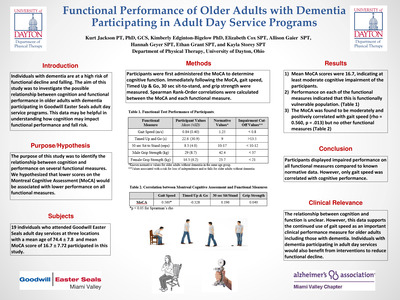
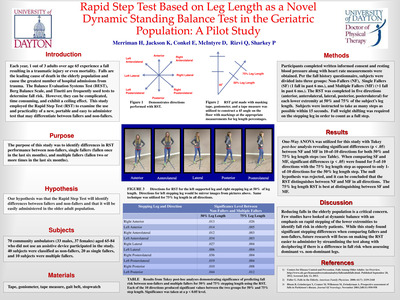
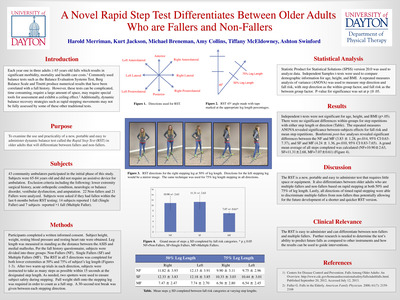
Determining the Concurrent and Predictive Validity of the Repetitive Step Test in Individuals With Parkinson’s Disease
Harold Merriman, Kurt Jackson, Kathleen Mulligan, and Arrah Sandy
Purpose/Hypothesis: The Repetitive Step Test (RST) assesses rapid stepping capability in anterior lateral (AL) and posterior lateral (PL) diagonal directions. This study’s goal was to determine the predictive validity of the RST to identify fallers with Parkinson’s Disease (PD). A secondary objective was to determine concurrent validity of the RST to other established tests. It was hypothesized that those who completed fewer steps with the RST would be more likely to fall and that the RST would predict falls at least as well as the other balance tests.
Materials and Methods: 19 subjects (10 F, 9 M; mean age 70.3 years) with mild to moderate PD were tested. Foot dominance was recorded (dominant [Dom] or nondominant [NonD]). The number of steps made by a single leg at 50% and 75% of leg length within 15 seconds were recorded. Data was collected in a single session: RST at 50% and 75%, Timed Up and Go (TUG), Five Time Sit to Stand Test (5TSTS), and 10 Meter Walk Test (10MWT). Falls were then recorded for 6 and 12 months.
Results: ROC curve analysis for the RST, TUG, 5TSTS and 10MWT was performed to determine the area under the curve (AUC) and cut-off scores for sensitivity (Sn) and specificity (Sp) in order to predict future falls. AUCs (0.607-0.762) for the RST were non-significant as were the TUG and 10MWT (p>0.05). AUC for the 5TSTS was significant (0.762 p=0.021) with a cut-off value of 8.0 sec (Sn=0.857, Sp=0.667).
Spearman’s rho correlation was used to compare the tests. RST 50% and RST 75% were analyzed separately in order to assess if one version showed stronger correlations. For the RST 75%, only Dom PL was strongly correlated to 5TSTS (r= -0.71, p=< 0.01). However, Dom AL, NonD AL, and NonD PL of RST 75% were found to be moderately correlated to 5TSTS. All forms of the RST 50% were strongly correlated to 5TSTS (r> -0.72, p=0.01) and all forms of the 50% RST were moderately correlated to the TUG (r> -0.51, p=0.02).
Conclusion: The AUCs for the RST were found to be non-significant, demonstrating poor ability of the RST to predict future falls in patients with PD. However, the 5TSTS was good for fall prediction. All RST 50% directions were strongly correlated with at least one pre-validated balance test, with Dom PL and NonD PL strongly correlating with two established balance tests. This generally supports our hypothesis that the RST 50% would show good concurrent validity with the selected pre-validated tests. The 6 month follow up data was found to be more significant than the 12 month. This could be due to PD being a neurodegenerative disorder and the initial screen not giving good insight on how the patient may perform 12 months later.
Clinical Relevance: Balance and gait measures are important for clinicians treating individuals with PD because they quantify the functional deficits seen in this population. Some tests require a considerable amount of clinic space and/or have a ceiling effect. Our findings support the use of the 5TSTS for fall prediction in persons with PD, but not the RST. However, the RST 75% could be a useful functional tool for identifying specific stepping impairments. The small number of subjects in this study may have impacted our findings.
-
Soft Tissue Mobilization Is More Effective Than Self-Stretching in Reducing Common Wrist Extensor Tendon Stiffness in Recreational Tennis Players
Olivia Potts, Noah Knackstedt, Cayton Ruby, Harold Merriman, and Joseph Day
Purpose/Hypothesis: Increased muscle and tendon stiffness plays a role in the development of musculoskeletal pathologies. A number of interventions have been proposed to temporarily reduce muscle/tendon stiffness including soft tissue mobilization (STM) techniques and stretching. The purpose of this study was to investigate the immediate and short-term effects of STM versus self-stretching on common extensor tendon (CET) stiffness in a group of recreational tennis players.
Subjects: Healthy recreational tennis players
Materials/Methods: Stiffness, measured with the shear wave modulus in kilopascals (kPa), was obtained at rest on the dominant CET using 2D ultrasound imaging shear wave elastography (SWE) (GE Logiq S8, 9L, linear transducer). A second stiffness measure was taken 5 minutes after the first measure to determine intra-rater reliability. Participants were then randomly assigned to a treatment group (STM or self-stretching). Stiffness measures were taken immediately after treatment for both groups and following a 15-minute rest. For each data collection, 4 measures were taken and averaged for a single data point. Within examiner intraclass correlation coefficients (ICC (3, 1)) with 95% confidence intervals were calculated. A repeated measures ANOVA using one between variable group (STM or stretching) and one within variable group (initial, post-treatment, and 15 minutes post-treatment)) was used in the main analysis. Significance was set at p ≤ 0.05 with a Bonferroni correction.
Results: Thirty-two participants (12 male/20 female, mean age =54.4± 13.8yr) were randomized into the STM (n=16) or stretching group (n=16). There were no group differences in body mass index, age, frequency of play, or shoulder activity levels (p>.10). The within day intra-rater reliability was excellent (ICC = .98 (95%CI = .95-.99)), minimal detectable change 10.9 (95%CI 21.4) kPa. There was no main effect for group or time, but there was a significant interaction between time and group (p = .015). For the STM group, there were significant decreases in tendon stiffness between rest and post treatment and between rest and 15 minutes post treatment (p≤.007, mean change ≥ -47.59kPA). For the STM group, no significant differences in stiffness existed between the post treatment and 15 minutes post treatment. The change in CET stiffness between rest and post treatment as well as between rest and 15 minutes post-treatment was significantly greater for the STM group compared to the self-stretching group (p≤.013), mean change ≥ -39.64kPA.
Conclusion: STM of the CET significantly decreased the resting tendon stiffness immediately after treatment and these changes were significantly different from the group that received stretching. The resting tendon stiffness remained diminished 15 minutes after the soft tissue technique was applied.
Clinical Relevance: Clinicians may consider STM techniques over self-stretching for the purpose of maintaining soft tissue stiffness balance in healthy recreational tennis players.
-
The Use and Accuracy of Millimeter Wave Radar and Machine Learning for Gait Classification and Monitoring
Mubarak Alanazi, Abdullah Alhazmi, Vamsy Chodavarapu, Kurt Jackson, Meghan Brown, Kara Gnau, and Shannon Thiel
Purpose/hypothesis: The ability to monitor human activity remotely may be useful in providing telerehabilitation and measuring real-world rehabilitation outcomes. Current methods of activity monitoring have significant limitations (cost, privacy, ease of use) that can limit their benefit and widespread use. Recent advances in machine learning (ML) and millimeter wave radar (MWR) have allowed for the development of a cost effective and simple way to monitor human movement continuously and remotely while maintaining reasonable privacy. The purpose of this study was to test the ability of ML and MWR to accurately classify and monitor different types of human activity including different gait patterns to monitor for changes over time.
Number of Subjects: 74 healthy adults (mean age = 24 ± 7.36, range = 21-53)
Methods and Materials: A skeleton pose estimation (Microsoft Kinect) and micro-Doppler signatures were combined to train the program to recognize and accurately classify five different gait patterns. The five gait patterns included a normal gait, a limping (antalgic) gait, a stooped posture, with the use of a walker, and with the use of a cane. Subjects spent one minute in each of the following scenarios: walking perpendicularly, parallel and freely in front of the sensor. This design allowed data to be collected from multiple angles to improve the model’s accuracy in all planes.
Results: A real-time simulation was performed to observe the point cloud behavior for different activities which then validated the system against the ground-truth values. Therefore, this allowed the system to calculate the training and prediction accuracy levels. Accuracy of the system was determined for each gait pattern using ROC/AUC analysis and were as follows: Normal = 97.2%, Stooped = 95.7%, Limp = 97.4%, Walker = 98.8%, and Cane = 98.4%. The first three activities (normal, limping, and stopped gait) demonstrated slightly lower prediction accuracy levels due to the gait patterns overlapping.
Conclusions: Prediction accuracy values ranging from 95.7 - 98.8% demonstrated good to excellent ability of the millimeter wave radar and machine learning model to classify different gait patterns in an open environment. Additionally, it has the capability to track the gait patterns observed and the changes that occur in a space simultaneously.
Clinical Relevance: An inexpensive radar system could be used in both home and institutional and community settings to accurately monitor activity levels and detect changes in gait over time. The ability to detect changes in gait patterns over time could be helpful in recognizing declines in function that require intervention or for monitoring outcomes of rehabilitation.
-
An Artificial Intelligent Millimeter Wave Radar System for Human Activity Recognition and Monitoring
Abdullah Alhazmi, Vamsy Chodavarapu, Kurt Jackson, Cameron Djukic, Jennifer Jaszek, and Anna Brown
Purpose/hypothesis: The ability to monitor human activity remotely may be useful in providing telerehabilitation and measuring real-world rehabilitation outcomes. Current methods of activity monitoring have significant limitations (cost, privacy, ease of use) that can limit their benefit and widespread use. Recent advances in machine learning (ML) and millimeter wave radar (MWR) have allowed for the development of a cost effective and simple way to monitor human movement continuously and remotely while maintaining reasonable privacy. The purpose of this study was to test the ability of ML and MWR to accurately classify and monitor different types of human activity including falls.
Number of Subjects: 89 healthy adults (mean age = 24 ± 7.4, range = 21-53)
Materials and Methods: A Texas Instruments IWR6843ISK-ODS MMW radar and NVIDIA Jetson nano-board (GPU) was used to collect and process radar data. Subjects spent one minute in each of the following positions, sitting, standing, lying, walking and falling within a 5 x 5-meter area. A machine learning model was applied to the training data. Receiver Operating Characteristic (ROC) analysis was then used to determine accuracy of the activity classification model.
Results: Based on the ROC analysis, the area under the curve (AUC) for each activity were as follows. Standing = 0.83, Walking = 0.96, Sitting = 0.93, Lying = 0.90, Falling = 0.88.
Conclusions: AUC values ranging from 0.83 – 0.96 demonstrated good to excellent ability of the millimeter wave radar and machine learning model to classify different functional activities in a home environment. Additionally, it has the capability to track the activities of multiple individuals in a space simultaneously and create a heat map to show the location where different activities occur most frequently.
Clinical Relevance: An inexpensive radar system could be used in both home and institutional settings to accurately monitor activity levels and detect falls over extended periods of time and provide useful information to healthcare providers.
-
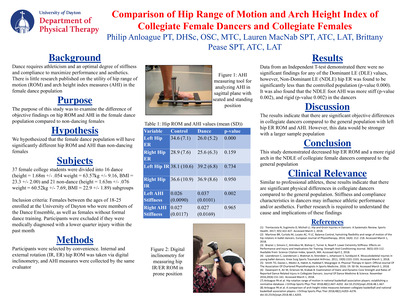
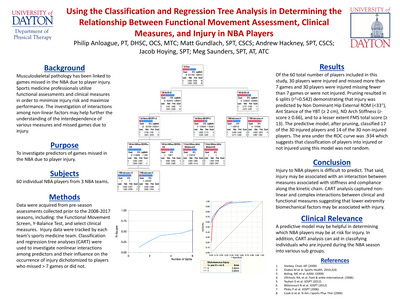
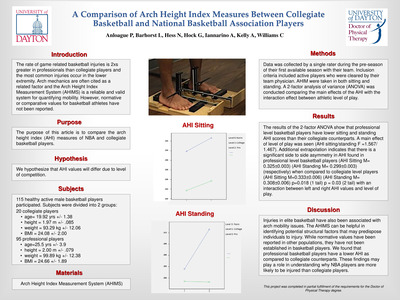
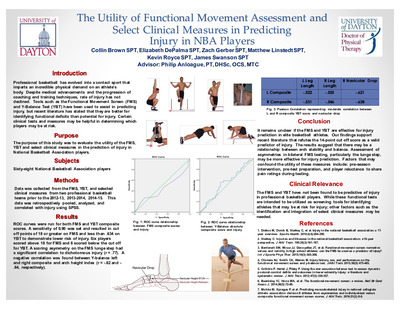
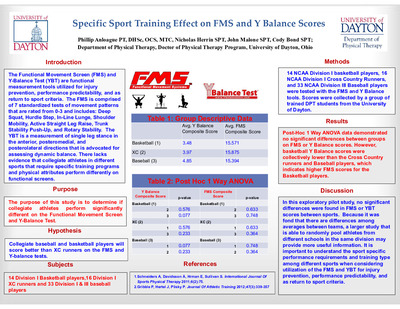
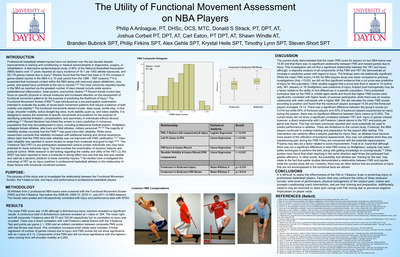
A Comparison of Clinical Measures Between Front and Back Court National Basketball Association Players
Philip A. Anloague, Brooklyn Keaton, Noah Monaghan, Brianna Pittenger, Angelica Scanland, Claire Slamka, Destiny Sunberg, and Brett Williams
Purpose/Hypothesis: The purpose of this study was to compare select clinical measures between front and back court players to establish normative values in these populations. We hypothesized that there would be differences between front and back court players for select clinical measures.
-
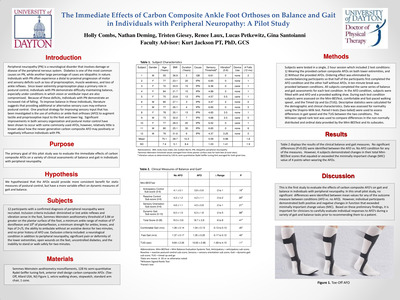
Effectiveness of a Talocrural Joint Mobilization on Restricted Dorsiflexion: A Time Series Intervention Analysis
Carly Archambeau, Ceili Kacmarcik, and Camryn Yacks
Purpose/Hypothesis: Restricted ankle dorsiflexion (DF) mobility is a common musculoskeletal impairment. For intervention, ankle joint mobilizations are often utilized to address restricted DF. Interestingly, no studies have investigated the short-term effect duration of a joint mobilization intervention on restricted DF. Therefore, the purpose of this study was to observe the initial effectiveness and effect duration of a DF mobilization treatment. DF measures included both a static inclinometer-based weight-bearing lunge test (WBLT) as well as dynamic 3D motion capture-based peak ankle DF during a forward step down (FSD) task. We hypothesized that both measures would increase post-mobilization and fade to baseline within 1 hour.
Number of Subjects: 76 individuals responded to recruitment efforts seeking individuals with DF restriction, of which 26 (15 female, 22.3 ± 2.2 years old, body mass index 25.2 ± 2.9 kg/m2) qualified with a WBLT of ≤ 35° on at least one limb, provided informed consent and completed all testing.
Materials and Methods: Reflective markers were placed on the pelvis and qualifying test leg. If both limbs qualified, the limb with the greatest restriction was tested. A baseline WBLT measure and 3D motion capture of 5 consecutive FSD repetitions on a 6-inch box were obtained. Participants then viewed an instructional video of a talocrural joint self-mobilization using an elastic band. Participants were monitored during the mobilization. WBLT and FSD were collected again immediately post-mobilization and at 5-minute intervals for 60 minutes or until the WBLT returned to baseline for 2 consecutive measures. Repeated measures general linear models with Bonferroni adjustments were performed with the last observation carried forward for both DF measures.
Results: WBLT DF showed a mean increase of 6.5 degrees (p<0.001) post-mobilization. The effect faded over time and no longer differed from baseline 25 minutes post-mobilization (p=0.964). Dynamic peak ankle DF showed no changes post-mobilization at any time point (p≥0.546).
Conclusions: Partially consistent with our hypotheses, the self-applied joint mobilization increased static DF per the WBLT for a 20-25 minute period with fading effectiveness. The data suggest that restricted DF can be improved short-term with mobilization. However, increased dynamic ankle DF was not observed post-mobilization during the FSD functional task. Further research is warranted to investigate how increased DF mobility after mobilization can translate to improved dynamic joint function in those with restriction.
Clinical Relevance: DF mobilization was effective in increasing mobility for 20-25 minutes, on average. Effective utilization of this short time period of enhanced mobility is important.
However, improved mobility alone does not appear to change movement patterns. Clinicians should be aware of both fading effectiveness and the potential need for movement pattern retraining after a single DF mobilization.
-
Altering the Lower Limb Kinetic Chain: Reliability and Minimum Detectable Change of Total Support Moment
J Barrios, R Cloud, M Gorski, A Grieshop, and A Kinney
Purpose: 3D joint kinetics are routinely studied in various lower limb musculoskeletal conditions. Often, a condition affecting a joint is associated with altered kinetics at that same joint, such as knee osteoarthritis being associated with reduced knee flexion moments. However, these same-joint alterations may also contribute to altered comprehensive movement patterns of the entire limb in a synergistic manner. A lower limb biomechanical metric that represents this multi-joint kinetic chain synergy is the total support moment (TSM). Indeed, TSM has been found to be altered in knee osteoarthritis, anterior cruciate ligament reconstruction, and partial meniscectomy. Despite this, psychometric studies are lacking and the test-retest reliability of TSM metrics are unknown. Therefore, the purpose of this study was to assess the test-retest reliability of TSM metrics during walking and running. We hypothesized that at least moderate strength reliability estimates would be observed.
Subjects: 12 healthy participants (5 females, body mass index = 23.1±3.42kg/m2, age = 23.9±1.4 years) completed all testing.
Methods/Materials: Established 3D motion capture procedures and inverse dynamics calculations were conducted for stance-phase overground walking at 1.5 m/s and running at 3.7 m/s. Five successful trials per condition were captured for the right lower extremity. The anti-gravity internal extensor moments for the ankle, knee, and hip joint were derived and time-normalized to 101 point waveforms. TSM was determined by summing the three normalized waveforms. Peak TSM was expressed in Nm/(kg*m) and TSM impulse was expressed in Nm/(kg*m)%stance. Participants returned after one week to repeat the testing. Intraclass correlation coefficients were calculated for a two-way mixed effects model with absolute agreement. Minimum detectable change (MDC) values were calculated as percentages.
Results: For walking peak TSM and TSM impulse respectively, test-retest reliability coefficients were 0.944 and 0.862. MDC percent thresholds were 20% and 24%. Running coefficients were 0.941 and .937, respectively, with MDC percent thresholds of 11% and 13%.
Conclusion: As hypothesized, TSM measurements demonstrated good-to-excellent test-retest reliability during overground walking and running. MDC percent thresholds were smaller for running than walking.
Clinical Relevance: The use of TSM to characterize the kinetics of lower extremity movement strategies is increasing in the movement sciences. TSM metrics during running may be more sensitive to changes in movement strategy than for walking. Efforts to clinically translate this metric are warranted.
-
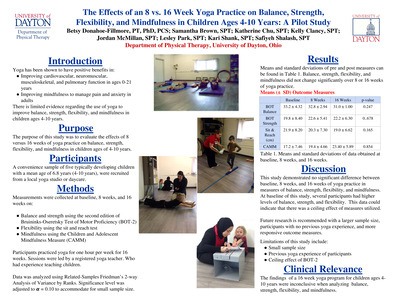
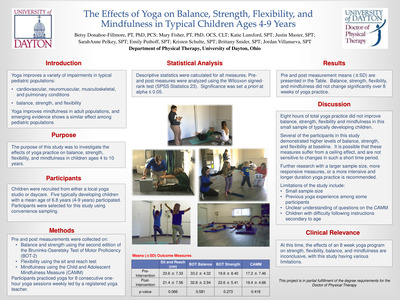
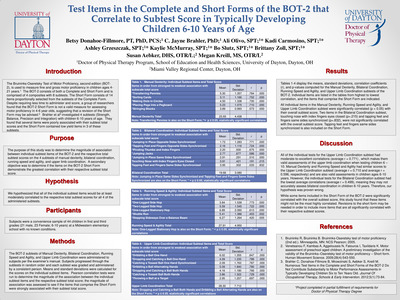
Bal-A-Vis-X intervention to improve upper limb coordination in children with disability: A Pilot Study
Marta Boot, Zoe Clark, Kyla Hill, McKenzie Stefanoff, Betsy Donahoe Fillmore, Trisha Renner, Bo Slutz, and Mary I. Fisher
Purpose/Hypothesis: Balance/Auditory/Vision exercises (Bal-A-Vis-X) consists of a series of exercises using sand-filled bags and racquet balls. Most of the exercises are completed while standing on a rocker board and heavily rooted in rhythm. The rhythmic patterns are utilized to facilitate focused concentration, crossing midline, motor planning, right/left awareness, eye-hand coordination, balance, bilateral coordination, body and spatial awareness. Only a few published studies have explored Bal-A-Vis-X as an intervention in therapy. The purpose of this study was to investigate the use of Bal-A-Vis-X to improve upper limb coordination in children with motor delays.
Number of Subjects: Fifteen children with motor delays enrolled, ages 4 to 16 years (mean 9.73 years), have completed to date. Diagnoses included Down syndrome, autism, developmental delay, cerebral palsy, idiopathic toe walking, attention-deficit/hyperactivity disorder, and congenital myopathy.
Methods and Materials: Participants were assigned to a control or intervention group. All participants received physical therapy for 60 minutes once a week for 12 sessions. Each session for the intervention group (n=9) included Bal-A-Vis-X training for 20 minutes. Children in the control group (n=6) received intervention for the same length of time without Bal-A-Vis X. The upper limb coordination subtest of the Bruininks-Oseretsky Test of Motor Proficiency, 2nd edition (BOT-2) was administered prior to and at the conclusion of 12 sessions. Descriptive statistics were calculated. Change within the Bal-A-Vis X intervention and control groups was analyzed with the Wilcoxon Signed Rank test. Change between the groups was analyzed with the Mann Whitney U test. An a priori power analysis was utilized to establish significance at ɑ ≤ 0.05.
Results: Data analysis found a significant difference (p=.007) in pre- and post- BOT-2 upper limb coordination point scores within the intervention group. No significant difference (p=0.595) was found in pre- and post- BOT-2 upper limb coordination point scores within the control group. A significant change score (p=0.026) was found for the BOT-2 point scores between the control and intervention groups pre- and post-physical therapy intervention.
Conclusions: The participants in this study showed improvements in upper limb coordination after 12 sessions of physical therapy intervention that included a consistent dose of Bal-A-Vis-X training. The small sample size limits generalizing this finding to a specific patient population. Additional studies are needed within specific patient populations and to determine Bal-A-Vis-X dosing parameters.
Clinical Relevance: Bal-A-Vis-X training has potential as an intervention for therapists to improve upper extremity coordination in children.
-
Efficacy of Curl up Task As Abdominal Exercise Program for Diastasis Recti Abdominis
Wendy Chorny, Betsy K. Donahoe-Fillmore, Rio Harrelson, Laney Hulbert, Jessica Westerfield, and Mary I. Fisher
Purpose/Hypothesis: The separation between the rectus abdominal muscles caused by a widening and thinning linea alba, called diastasis recti abdominis (DRA), contributes to impairments in strength of the abdominal and trunk muscles. DRA is most frequently observed during pregnancy and may recede after childbirth but can be present at 12 months or later after giving birth. The purpose of this study was to determine if a focused 12 or 24 week exercise program improves inter-rectus distance and abdominal strength in women who have given birth.
Number of Subjects: Forty-eight women 27-49 years (mean 37 years) were randomized into a 12 (n=16) or 24 week intervention group (n=17) or a control group (n=15).
Materials and Methods: Outcome testing occurred at baseline, 12 and 24 weeks. The inter-rectus distance (IRD) was measured at rest at the level of umbilicus with digital calipers. Abdominal strength was assessed with manual muscle testing (MMT) as described by Kendall. The intervention groups were instructed in exercises to be performed 3x/week, 5 repetitions each: strengthening (Preactivation transversus abdominis (TrA) with curl-up exercise with verbal and palpation cues to monitor the tension in the linea alba), breathing education including lower rib mechanics and engaging the TrA, and postural education. The control group was not provided with exercise. An intention to treat analysis using the last measure carried forward was conducted. Within group change in IRD was analyzed with paired sample t-tests. Change in IRD and MMT was compared using ANCOVA, with time since delivery as a covariate. Significance was 0.05, a priori.
Results: Subjects were similar at baseline on age, BMI, and number of pregnancies, however time since delivery was significantly longer (69 months, compared to 43 months in 24 week group, 32 months in 12 week group; p=0.016) in the control group. All groups saw a decrease of IRD from baseline to 12 and 24 weeks (p
Conclusions: While there were decreases in the IRD among all groups, these were significantly better at 12 and 24 weeks in both exercise groups in comparison to control with the exercise groups showing clinically relevant change in comparison to control. Since both the 12 and 24 week exercise groups saw statistically and clinically significant change at 12 weeks, this may be long enough to encourage ongoing resolution of DRA. Meaningful strength changes, however, require a longer intervention of 24 weeks rather than 12.
Clinical Relevance: This program challenges the conventional treatment of DRA by incorporating the curl-up exercise and emphasizing the importance of utilizing linea alba tension and transverse abdominis activation. The comprehensive approach aims to optimize outcomes for individuals with DRA.
-
eHealth Cancer-Related Fatigue Intervention Single Arm Study
Anne Fleischer, Samantha Gelhaus, Emily Flohre, Caroline Frazee, Mary I. Fisher, and Carrie Pickering
Purpose/Hypothesis: Cancer related fatigue (CRF), a sense of physical, emotional and cognitive tiredness not relieved by rest, negatively affects function. Prevalence is reported to be 59-100% throughout the care continuum. Exercise and psychosocial interventions are supported as effective treatment options, yet barriers to personalized care include time and distance to travel for care. The purpose of this pilot study was to evaluate the effectiveness of personalized exercise prescribed by physical therapy (PT), and occupational goal setting and tasks prescribed by occupational therapy (OT) on physical function.
Number of Subjects: 16 adults with cancer and fatigue ≥4/10.
Materials and Methods: Over an 8-week intervention period, participants met weekly with PT and OT for individualized exercise instruction and progression, and personalized goal setting and progression via video conferencing. Physical function was measured by the 30-second sit to stand test (30STS), 6 Minute Walk test (6MWT) and the Canadian Occupational Performance Measure (COPM) at baseline, 4 and 8 weeks. Heart rate (HR) during exercise and rate of perceived exertion were collected weekly to monitor response to exercise. Participants were prescribed exercise by physical therapy using baseline 30STS and 6MWT compared to age-appropriate norms. Exercise videos were posted to personalized participant websites and were to be completed 3x/weekly at 40-60% of HRmax; exercise consisted of warm-up, strengthening, aerobic, and cool down portions. With OT, participants set goals based upon personalized important activities identified on the COPM. Performance of and satisfaction with goals were evaluated on a 1-10 scale. During weekly meetings, exercise modifications were given as needed in order to ensure completion, and problem-solving strategies were used to meet personalized important activity goals. Intention-to-treat analysis was performed and paired samples t-test was used to analyze pre-post outcomes with alpha 0.05 a priori.
Results: Participants who completed at least 4 weeks of the program are included in each analysis with the last measure carried forward (n=14). The mean age of all participants was 46.4 years (29-67); all but one participant were female (93.8%), 9 (56%) had breast cancer, followed by 1 each with leukemia, pancreatic, and endometrial cancer, and 4 with a different cancer. At 8 weeks, the 6MWT distance was not statistically improved, however the 30STS (p=.010), COPM satisfaction (p
Conclusions: Use of a personalized PT and OT intervention aimed at improving function in those with CRF resulted in improvement in physical function measured by the 30STS and COPM. Use of eHealth appears to be an effective method to deliver exercise and personalized problem-solving intervention in this population. Limitations include a small sample size in this ongoing study as well as variability of cancer diagnoses, making broad generalization difficult.
Clinical Relevance: eHealth interventions of personalized exercise and goal setting can be effective to improve function among individuals with CRF.
-
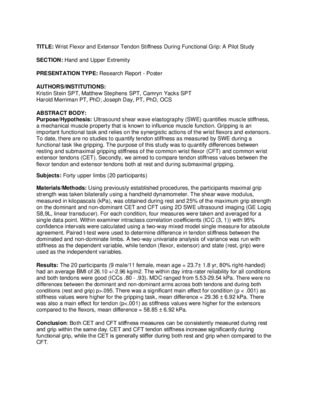
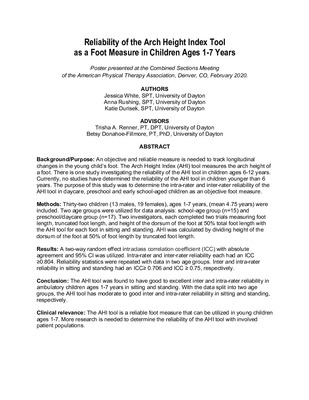
Wrist Flexor and Extensor Tendon Stiffness During Functional Grip: A Pilot Study
Kristin Stein, Matthew Stephens, Camryn Yacks, Harold Merriman, and Joseph Day
Purpose/Hypothesis: Ultrasound shear wave elastography (SWE) quantifies muscle stiffness, a mechanical muscle property that is known to influence muscle function. Gripping is an important functional task and relies on the synergistic actions of the wrist flexors and extensors. To date, there are no studies to quantify tendon stiffness as measured by SWE during a functional task like gripping. The purpose of this study was to quantify differences between resting and submaximal gripping stiffness of the common wrist flexor (CFT) and common wrist extensor tendons (CET). Secondly, we aimed to compare tendon stiffness values between the flexor tendon and extensor tendons both at rest and during submaximal gripping.
Subjects: Forty upper limbs (20 participants)
Materials/Methods: Using previously established procedures, the participants maximal grip strength was taken bilaterally using a handheld dynamometer. The shear wave modulus, measured in kilopascals (kPa), was obtained during rest and 25% of the maximum grip strength on the dominant and non-dominant CET and CFT using 2D SWE ultrasound imaging (GE Logiq S8,9L, linear transducer). For each condition, four measures were taken and averaged for a single data point. Within examiner intraclass correlation coefficients (ICC (3, 1)) with 95% confidence intervals were calculated using a two-way mixed model single measure for absolute agreement. Paired t-test were used to determine difference in tendon stiffness between the dominated and non-dominate limbs. A two-way univariate analysis of variance was run with stiffness as the dependent variable, while tendon (flexor, extensor) and state (rest, grip) were used as the independent variables.
Results: The 20 participants (9 male/11 female, mean age = 23.7± 1.8 yr, 80% right-handed) had an average BMI of 26.10 +/-2.96 kg/m2. The within day intra-rater reliability for all conditions and both tendons were good (ICCs .80 - .93). MDC ranged from 5.53-29.54 kPa. There were no differences between the dominant and non-dominant arms across both tendons and during both conditions (rest and grip) p>.095. There was a significant main effect for condition (p < .001) as stiffness values were higher for the gripping task, mean difference = 29.36 ± 6.92 kPa. There was also a main effect for tendon (p
Conclusion: Both CET and CFT stiffness measures can be consistently measured during rest and grip within the same day. CET and CFT tendon stiffness increase significantly during functional grip, while the CET is generally stiffer during both rest and grip when compared to the CFT.
Clinical Relevance: Obtaining stiffness values during rest and functional grip is a viable option of data collection for the CFT and CET. Compared to the CFT, clinicians should expect significantly greater CET stiffness both at rest and during contraction. Higher CET stiffness may support its functionality as a wrist stabilizer during grip.
-
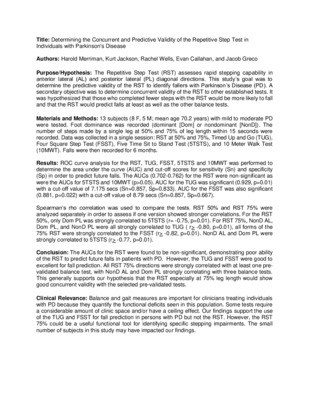
Determining the Concurrent and Predictive Validity of the Repetitive Step Test in Individuals with Parkinson's Disease
Rachel Wells, Evan Callahan, Jacob Greco, Harold L. Merriman, and Kurt Jackson
Purpose/Hypothesis: The Repetitive Step Test (RST) assesses rapid stepping capability in anterior lateral (AL) and posterior lateral (PL) diagonal directions. This study’s goal was to determine the predictive validity of the RST to identify fallers with Parkinson’s Disease (PD). A secondary objective was to determine concurrent validity of the RST to other established tests. It was hypothesized that those who completed fewer steps with the RST would be more likely to fall and that the RST would predict falls at least as well as the other balance tests.
Materials and Methods: 13 subjects (8 F, 5 M; mean age 70.2 years) with mild to moderate PD were tested. Foot dominance was recorded (dominant [Dom] or nondominant [NonD]). The number of steps made by a single leg at 50% and 75% of leg length within 15 seconds were recorded. Data was collected in a single session: RST at 50% and 75%, Timed Up and Go (TUG), Four Square Step Test (FSST), Five Time Sit to Stand Test (5TSTS), and 10 Meter Walk Test (10MWT). Falls were then recorded for 6 months.
Results: ROC curve analysis for the RST, TUG, FSST, 5TSTS and 10MWT was performed to determine the area under the curve (AUC) and cut-off scores for sensitivity (Sn) and specificity (Sp) in order to predict future falls. The AUCs (0.702-0.762) for the RST were non-significant as were the AUCs for 5TSTS and 10MWT (p>0.05). AUC for the TUG was significant (0.929, p=0.01) with a cut-off value of 7.175 secs (Sn=0.857, Sp=0.833). AUC for the FSST was also significant (0.881, p=0.022) with a cut-off value of 8.79 secs (Sn=0.857, Sp=0.667).
Spearman’s rho correlation was used to compare the tests. RST 50% and RST 75% were analyzed separately in order to assess if one version showed stronger correlations. For the RST 50%, only Dom PL was strongly correlated to 5TSTS (r=-0.75, p=0.01). For RST 75%, NonD AL, Dom PL, and NonD PL were all strongly correlated to TUG (r≥-0.80, p=0.01), all forms of the 75% RST were strongly correlated to the FSST (r≥-0.82, p=0.01). NonD AL and Dom PL were strongly correlated to 5TSTS (r≥-0.77, p=0.01).
Conclusion: The AUCs for the RST were found to be non-significant, demonstrating poor ability of the RST to predict future falls in patients with PD. However, the TUG and FSST were good to excellent for fall prediction. All RST 75% directions were strongly correlated with at least one pre-validated balance test, with NonD AL and Dom PL strongly correlating with three balance tests. This generally supports our hypothesis that the RST especially at 75% leg length would show good concurrent validity with the selected pre-validated tests.
Clinical Relevance: Balance and gait measures are important for clinicians treating individuals with PD because they quantify the functional deficits seen in this population. Some tests require a considerable amount of clinic space and/or have a ceiling effect. Our findings support the use of the TUG and FSST for fall prediction in persons with PD but not the RST. However, the RST 75% could be a useful functional tool for identifying specific stepping impairments. The small number of subjects in this study may have impacted our findings.
-
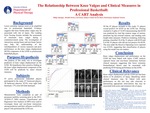
The Relationship between Knee Valgus and Clinical Measures in Professional Basketball: A CART Analysis
Philip A. Anloague, Donald S. Strack, Carl Eaton, Joshua David Corbeil, Steven Michael Short, Paul John Insana, and Stephanie Lynn Nazario
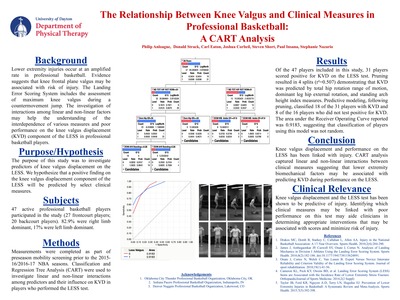
Background/Purpose: Lower extremity injuries occur at an amplified rate in professional basketball. Evidence suggests that knee frontal plane valgus may be associated with risk of injury. The Landing Error Scoring System includes the assessment of maximum knee valgus during a countermovement jump. The investigation of interactions among linear and non-linear factors may help the understanding of the interdependence of various measures and poor performance on the knee valgus displacement (KVD) component of the LESS in professional basketball players. The purpose of this study was to investigate predictors of knee valgus displacement on the LESS. We hypothesize that a positive finding on the knee valgus displacement component of the LESS will be predicted by select clinical measures.
Methods: 47 professional basketball players participated. Measurements were completed as part of preseason mobility screening prior to the 2015-16 and 2016-17 NBA seasons. Classification and Regression Tree Analysis (CART) were used to investigate linear and non-linear interactions among predictors and their influence on KVD in players who performed the LESS test.
Results: Of the 47 players included in this study, 16 players did not test positive for KVD on the LESS test and 31 did. Pruning resulted in 4 splits (r2=0.507) demonstrating that KVD was predicted by total hip rotation range of motion, dominant leg hip external rotation, and standing arch height index measure. Predictive modeling, classified 18 of the 31 players with KVD and 8 of the 16 players who tested negative for KVD. The area under the ROC curve was .9183, suggesting that classification of players using this model was not random.
Conclusion: KVD and performance on the LESS has been linked with injury. CART analysis captured linear and non-linear interactions between clinical measures suggesting that lower extremity biomechanical factors may be associated with predicting KVD during performance on the LESS.
Clinical Relevance: KVD and the LESS test has been shown to be predictive of injury. Identifying which clinical measures may be linked with poor performance on this test may aide clinicians in determining appropriate interventions that may be associated with improved scores and minimize risk of injury.
-
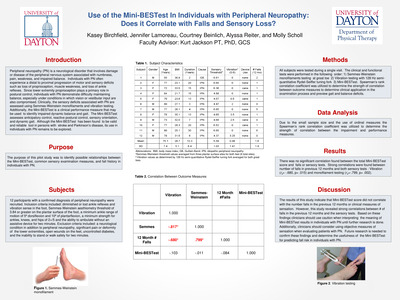
The Association between Y-Balance and the Delos Postural Proprioceptive System in Professional Basketball Players
Philip A. Anloague, Shawn Windle, Grady Garno, Mike Lewandowski, Caleb Norton, Ryan Smerke, Sierra Speck, Jenna Stoner, and Aaron Strausbaugh
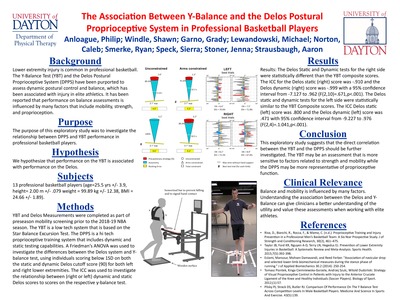
Background/Purpose: Lower extremity injury is common in professional basketball. The Y-Balance Test (YBT) and the Delos Postural Proprioceptive System (DPPS) have been purported to assess dynamic postural control and balance, which has been associated with injury in elite athletics. It has been reported that performance on balance assessments is influenced by many factors that include mobility, strength, and proprioception. The purpose of this exploratory study was to investigate the relationship between DPPS and YBT performance in professional basketball players.
Methods: 13 professional basketball players (age=25.5 yrs +/- 3.9, height = 2.00 m +/- .079 weight = 99.89 kg +/- 12.38, BMI = 24.66 +/- 1.89) participated. YBT and Delos Measurements were completed as part of preseason mobility screening prior to the 2018-19 NBA season. A Friedman’s ANOVA was used to investigate the differences between the DPPS and YBT, using individuals scoring below 1SD on both the static and dynamic Delos cutoff score (90) for both left and right lower extremities. The ICC was used to investigate the relationship between (right or left) dynamic and static Delos scores to scores on the respective y-balance test.
Results: The Delos Static and Dynamic tests for the right side were statistically different than the YBT composite scores. The ICC for the Delos static (right) score was -.910 and the Delos dynamic (right) score was -.999 with a 95% confidence interval from -7.127 to .962 (F(2,10)=.671,p
Conclusion: This exploratory study suggests that the direct correlation between the YBT and the DPPS should be further investigated. The YBT may be an assessment that is more sensitive to factors related to strength and mobility while the DPPS may be more representative of proprioceptive function.
Clinical Relevance: Balance and mobility is influenced by many factors. Understanding the association between the Delos and Y-Balance can give clinicians a better understanding of the utility and value these assessments when working with elite athletes.
-
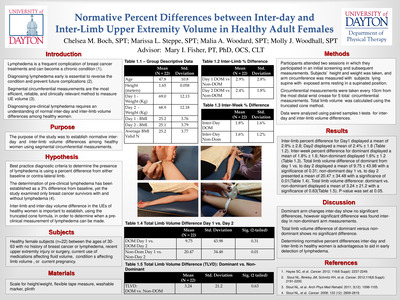
Scapular Acceleration during Upper Extremity Elevation in Healthy Individuals with and without Scapular Dyskinesis
Joseph M. Day, Taylor Hunter, Kayla Eiben, and Yitz Berger
Background/Purpose: Individuals with upper extremity pathology often present with altered scapular motion and muscle performance. There are few clinical tools that are capable of collecting specific and efficient data on alterations in scapular motion and even fewer studies have looked at variations in scapular acceleration. The primary purpose of this study was to determine the effectiveness of wireless accelerometers for detecting changes in acceleration in individuals with and without scapular dyskinesis.
Methods: Twenty-seven subjects, mean age 24 (SD1.49). Healthy subjects were visually screened for scapular dyskinesis. Subjects were positioned in a standardized standing posture and anatomical references were marked on the scapula for the wireless accelerometer (MyoResearch 3D DTS). After the accelerometer was secured, subjects performed five repetitions of standing scaption from 0-140. Linear scapular accelerations along three orthogonal axes (x, y, and z) were collected during arm elevation and lowering. For the first 9 subjects, the entire process was repeated 1-2 days later. Data was synthesized in order to reflect changes in acceleration from the resting position. Intraclass correlation coefficients (ICC 3, k) were used to determine the between-day intra-rater reliability. An independent t-test was used to determine the difference in average axis acceleration between those with and without dyskinesis. A one-way multivariate analysis of variance (MANOVA) was used to determine differences in acceleration between those with and without dyskinesis for each accelerometer axis while adjustments were made for multiple comparisons.
Results: There was good intra-rater reliability for the x and y axes (ICC>.80). There was a significant increase in overall acceleration of the scapula in those with dyskinesis (P=.039). There was also a significant increase in acceleration across the x-axis for those with dyskinesis (P=.003).
Conclusion: Wireless accelerometers are a reliable tool for quantifying scapular motion in healthy individuals with and without dyskinesis. In a healthy population with dyskinesis, the overall magnitude of scapular acceleration was greater when compared to a healthy group without dyskinesis.
Clinical Relevance: Dyskinetic subjects present with increased scapular acceleration in elevation implicating potential muscle imbalances that need to be further investigated in future research.
-
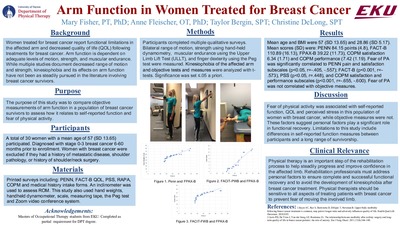
Arm Function in Women Treated for Breast Cancer
Mary Insana Fisher, Anne Fleischer, Taylor Bergin, and Christine DeLong
Background/Purpose: Women with breast cancer (WBC) report decreased function following cancer treatment, yet objective measures of function typically return within the first year after surgery. Kinesiophobia, or fear of physical activity (PA), has been documented following other musculoskeletal pathologies. This study explored the relationships between fear of PA and self-reported arm function, QOL, perceived stress, and objective measures of range of motion (ROM), strength, and muscular endurance in WBC.
Methods: Women (n=30) diagnosed with stage 0-3 breast cancer 6-60 months prior to enrollment participated; WBC were excluded with metastatic disease, shoulder pathology, or history of shoulder/neck surgery. Self-reported function was measured with the Penn Shoulder Score; FACT-B QOL, Perceived Stress Scale (PSS), Canadian Occupational Performance Measure (COPM), bilateral flexion, external and internal rotation ROM and strength, and muscular endurance measures were also collected. Relationships between fear of PA and all variables were explored using Pearson’s correlations. Significance was set ≤0.05 a priori.
Results:Mean age and BMI were 57 (SD 13.65) and 28.86 (SD 5.17). Mean scores (SD) were: PENN 84.15 points (4.8), FACT-B 110.89 (16.13), FPAX-B 39.22 (11.73), COPM satisfaction 6.34 (1.71) and COPM performance (7.42 (1.19). Fear of PA was significantly correlated to PENN pain and satisfaction subscales (p
Conclusion: Fear of PA was associated with self-reported function, QOL, and perceived stress in this population of WBC, while objective measures were not. These findings suggest that personal factors play a significant role in functional recovery.
Clinical Relevance: Rehabilitation professionals must address personal factors to ensure complete and successful functional recovery among WBC.
-
Effects of Extracurricular Physical Activity on Strength, Balance, Endurance and Quality of Life on Children with Disabilities
Christy Lee, Alana Mathews, Kayla Ayers, Madison Weisbarth, and Melissa Spurbeck
Background/Purpose: The purpose of this study was to investigate the effects of extracurricular physical activity on strength, balance, endurance and quality of life on children with disabilities.
Methods: Eighteen children (10 males, 8 females) ranging in age from 11-18 years participated in a local inclusive kickball program. All children and their parents were aware that participation was voluntary and signed consent or assent forms. Diagnoses of the children included Down Syndrome, Asbergers, Expressive Language Delay and Developmental Delay. The children participated in 60 minute kickball sessions led by a program director, 1 time per week for 6 weeks. The Pediatric Quality of Life Inventory (PedsQL), Pediatric Balance Scale (PBS) and 30-second walk test were administered at baseline and at the end of 6 weeks. Descriptive statistics were calculated for all measures.
Results: Means, standard deviations, and p-values were calculated. Non-parametric statistics, Related-Samples Wilcoxon Signed Rank Test, were used. A significant difference (p = .028) was found between the pre and post distance measures for the 30 second walk test, and in the pre and post measures for the PBS (p = .009). No significant difference (p = .445) was found between pre and post measures for the PedsQL.
Conclusion: Participating in kickball was found to significantly improve endurance and balance but not quality of life. Improvements may have been seen in endurance due to the participants running the bases and in the outfield each time they played. The improvements seen in balance were likely due to the participants having to kick the ball repetitively, change positions quickly, bend over to pick up the ball and navigate obstacles while running. Moving forward, it might be advantageous to include a warm-up incorporating activities that are aimed at having the children interact with each other, in hopes of improving item scores on the PedsQL.
Clinical Relevance: Children experience benefits in activities directly related to the task they are performing. These findings indicate that kickball or other similar recreational sports that involve running and balancing activities may be advantageous to improving functional mobility, specifically ambulation speed and balance.
-
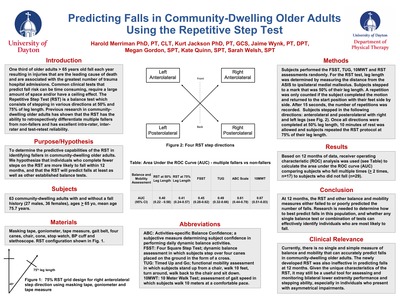
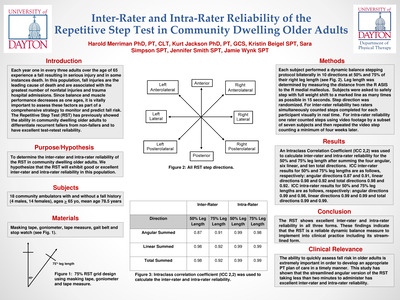
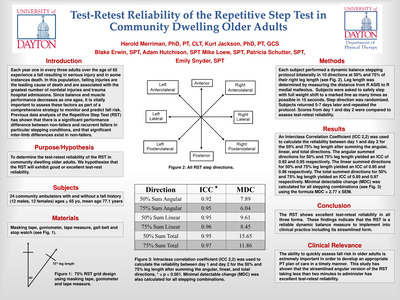
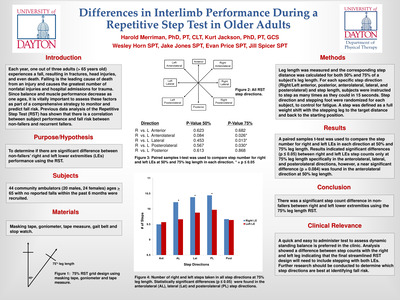
Predicting Falls in Community-Dwelling Older Adults Using the Repetitive Step Test
Harold L. Merriman, Kurt Jackson, Jamie Wynk, Megan Gordon, Kathryn Quinn, and Sarah Welsh
Background/Purpose: The Repetitive Step Test (RST) is a newly developed dynamic balance test that requires stepping in multiple directions. It has previously demonstrated excellent test-retest and inter-rater reliability, along with ability to retrospectively classify individuals who had fallen more than once in 12 months though its ability to predict falls has not been evaluated. This study aimed to determine the capability of the RST to identify individuals likely to fall prospectively over 12 months.
Methods: 63 community-dwelling adults >65 years old were tested using the following balance and mobility measures: RST, 10 Meter Walk Test (10MWT), Activities-specific Balance Confidence scale (ABC), Four Square Step Test (FSST), and Timed Up and Go (TUG). For the RST, participants completed as many steps as possible in 15 seconds at 50% and 75% of their right leg length in the anterolateral and posterolateral directions bilaterally. Participants completed a fall log that was reported on a monthly basis for 12 months.
Results: Based on 12 months of data, receiver operating characteristic (ROC) curve analysis was used to compare adults who fell > 2 times to adults (n=17) who did not fall (n=29). Area under the curve (AUC) results with 95% confidence interval are as follows: RST at 50% 0.40 (0.22-0.58), RST at 75% 0.41 (0.24-0.57), FSST 0.45 (0.28-0.62), TUG 0.49 (0.32-0.66), ABC 0.61 (0.44-0.78) and 10MWT 0.67 (0.51-0.83).
Conclusion: At 12 months, the RST and other balance and mobility measures either failed to or poorly predicted the number of falls. Research is needed to determine how to best predict falls in this population, and whether any single balance test can effectively identify individuals who are most likely to fall.
Clinical Relevance: Currently, there is no simple measure of balance and mobility that can accurately predict falls in community-dwelling older adults. The RST was ineffective in predicting falls at 12 months. Given the unique characteristics of the RST, it may still be a useful tool for assessing and monitoring bilateral lower extremity performance and stepping ability, especially in individuals who present with asymmetrical impairments (e.g., stroke, multiple sclerosis, Parkinson’s disease).
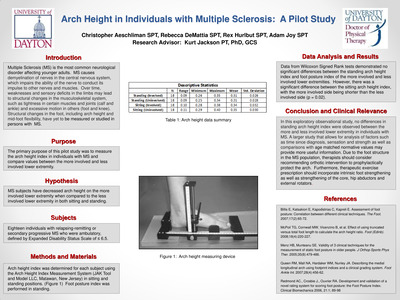
Every spring since 2009, students in the Doctor of Physical Therapy program have presented their clinical research in a symposium for peers, faculty and professionals in the community. Completed in cooperation with faculty mentors, the projects often form the basis of publishable research submitted to professional conferences and reputable scholarly journals.
Printing is not supported at the primary Gallery Thumbnail page. Please first navigate to a specific Image before printing.