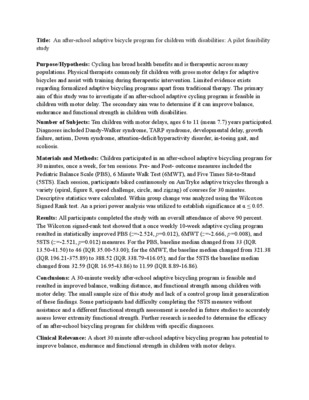

-
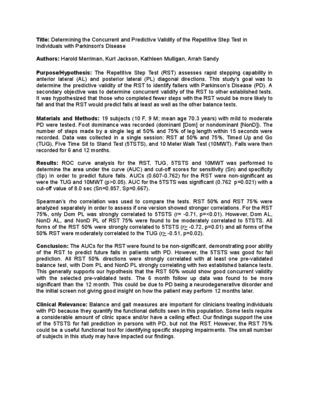
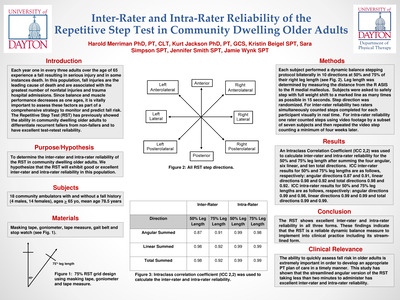
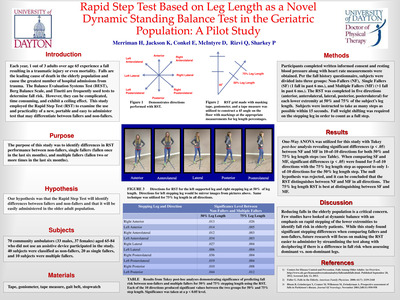
A Novel Rapid Step Test Differentiates Between Older Adults Who are Fallers and Non-Fallers
Harold L. Merriman, Kurt Jackson, Michael Breneman, Amy Collins, Tiffany McEldowney, and Ashton Swinford
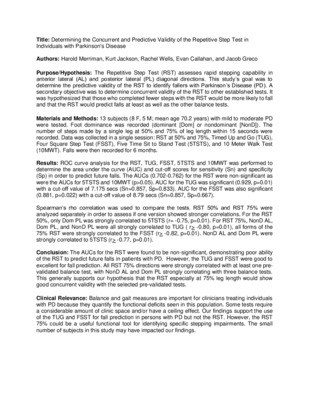
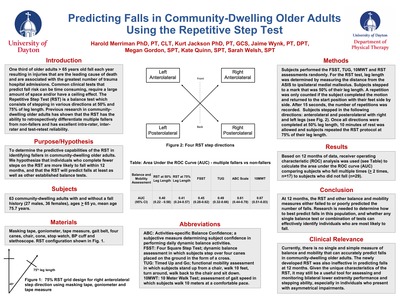
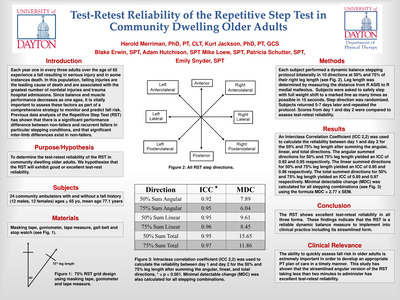
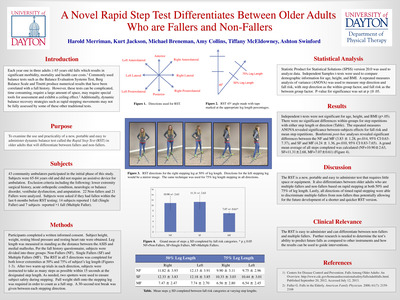
Each year one in three adults > 65 years old falls which results in significant morbidity, mortality and health care costs. Commonly used balance tests such as the Balance Evaluation Systems Test, Berg Balance Scale and Tinetti produce numerical results that have been correlated with a fall history. However, these tests can be complicated, time consuming, require a large amount of space, may require special tools for assessment and exhibit a ceiling effect. Additionally, dynamic balance recovery strategies such as rapid stepping movements may not be fully assessed by some of these other traditional tests.
-
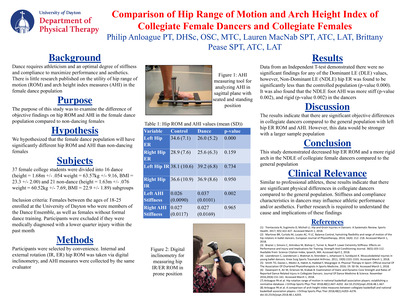
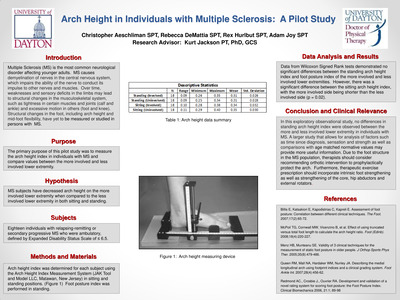
Arch Height in Individuals with Multiple Sclerosis: A Pilot Study
Christopher Aeschliman, Rebecca DeMattia, Rex Hurlbut, and Adam Joy
Multiple Sclerosis (MS) is the most common neurological disorder affecting younger adults. MS causes demyelination of nerves in the central nervous system, which impairs the ability of the nerve to conduct its impulse to other nerves and muscles. Over time, weaknesses and sensory deficits in the limbs may lead to structural changes in the musculoskeletal system, such as tightness in certain muscles and joints (calf and ankle) and excessive motion in others (foot and knee). Structural changes in the foot, including arch height and mid-foot flexibility, have yet to be measured or studied in persons with MS.
-
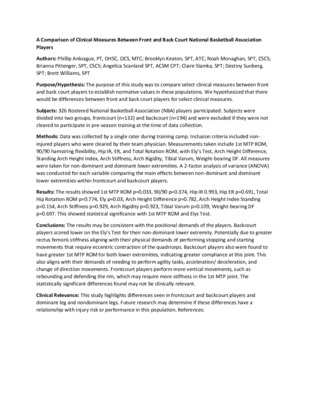
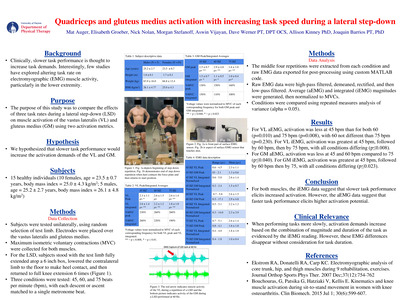
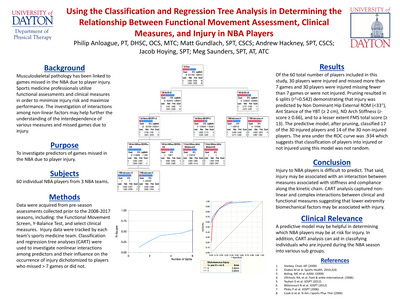
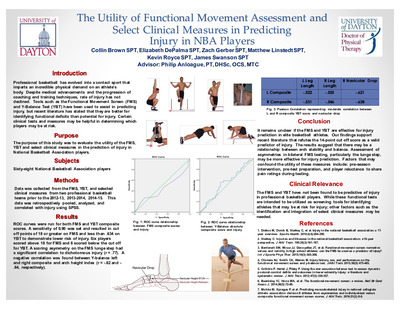
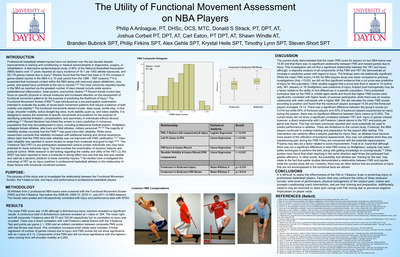
The Utility of Functional Movement Assessment on NBA Players
Philip A. Anloague, Donald S. Strack, Joshua Corbeil, Carl Eaton, Shawn Windle, Branden Bubnick, Philip Firkins, Alex Gehle, Krystal Heile, Timothy Lynn, and Steven Short
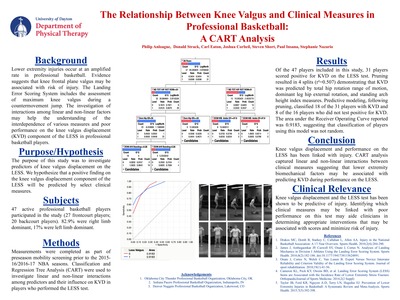
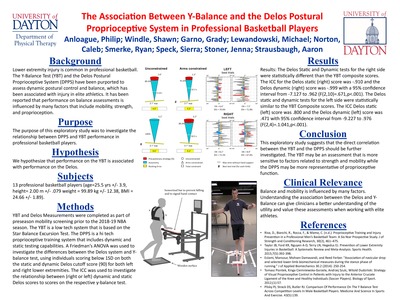
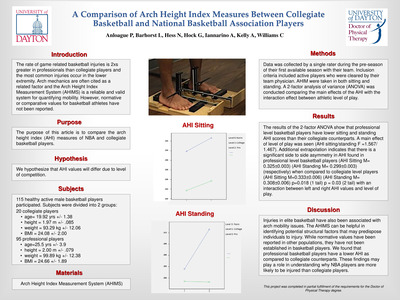
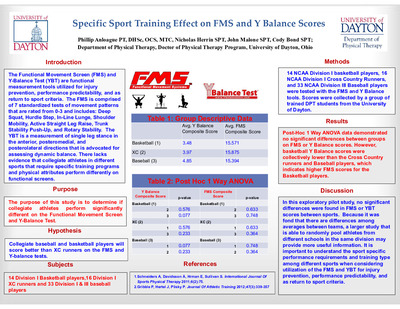
Professional basketball related injuries have not declined over the last decade despite improvements in training and conditioning or medical advancements in diagnostics, surgery, or rehabilitation. A descriptive epidemiological study of 80% of the National Basketball Association (NBA) teams over 17 years reported an injury incidence of 19.1 per 1000 athlete exposures, and 59,179 games missed due to injury. Starkey found that the there has been a 12.4% increase in game-related injuries in the NBA in a 10-year period from the 1988 - 1997 seasons. It is suspected that increased contact within the NBA along with improved player athleticism, size, power, and speed have contribute to the rise in injuries. The most commonly reported injuries in the NBA as reported via the greatest number of days missed include ankle sprains, patellofemoral inflammation, knee sprains, and lumbar strains. Recent trends involve less focus on specific physical or clinical measures and increased attention on the assessment of functional movement patterns for the purpose of predicting the likelihood of injury. The Functional Movement Screen (FMSTM) was introduced as a pre-participation examination intended to evaluate the quality of seven basic movement patterns that require a balance of both mobility and stability. The functional movements tested include: deep squat, hurdle step, in-line lunge, shoulder mobility, active straight leg raise, trunk stability push-up, and rotary stability. It is designed to assess the extremes of specific movements and positions for the purpose of identifying potential limitation, compensation, and asymmetry in individuals without obvious pathology. Recent literature has linked this screen to injury prediction in numerous populations that may be predisposed to injury, including professional football players, firefighters, collegiate female athletes, elite track and field athletes, military personnel. The majority of reliability studies conclude that the FMSTM has good intra-rater reliability. While some researchers conclude that reliability increases with additional training and clinical experience, others claim that the FMS intra-rater reliability was not improved with FMS certification. Inter- rater reliability was reported in recent studies to range from moderate and good to high. The Y-balance Test (YBT) is pre-participation assessment used to screen individuals who may have potential for lower extremity injury. This test involves the examination of dynamic balance and postural control. While research is still lacking regarding the validity and utility of the YBT-LQ, the SEBT has been reported to have a moderate to strong effect size and that this test was reliable and valid as a dynamic predictor to lower extremity injuries. No studies have investigated the outcomes of YBT as an injury predictor in professional basketball athletes or the relationship of these factors with functional movement screens.
-
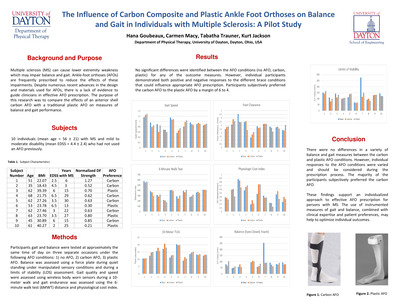
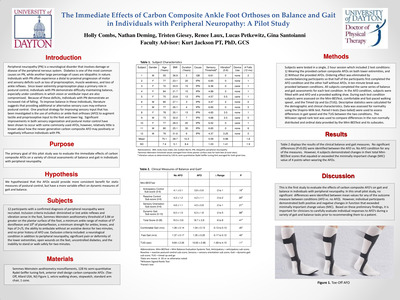
The Immediate Effects of Carbon Composite Ankle Foot Orthoses on Balance and Gait in Individuals with Peripheral Neuropathy: A Pilot Study
Holly Combs, Tristen Glesey, Renee Laux, Lucas Petkewitz, and Gina Santoianni
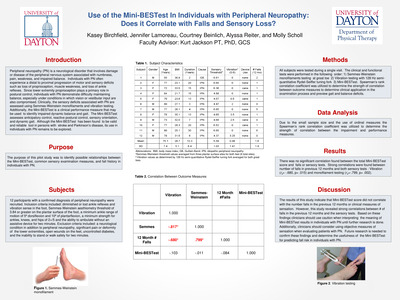
Peripheral neuropathy (PN) is a neurological disorder that involves damage or disease of the peripheral nervous system. Diabetes is one of the most common causes on PN, while another large percentage of cases are idiopathic in nature. Individuals with PN often experience a distal to proximal progression of motor and sensory deficits such as loss of proprioception, muscle weakness, and loss of ankle reflexes. Since lower extremity proprioception plays a primary role in postural control, individuals with PN demonstrate difficulty maintaining balance, especially under conditions in which vision or vestibular input are also compromised. Because of these deficits, individuals with PN demonstrate an increased risk of falling. To improve balance in these individuals, literature suggests that providing additional or alternative sensory cues may enhance postural control. One practical strategy for improving sensory input that has been investigated is the use of orthotics or ankle-foot orthoses (AFO) to augment tactile and proprioceptive input to the foot and lower leg. Significant improvements in both sensory organization and postural motor control have been shown to occur with some commonly used AFOs, however, relatively little is known about how the newer generation carbon composite AFO may positively or negatively influence individuals with PN.
-
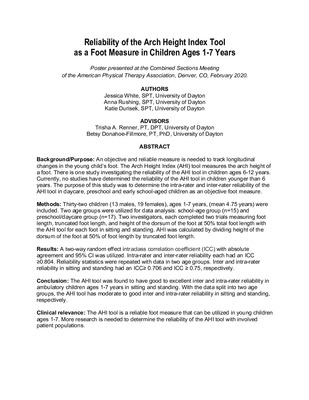
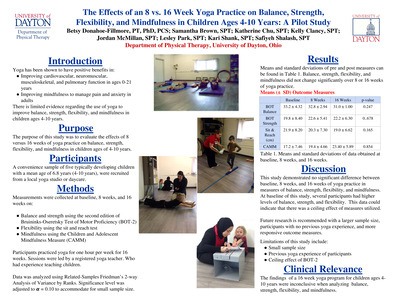
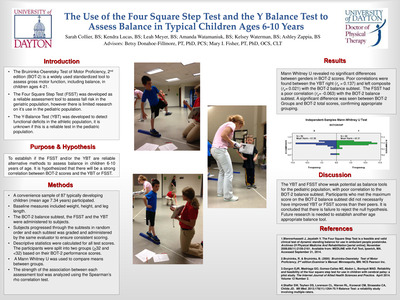
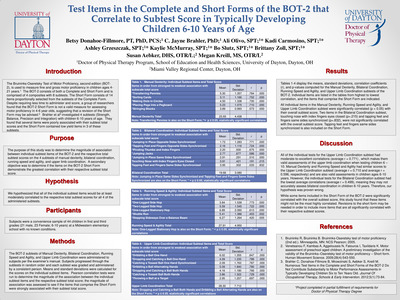
Test Items in the Complete and Short Forms of the BOT-2 that Correlate to Subtest Score in Typically Developing Children 6-10 Years of Age
Betsy Donahoe-Fillmore, C. Jayne Brahler, Kadi Carmosino, Ashley Grzeszczak, Kaylie McMurray, Bo Slutz, Brittany Zoll, Susan Aebker, and Megan Kreill
The Bruininks-Oseretsky Test of Motor Proficiency, second edition (BOT-2), is used to measure fine and gross motor proficiency in children ages 4- 21 years.1 The BOT-2 consists of both a Complete and Short Form and is comprised of 4 composites with 8 subtests. The Short Form consists of 14 items proportionally selected from the subtests of the Complete Form. Despite requiring less time to administer and score, a group of researchers found that the BOT-2 Short Form is not a valid measure for assessing motor proficiency in 4-6 year olds, suggesting that a revision of the Short Form may be advised.2 Brahler et al3 investigated 4 subtests (Strength, Balance, Precision and Integration) with children 6-10 years of age. They found that several items were poorly associated with their subtest total scores and the Short Form contained low yield items in 3 of these subtests.
-
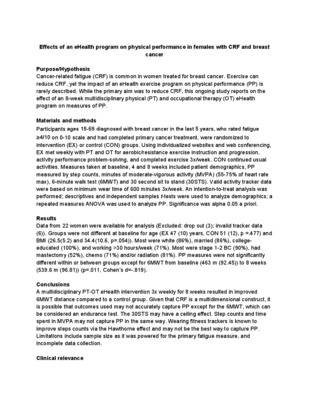
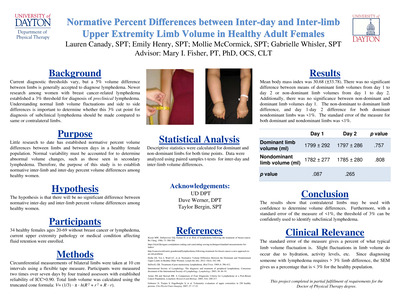
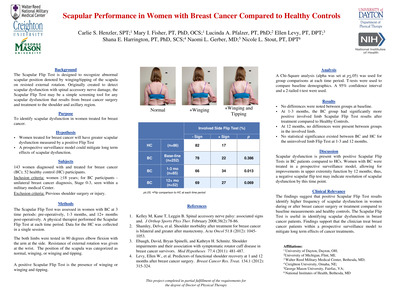
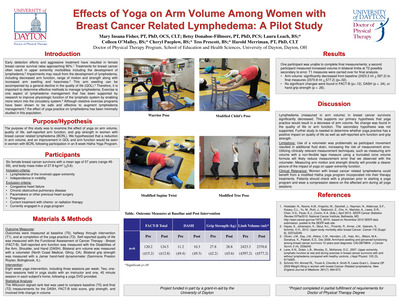
Effects of Yoga on Arm Volume Among Women with Breast Cancer Related Lymphedema: A Pilot Study
Mary I. Fisher, Betsy Donahoe-Fillmore, Laura Leach, Colleen O'Malley, Cheryl Paeplow, and Tess Prescott
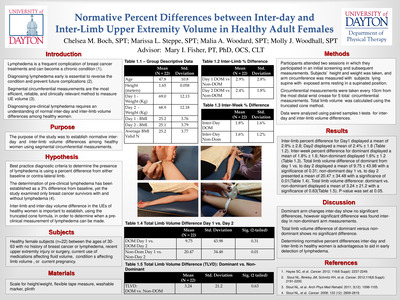
Early detection efforts and aggressive treatment have resulted in female breast cancer survival rates approaching 90%. Treatments for breast cancer often result in upper extremity morbidities including the development of lymphedema. Impairments may result from the development of lymphedema, including decreased arm function, range of motion and strength along with increased arm swelling and heaviness. This arm swelling can be accompanied by a general decline in the quality of life (QOL). Therefore, it is important to determine effective methods to manage lymphedema. Exercise is one aspect of lymphedema management that has been supported by research to improve physiologic function of the lymphatic system by enabling more return into the circulatory system. Although resistive exercise programs have been shown to be safe and effective to augment lymphedema management, the effect of yoga practice on lymphedema has been minimally studied in this population.
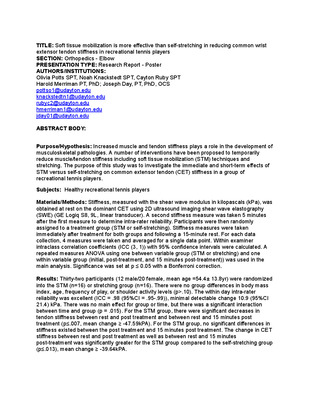
Every spring since 2009, students in the Doctor of Physical Therapy program have presented their clinical research in a symposium for peers, faculty and professionals in the community. Completed in cooperation with faculty mentors, the projects often form the basis of publishable research submitted to professional conferences and reputable scholarly journals.
Printing is not supported at the primary Gallery Thumbnail page. Please first navigate to a specific Image before printing.