
-
Effect of Ankle-Foot Orthosis on Reactive Stepping in Healthy Young Adults: A Pilot Study
Kyra Twohy, Hunter Andrews, Ryan Christopher, Aaron Scott, Katie Valentine, and Kurt Jackson
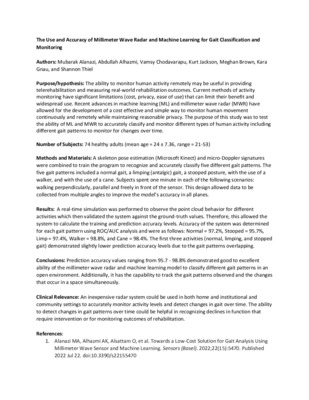
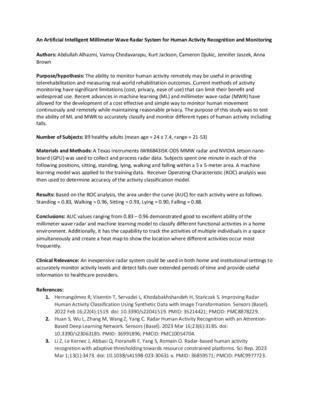
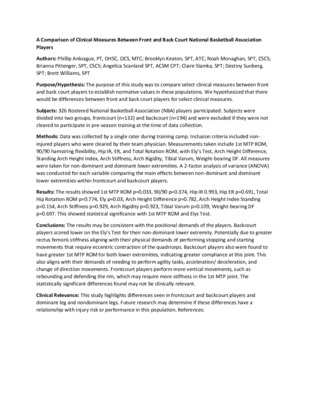
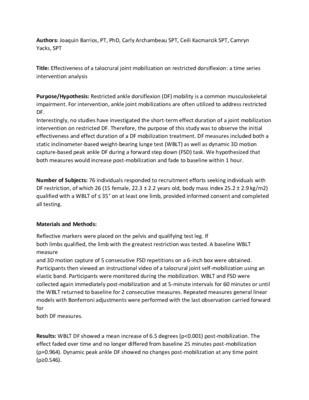
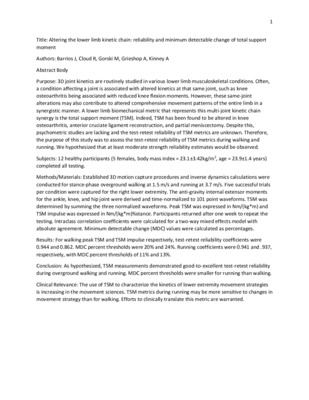
Background/Purpose: Ankle-Foot orthoses (AFOs) are commonly used in individuals with neurologic disorders such as MS and stroke. However, a rigid style of AFO may impact an individual's ability to complete dynamic balance tasks especially reactive stepping movements in the instance of losing balance. The impact a rigid AFO has on reactive stepping has not been investigated. The primary purpose of this study was to determine the impact rigid AFOs have on reactive stepping preference in healthy young adults, thus providing preliminary data on healthy individuals’ stepping strategies that could be used for further research with more neurologically-involved populations.
Methods: Twenty healthy participants (mean age = 24±6 yrs.) with no persistent lower extremity injuries completed the testing. This study utilized a lean-and-release procedure for inducing a perturbation and subsequent recovery step. Participants were placed in a safety harness and separate belt attachment to the weight support system. Subjects were asked to lean at 10-15% of their bodyweight. Examiners released the subject unexpectedly from the belt so they were required to take a reactive step to regain their balance. This was repeated 10 times for each of the following conditions 1) with no AFO, 2) AFO on the left, 3) AFO on the right. The primary outcome measure was number of steps taken with the right foot during each condition.
Results: When wearing no AFO, participants preferred stepping with their right foot (7.0 ± 3.9) There was a significant difference (p = 0.03) in preferred reactive stepping limb between the left and right AFO conditions. Reactive stepping with the right foot was greater when an AFO was worn on the left foot (8.1 ± 3.3) compared to the right foot AFO (5.7 ± 4.4).
Conclusion: There is a significant difference in preferred reactive stepping limb when the AFO placed on right versus left lower extremity.
Clinical Relevance: Following loss of balance, AFO limb placement may influence the preferred reactive stepping limb. This should be considered when teaching neurological patients to use an AFO and during balance training.
-
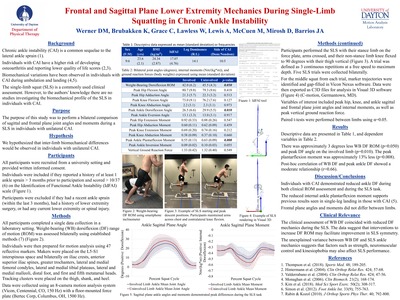
Frontal and Sagittal Plane Lower Extremity Mechanics during Single-Limb Squatting in Chronic Ankle Instability
David M. Werner, Kati Brubakken, Claire Grace, Mike Lawless, Aaron Lewis, Marc McCuen, Dennis Mirosh, and Joaquin Alberto Barrios
Background/Purpose: Chronic ankle instability is a common sequelae to the lateral ankle sprain. Individuals with CAI have a higher risk of developing osteoarthritis and reporting lower quality of life scores. Biomechanical variations have been observed in individuals with CAI during ambulation and landing. To the authors’ knowledge there are no studies investigating the biomechanical profile of the SLS in individuals with CAI. The purpose of this study was to compare the biomechanics of the SLS in individuals with unilateral CAI. We hypothesized that inter-limb biomechanical differences would be observed in individuals with unilateral CAI.
Methods: Participants were recruited from a university setting and provided informed consent. Individuals were included if they reported a history of at least 1 ankle sprain >3 months prior to participation and scored >10/37 on the Identification of Functional Ankle Instability scale. Participants were excluded if they had an ankle sprain within the last 3 months, had a history of LE surgery, or had any current LE or spinal injury. Weight-bearing dorsiflexion ROM was assessed bilaterally using established methods. Participants performed the SLS with their stance limb on the force plate, arms crossed, and their non-stance limb knee flexed to 90 degrees with their thigh vertical. A trial was 3 continuous repetitions to maximum depth at a speed of 60 bpm to a metronome. Five SLS trials were collected bilaterally. Variables of interest included peak hip, knee, and ankle sagittal and frontal plane joint angles and internal moments, as well as peak vertical ground reaction force.
Results: There was approximately 3 degrees less in WB DF ROM (p=0.050) and peak DF angle on the involved limb (p=0.010). The peak plantarflexion moment was approximately 13% less (p=0.008).
Conclusion: Individuals with CAI demonstrated reduced ankle DF during both clinical ROM assessment and motion analysis of SLS. Frontal plane mechanics did not differ between limbs.
Clinical Relevance: The clinical assessment of WB DF coincided with reduced DF mechanics during the SLS. These data suggest that interventions to increase DF ROM may improve SLS symmetry. Clinicians can use WB DF as an assessment to assist in identifying ROM deficits that may be related to motion analysis abnormalities.
-
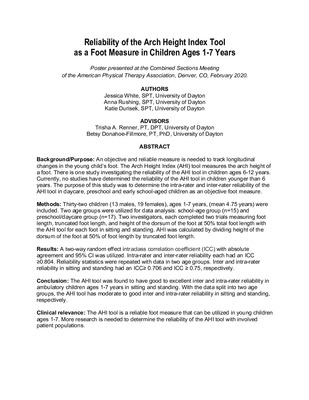
Reliability of the Arch Height Index Tool as a Foot Measure in Children Ages 1-7 Years
Jessica White, Anna Rushing, and Katie Durisek
Background/Purpose: An objective and reliable measure is needed to track longitudinal changes in the young child’s foot. The Arch Height Index (AHI) tool measures the arch height of a foot. There is one study investigating the reliability of the AHI tool in children ages 6-12 years. Currently, no studies have determined the reliability of the AHI tool in children younger than 6 years. The purpose of this study was to determine the intra-rater and inter-rater reliability of the AHI tool in daycare, preschool and early school-aged children as an objective foot measure.
Methods: Thirty-two children (13 males, 19 females), ages 1-7 years, (mean 4.75 years) were included. Two age groups were utilized for data analysis: school-age group (n=15) and preschool/daycare group (n=17). Two investigators, each completed two trials measuring foot length, truncated foot length, and height of the dorsum of the foot at 50% total foot length with the AHI tool for each foot in sitting and standing. AHI was calculated by dividing height of the dorsum of the foot at 50% of foot length by truncated foot length.
Results: A two-way random effect intraclass correlation coefficient (ICC) with absolute agreement and 95% CI was utilized. Intra-rater and inter-rater reliability each had an ICC ≥0.804. Reliability statistics were repeated with data in two age groups. Inter and intra-rater reliability in sitting and standing had an ICC≥ 0.706 and ICC ≥ 0.75, respectively.
Conclusion: The AHI tool was found to have good to excellent inter and intra-rater reliability in ambulatory children ages 1-7 years in sitting and standing. With the data split into two age groups, the AHI tool has moderate to good inter and intra-rater reliability in sitting and standing, respectively.
Clinical relevance: The AHI tool is a reliable foot measure that can be utilized in young children ages 1-7. More research is needed to determine the reliability of the AHI tool with involved patient populations.
-
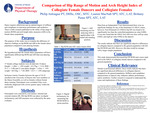
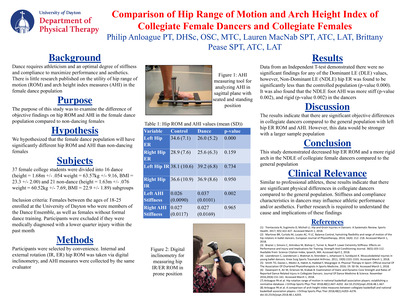
Comparison of Hip Range of Motion and Arch Height Index of Collegiate Female Dancers and Collegiate Females
Philip A. Anloague, Lauren MacNab, and Brittany Pease
Dance requires athleticism and an optimal degree of stiffness and compliance to maximize performance and aesthetics. There is little research published on the utility of hip range of motion (ROM) and arch height index measures (AHI) in the female dance population.
-
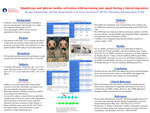
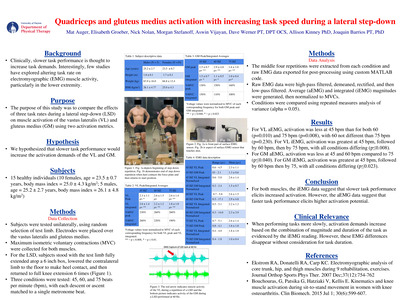
Quadriceps and gluteus medius activation with increasing task speed during a lateral step-down
Mat Auger, Elisabeth Groeber, Nick Nolan, Morgan Stefanoff, Aswin Vijayan, Dave Werner, Allison Kinney, and Joaquin A. Barrios
Clinically, slower task performance is thought to increase task demands. Interestingly, few studies have explored altering task rate on electromyographic (EMG) muscle activity, particularly in the lower extremity.
-
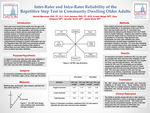
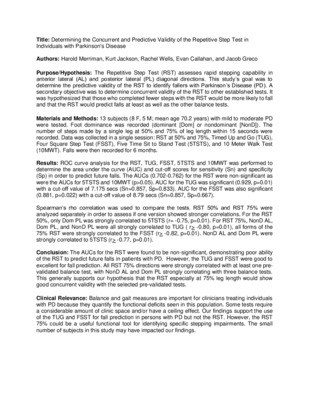
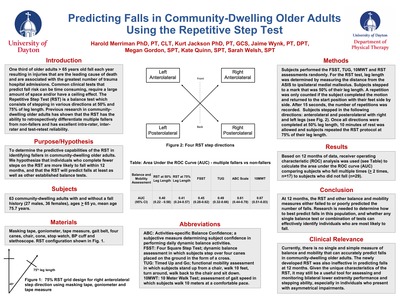
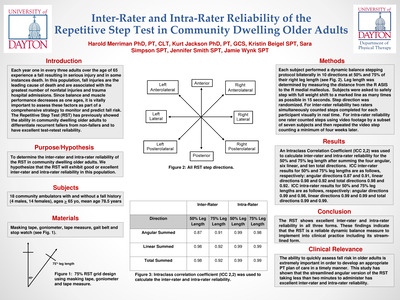
Inter-Rater and Intra-Rater Reliability of the Repetitive Step Test in Community Dwelling Older Adults
Harold L. Merriman, Kurt Jackson, Kristin Beigel, Sara Simpson, Jennifer Smith, and Jamie Wynk
Each year one in every three adults over the age of 65 experience a fall resulting in serious injury and in some instances death. In this population, fall injuries are the leading cause of death and are associated with the greatest number of nonfatal injuries and trauma hospital admissions. Since balance and muscle performance decreases as one ages, it is vitally important to assess these factors as part of a comprehensive strategy to monitor and predict fall risk. The Repetitive Step Test (RST) has previously showed the ability in community dwelling older adults to differentiate recurrent fallers from non-fallers and to have excellent test-retest reliability.
-
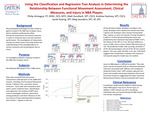
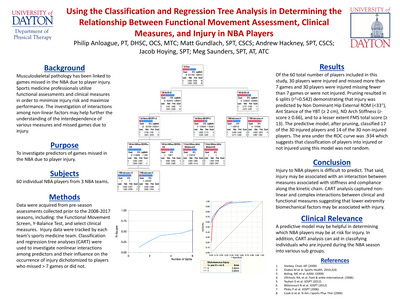
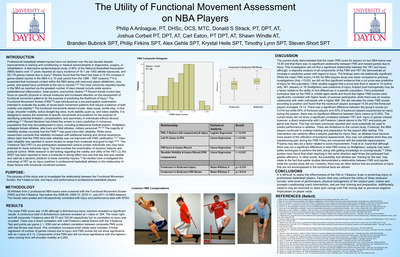
Using the Classification and Regression Tree Analysis in Determining the Relationship Between Functional Movement Assessment, Clinical Measures, and Injury in NBA Players
Philip A. Anloague, Matt Gundlach, Andrew Hackney, Jacob Hoying, and Meg Saunders
Musculoskeletal pathology has been linked to games missed in the NBA due to player injury. Sports medicine professionals utilize functional assessments and clinical measures in order to minimize injury risk and maximize performance. The investigation of interactions among non-linear factors may help further the understanding of the interdependence of various measures and missed games due to injury.
-
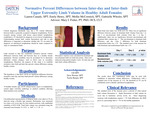
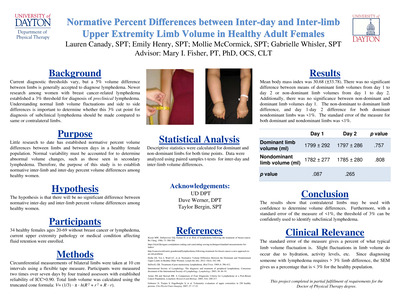
Normative Percent Differences between Inter-day and Inter-Limb Upper Extremity Volume in Healthy Adult Females
Lauren Canady, Emily Henry, Mollie McCormick, and Gabrielle Whisler
Current diagnostic thresholds vary, but a 5% volume difference between limbs is generally accepted to diagnose lymphedema. Newer research among women with breast cancer-related lymphedema established a 3% threshold for diagnosis of preclinical lymphedema. Understanding normal limb volume fluctuations and side to side differences is important to determine whether this 3% cut point for diagnosis of subclinical lymphedema should be made compared to same or contralateral limbs.
-
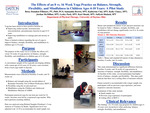
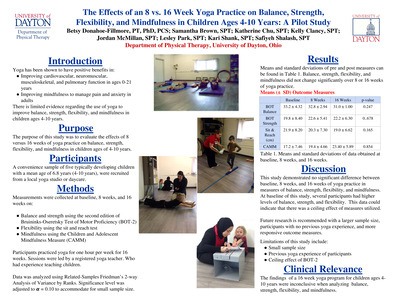
The Effects of an 8 vs. 16 Week Yoga Practice on Balance, Strength, Flexibility, and Mindfulness in Children Ages 4-10 Years: A Pilot Study
Betsy Donahoe-Fillmore, Samantha Brown, Katherine Chu, Kelly Clancy, Jordan McMillan, Lesley Park, Kari Shank, and Safiyeh Shalash
Yoga has been shown to have positive benefits in: Improving cardiovascular, neuromuscular, musculoskeletal, and pulmonary function in ages 0-21 years and improving mindfulness to manage pain and anxiety in adults. There is limited evidence regarding the use of yoga to improve balance, strength, flexibility, and mindfulness in children ages 4-10 years.
-
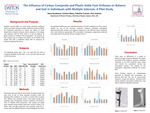
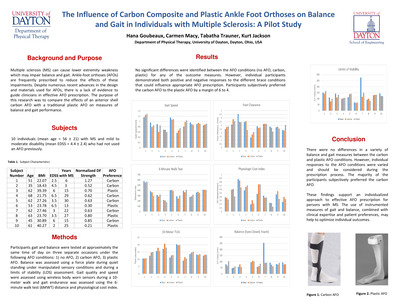
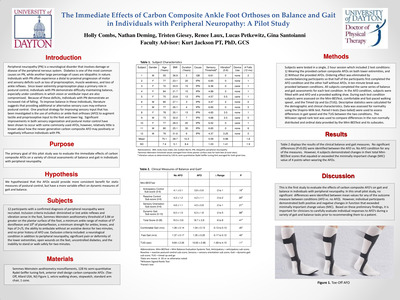
The Influence of Carbon Composite and Plastic Ankle Foot Orthoses on Balance and Gait in Individuals with Multiple Sclerosis: A Pilot Study
Hana Goubeaux, Carmen Macy, Tabatha Trauner, and Kurt Jackson
Multiple sclerosis (MS) can cause lower extremity weakness which may impair balance and gait. Ankle-foot orthoses (AFOs) are frequently prescribed to reduce the effects of these impairments. Despite numerous recent advances in the design and materials used for AFOs, there is a lack of evidence to guide clinicians in effective AFO prescription. The purpose of this research was to compare the effects of an anterior shell carbon AFO with a traditional plastic AFO on measures of balance and gait performance.
-
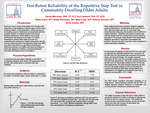
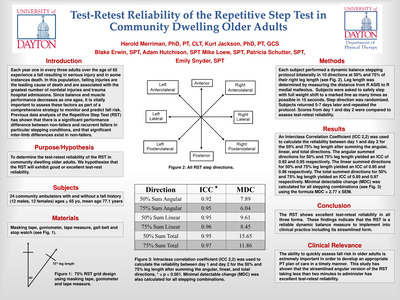
Test-Retest Reliability of the Repetitive Step Test in Community Dwelling Older Adults
Harold L. Merriman, Kurt Jackson, Blake Erwin, Adam Hutchison, Mike Loew, Patricia Schutter, and Emily Snyder
Each year one in every three adults over the age of 65 experience a fall resulting in serious injury and in some instances death. In this population, falling injuries are the leading cause of death and are associated with the greatest number of nonfatal injuries and trauma hospital admissions. Since balance and muscle performance decreases as one ages, it is vitally important to assess these factors as part of a comprehensive strategy to monitor and predict fall risk. Previous data analysis of the Repetitive Step Test (RST) has shown that there is a significant performance difference between non-fallers and recurrent fallers in particular stepping conditions, and that significant inter-limb differences exist in non-fallers.
-
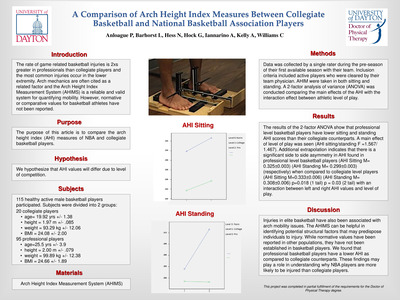
A Comparison of Arch Height Index Measures Between Collegiate Basketball and National Basketball Association Players
Philip Anloague, N Hess, L Barhorst, G Hock, A Iannarino, A Kelly, and C Williams
The rate of game related basketball injuries is 2xs greater in professionals than collegiate players and the most common injuries occur in the lower extremity. Arch mechanics are often cited as a related factor and the Arch Height Index Measurement System (AHIMS) is a reliable and valid system for quantifying mobility. However, normative or comparative values for basketball athletes have not been reported.
-
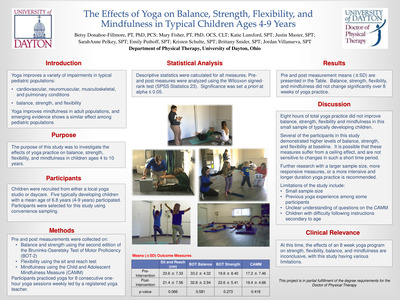
The Effects of Yoga on Balance, Strength, Flexibility, and Mindfulness in Typical Children Ages 4-9 Years
Betsy Donahoe Fillmore, Mary I. Fisher, Katie Lunsford, Justin Master, SarahAnne Pelkey, Emily Puthoff, Kristen Schulte, Brittany Snider, and Jordan Villanueva
Yoga improves a variety of impairments in typical pediatric populations: cardiovascular, neuromuscular, musculoskeletal, and pulmonary conditions, balance, strength, and flexibility. Yoga improves mindfulness in adult populations, and emerging evidence shows a similar effect among pediatric populations.
-
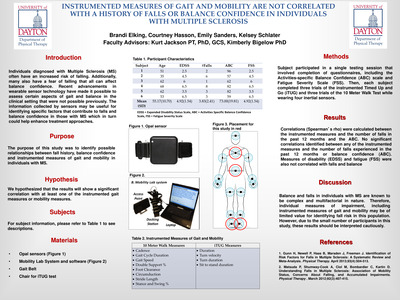
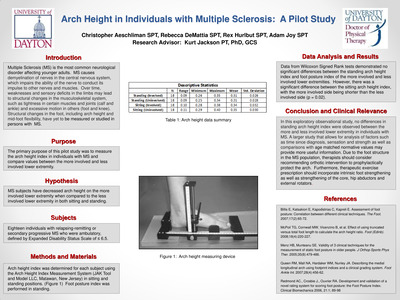
Instrumented Measures of Gait and Mobility Are Not Correlated with a History of Falls or Balance Confidence in Individuals with Multiple Sclerosis
Brandi Elking, Courtney Hasson, Emily Sanders, and Kelsey Schlater
Individuals diagnosed with Multiple Sclerosis (MS) often have an increased risk of falling. Additionally, many also have a fear of falling that all can affect balance confidence. Recent advancements in wearable sensor technology have made it possible to assess certain aspects of gait and balance in the clinical setting that were not possible previously. The information collected by sensors may be useful for identifying specific factors that contribute to falls and balance confidence in those with MS which in turn could help enhance treatment approaches.
-
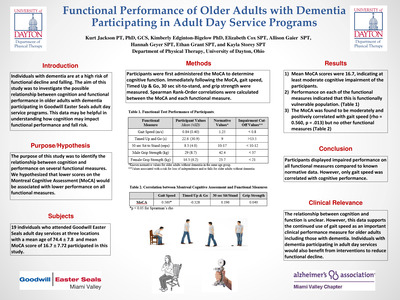
Functional Performance of Older Adults with Dementia Participating in Adult Day Service Programs
Kurt Jackson, Kimberly Edginton-Bigelow, Elizabeth Cox, Allison Gaier, Hannah Geyer, Ethan Grant, and Kayla Storey
Individuals with dementia are at a high risk of functional decline and falling. The aim of this study was to investigate the possible relationship between cognition and functional performance in older adults with dementia participating in Goodwill Easter Seals adult day service programs. This data may be helpful in understanding how cognition may impact functional performance and fall risk.
-
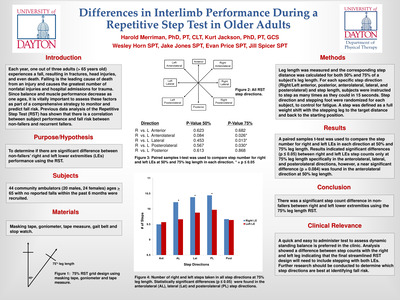
Differences in Interlimb Performance During a Repetitive Step Test in Older Adults
Harold L. Merriman, Kurt Jackson, Wesley Horn, Jake Jones, Evan Price, and Jill Spicer
Each year, one out of three adults (younger than 65 years old) experiences a fall, resulting in fractures, head injuries, and even death. Falling is the leading cause of death from an injury and causes the greatest number of nonfatal injuries and hospital admissions for trauma. Since balance and muscle performance decrease as one ages, it is vitally important to assess these factors as part of a comprehensive strategy to monitor and predict fall risk. Previous data analysis of the Repetitive Step Test (RST) has shown that there is a correlation between subject performance and fall risk between non-fallers and recurrent fallers.
-
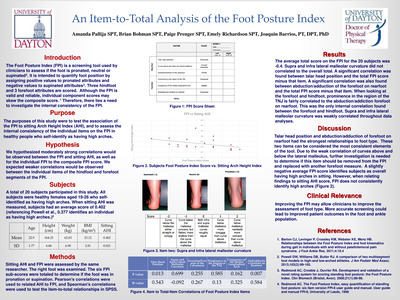
An Item-to-Total Analysis of the Foot Posture Index
Amanda Pallija, Brian Bohman, Paige Prenger, Emely Richardson, and Joaquin Barrios
The Foot Posture Index (FPI) is a screening tool used by clinicians to assess if the foot is pronated, neutral or supinated. It is intended to quantify foot position by assigning positive values to pronated attributes and negative values to supinated attributes. Three hindfoot and 3 forefoot attributes are scored. Although the FPI is valid and reliable, individual component scores may skew the composite score. Therefore, there lies a need to investigate the internal consistency of the FPI.
-
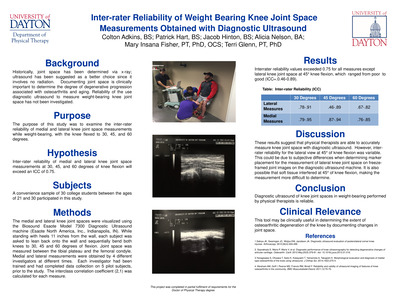
Inter-rater Reliability of Weight Bearing Knee Joint Space Measurements Obtained with Diagnostic Ultrasound
Colton Adkins, Patrick Hart, Jacob Hinton, and Alicia Nelson
Historically, joint space has been determined via x-ray; ultrasound has been suggested as a better choice since it involves no radiation. Documenting joint space is clinically important to determine the degree of degenerative progression associated with osteoarthritis and aging. Reliability of the use diagnostic ultrasound to measure weight-bearing knee joint space has not been investigated.
-
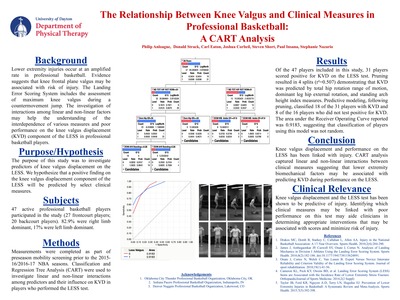
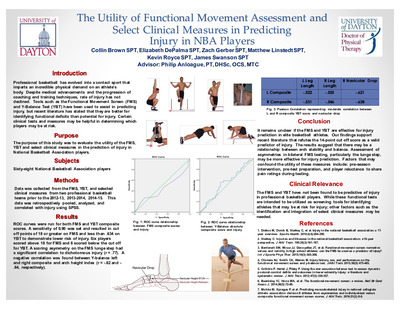
The Utility of Functional Movement Assessment and Select Clinical Measures in Predicting Injury in NBA Players
Collin Brown, Elizabeth DePalma, Zach Gerber, Matthew Linstedt, Kevin Royce, and James Swanson
Professional basketball has evolved into a contact sport that imparts an incredible physical demand on an athlete’s body. Despite medical advancements and the progression of coaching and training techniques, rate of injury has not declined. Tools such as the Functional Movement Screen (FMS) and Y-Balance Test (YBT) have been used to assist in predicting injury, but recent literature has stated that they are better for identifying functional deficits than potential for injury. Certain clinical tests and measures may be helpful in determining which players may be at risk.
-
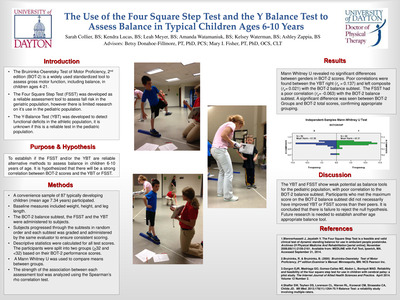
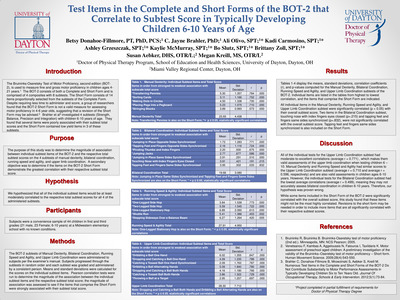
The Use of the Four Square Step Test and the Y Balance Test to Assess Balance in Typical Children Ages 6-10 Years
Sarah Collier, Kendra Lucas, Leah Meyer, Amanda Watamaniuk, Kelsey Waterman, and Ashely Zappia
The Bruininks-Oseretsky Test of Motor Proficiency, 2nd edition (BOT-2) is a widely used standardized tool to assess gross motor function, including balance, in children ages 4-21.The Four Square Step Test (FSST) was developed as a reliable assessment tool to assess fall risk in the geriatric population, however there is limited research on its use in the pediatric population. The Y-Balance Test (YBT) was developed to detect functional deficits in the athletic population, it is unknown if this is a reliable test in the pediatric population.
-
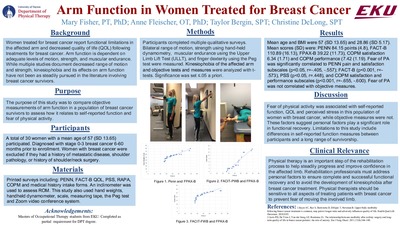
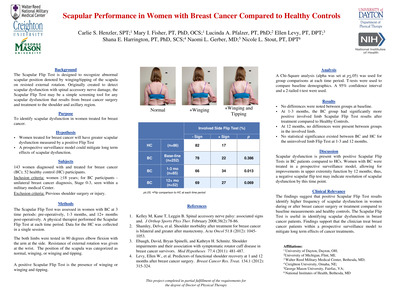
Scapular Performance in Women with Breast Cancer Compared to Healthy Controls
Carlie S. Henzler, Mary I. Fisher, Lucinda A. Pfalzer, Ellen Levy, Shana E. Harrington, Naomi L. Gerber, and Nicole L. Stout
The Scapular Flip Test is designed to recognize abnormal scapular position defined by winging/tipping of the scapula on resisted external rotation. Originally created to detect scapular dysfunction with spinal accessory nerve damage, the Scapular Flip Test may be a simple screening tool for any scapular dysfunction that results from breast cancer surgery and treatment to the shoulder and axillary region.
-
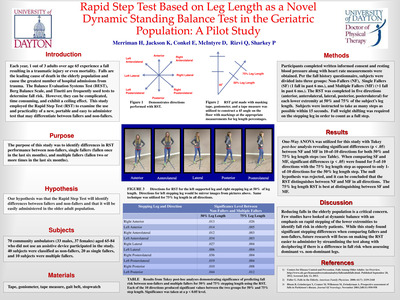
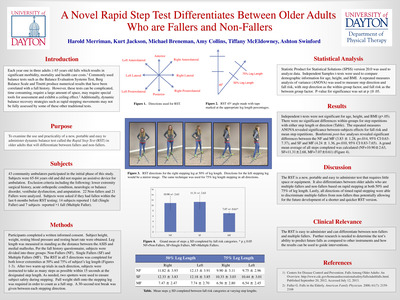
Rapid Step Test Based on Leg Length as a Novel Dynamic Standing Balance Test in the Geriatric Population: A Pilot Study
Harold L. Merriman, Kurt Jackson, E. Conkel, D McIntyre, Q Rizvi, and P Sharkey
Each year, 1 out of 3 adults over age 65 experience a fall resulting in a traumatic injury or even mortality. Falls are the leading cause of death in the elderly population and cause the greatest number of hospital admissions from trauma. The Balance Evaluation Systems Test (BEST), Berg Balance Scale, and Tinetti are frequently used tests to determine fall risk. However, they can be complicated, time consuming, and exhibit a ceiling effect. This study employed the Rapid Step Test (RST) to examine the use and practicality of a new, portable and easy to administer test that may differentiate between fallers and non-fallers.
-

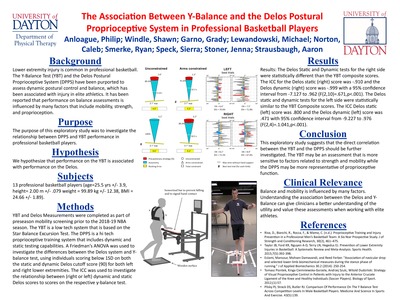
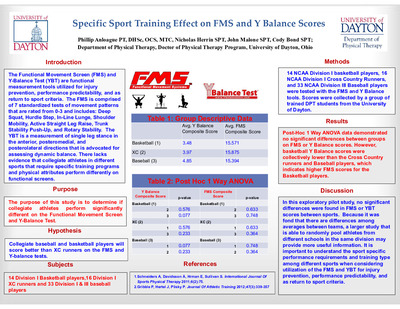
Specific Sport Training Effect on FMS and Y Balance Scores
Phillip Anloague, Nicholas Herrin, John Malone, and Cody Bond
The Functional Movement Screen (FMS) and Y-Balance Test (YBT) are functional measurement tools utilized for injury prevention, performance predictability, and as return to sport criteria. The FMS is comprised of 7 standardized tests of movement patterns that are rated from 0-3 and includes: Deep Squat, Hurdle Step, In-Line Lunge, Shoulder Mobility, Active Straight Leg Raise, Trunk Stability Push-Up, and Rotary Stability. The YBT is a measurement of single leg stance in the anterior, posteromedial, and posterolateral directions that is advocated for assessing dynamic balance. There lacks evidence that collegiate athletes in different sports that require specific training programs and physical attributes perform differently on functional screens.
-
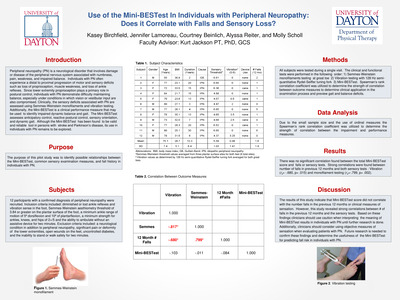
Use of the Mini-BESTest In Individuals with Peripheral Neuropathy: Does it Correlate with Falls and Sensory Loss?
Kasey Birchfield, Jennifer Lamoreau, Courtney Beinlich, Alyssa Reiter, and Molly Scholl
Peripheral neuropathy (PN) is a neurological disorder that involves damage or disease of the peripheral nervous system associated with numbness, pain, weakness, and impaired balance. Individuals with PN often experience a distal to proximal progression of motor and sensory deficits such as loss of proprioception, muscle weakness, and loss of ankle reflexes. Since lower extremity proprioception plays a primary role in postural control, individuals with PN demonstrate difficulty maintaining balance, especially under conditions in which vision or vestibular input are also compromised. Clinically, the sensory deficits associated with PN are assessed using Semmes-Weinstein monofilaments and vibration testing. Additionally, the Mini-BESTest is a clinical performance measure that may be used to identify impaired dynamic balance and gait. The Mini-BESTest assesses anticipatory control, reactive postural control, sensory orientation, and dynamic gait. Although the Mini-BESTest has been found to be valid and reliable tool in persons with stroke and Parkinson’s disease, its use in individuals with PN remains to be explored.
-
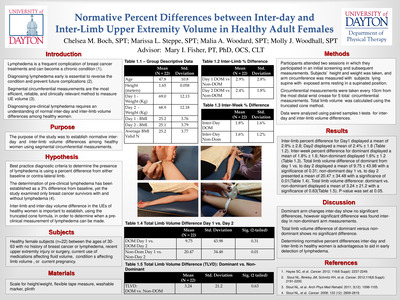
Normative Percent Differences between Inter-day and Inter-Limb Upper Extremity Volume in Healthy Adult Females
Chelsea M. Boch, Marissa L. Steppe, Malia A. Woodard, and Molly J. Woodhall
Lymphedema is a frequent complication of breast cancer treatments and can become a chronic condition. Diagnosing lymphedema early is essential to reverse the condition and prevent future complications. Segmental circumferential measurements are the most efficient, reliable, and clinically relevant method to measure UE volume. Diagnosing pre-clinical lymphedema requires an understanding of normal inter-day and inter-limb volume differences among healthy women.
Every spring since 2009, students in the Doctor of Physical Therapy program have presented their clinical research in a symposium for peers, faculty and professionals in the community. Completed in cooperation with faculty mentors, the projects often form the basis of publishable research submitted to professional conferences and reputable scholarly journals.
Printing is not supported at the primary Gallery Thumbnail page. Please first navigate to a specific Image before printing.