

-

Reflections on the Communication Master's Degree
Pat Enright, Dori Miller, Gift Olalusi, Emily Parker, Kaelene Walter
The Communication Graduate Practicum students created portfolios reflecting on their graduate studies. They collected assigned readings, projects, papers, and other elements from their graduate experience to craft a portfolio telling their masters degree story. Today they share highlights from their stories.
-
Rehabilitation programs and their effectiveness on reducing recidivism and arrest rates among juveniles
Matthew Pochatek
For this research project, I aim to explore various rehabilitation programs, with a focus on substance abuse treatment and mental health counseling, to assess their impact on juvenile recidivism. The primary research question I seek to answer is: Do rehabilitation programs reduce recidivism and arrest rates among juveniles, and if so, to what extent? The key outcome I intend to measure is the proportion of juveniles who, after participating in specific rehabilitation programs, either offend or re-offend. I will gather evidence of effectiveness for each rehab program and compare them. The independent variable in this study is the type of facility treatment received by individuals, such as mental health counseling or drug and alcohol rehabilitation. The dependent, or responding variable, is the recidivism rate among juveniles who have undergone treatment. Recidivism is defined as "a tendency to relapse into a previous condition or mode of behavior," and within criminology, it specifically refers to "the recurrence of criminal behavior, particularly following punishment"
-

Religion and mental health around the world: Similarities and differences
Aiden Grumbos, Jack Ishmael, Kenna Ryan
This is a literature review exploring how religion influences people's mental health and the similarities and differences seen in the ways different religions address mental health issues.
-
Religious Rhetoric in Our Lives
Audrey Alloto, Kolby Andwan, Sean Banks, Jordyn Boron, Nicole Chelew, Jack Doherty, Thomas Dwyer, Charles Frech, Thomas Fus, Dyan Garner, Gia Gentile, Caitlin Grevey, Elisabeth Gromofsky, Eileen Harris, Brady Hopkins, John Howland, Rylie Kollin, Maja Kosir, Emma Kovacevich, John Landis, Lotus Lazzara, Elena Loughlin, Collin Maclang, Maria Manzella, Ryan Marderosian, Ashley Mayr, Rachel Morgan, Owen Mullen, Gracelin O'Malley, Taylor Powell, Natalie Rach, Laney Reiss, Colin Richardson, Caitlyn Russell, Patrick Schwartz, Grace Scott, Jaden Secker, Natalia Serpe, Olivia Shirk, Kaitlyn Stehlik, Mary Stephens, Samantha Thomas, Thomas Thompson, Erica Velecela, Joseph Wallace, Alyson Walter, Elisabeth Watson, Hannah Witman, Jacob Wozniak, Megan Zielsdorf, Charlie Zieziula
The students in CMM 357 Religious Rhetoric spent the semester analyzing their own examples of rhetoric that explicitly or implicitly were religious in nature. Each group is sharing one of their reports that may focus on definitions of rhetoric, semiotics, dramatism, power, and/or civil religion.
-

Research Paper Quality Recognition
Sadwik Gummadavelli
Knowledge and innovations are shaped by using the quality and credibility of the scientific research. There always remains a challenge how to distinguish between impactful high-quality research and flawed. This project proposes a very systematic approach to classifying the research papers into good and bad categories where bad papers are those retracted from journals or conference proceedings and good papers are characterized by high citation counts. We explore the underlying factors that contribute to a papers scholarly influence or its eventual rejection by analyzing by citation patterns publication meta data and retraction records. We used machine learning models and feature extraction techniques to identify anomalies, trends and potential predictors of research quality. The findings of our study insights into highlighting the importance of citation behavior, the dynamics of academic publishing and scientific accountability. This study adds to the larger conversation about academic impact evaluation and lays the groundwork for automated tools that can help assess the reliability of research papers.
-
Resolving the function and evolution for two transcription factor genes that pattern a sexually dimorphic fruit fly pigmentation trait
Logan A. Brubaker, Hayley Long, Allison Pavlus
Animal morphological traits develop through the actions of and evolve through changes in genomic-encoded Gene Regulatory Networks or GRNs. Therefore, a robust understanding of the evolutionary developmental biology of traits requires knowledge about the architecture of GRNs and how such architecture evolves. Generally speaking, GRNs are hierarchical in structure, with their highest tier consisting of regulatory genes like transcription factors and the lowest tier consisting of the realizator genes whose encoded proteins end up making the trait. For several evo-devo model traits, some of the regulatory and realizator tier genes are known and their evolution have been chronicled. However, the architecture and evolution of an entire GRN has remained out of reach. This includes the GRN responsible for the sexually dimorphic pigmentation on the abdomens of Drosophila fruit flies. Here, new insights will be shared for two upper-tier transcription factors in the Drosophila melanogaster abdomen pigmentation GRN whose function and evolution have remained mostly un-studied.
-

Response of Bats to Solar Energy Developments
Connor Kurz
Solar energy developments are highly beneficial to renewable energy production, yet can fragment wildlife habitat and can affect sensitive mammal species, such as bats. Information on how bats are affected by renewable energy developments is well known for wind energy but very limited for solar energy. Ohio is home to 11 different bat species all with different traits, and all of them state protected. To better understand the response of bats to solar energy developments, we used acoustic monitoring techniques to record bat activity during the summer and fall at solar (n=5), forested (n=3), and prairie (n=3) sites. Bat activity was quantified using the number of passes per night and we used generalized linear mixed models to examine the relationship between activity and different environmental and site covariates. Using the same approach, we also examined species richness and diversity. Overall, we predict that solar energy developments will have a negative effect on bat activity and species composition compared to natural sites due to the reduced habitat complexity and therefore insect diversity. Our study will provide valuable insights on bat ecology in relation to sustainable energy and help inform on how to best mitigate and manage any impacts of these developments on bats in western Ohio.
-
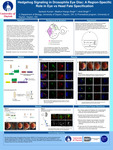
Role of Hedgehog in eye-head specification of Drosophila Melanogaster
Santosh Kumar
Hedgehog (Hh) signaling is a conserved pathway in both vertebrates and invertebrates, playing a crucial role in growth and differentiation. In the eye imaginal disc of Drosophila, Hh is expressed posterior to the developing morphogenetic furrow (MF) and in the dorsal anterior region within the developing ocellar field. While the role of Hh in MF progression is well understood, its function in the dorsal anterior region remains unclear. To investigate this, we overexpressed Hh in the Defective proventriculus (Dve) domain and interestingly observed enlargement of the ventral eye field. This finding suggests a potential interaction between Hh signaling and region-specific dorsal and ventral pathways, which may shed light on the molecular mechanisms governing eye versus head fate determination in Drosophila. Furthermore, we found that Hh signaling sustains ventral eye field expansion and photoreceptor differentiation by inducing decapentaplegic (dpp) expression in the ventral region through the transcription factor Cubitus interruptus (Cirep). Based on our preliminary data, we propose that increased dpp levels may elevate teashirt (tsh) expression. While tsh is expressed in both dorsal and ventral regions, it specifically promotes ventral eye development by inhibiting the homothorax (hth)-wingless (wg) positive feedback loop. This regulatory interaction may be restricted to the ventral region due to differences in molecular context, as the dorsal region may rely on Pannier (pnr) and Dve to sustain wg expression. To test this hypothesis, we will use immunohistochemistry and qRTPCR based approach to determine the level of diferent dorsal and ventral factors involved in dorsal and ventral eye-head specification in the context of gain of function and loss of function of Hh and Dpp.We strongly anticipate that this study will enhance our understanding of the molecular interplay governing dorsal and ventral eye versus head specification in Drosophila melanogaster. Keywords: Hedgehog, Dpp, Eye specification, Drosophila
-

Roman Aesthetics as Symbols of Power
Camden Daley
Since the fall of Rome, political movements have drawn upon its aesthetics to project power and instill pride in their base. This research explores why leaders and governments emulate Roman symbols and architecture, arguing that these choices serve as a deliberate strategy to inspire confidence and establish authority. By invoking Rome, political entities seek to connect themselves to a legacy of strength, stability, and imperial grandeur. This study examines three case studies: the United States, Napoleonic France, and Fascist Italy. These three examples will serve to analyze how each adapted Roman imagery to suit its political ambitions. The United States, in its founding, adopted neoclassical architecture and the Roman eagle. This is shown in Kumar’s (2017) “The Idea of Empire,” in which he describes America as being akin to the grandeur of Rome. Napoleon Bonaparte used Roman triumphal arches and imperial symbols to emulate the aesthetics associated with Roman emperors and conquerors. Mussolini, in his quest to restore Italian greatness, explicitly tied his regime to Rome, employing the use of the fasces and monumental architecture to evoke imperial dominance. This is most apparent through the Italian EUR complex, which combined modern and Roman architectural styles in order to emulate the appearance of Roman spaces, as explored in Muller’s (2012) “The imperial mirror: Rome as reference for empire.” This research demonstrates how aesthetics serve as more than decoration, they function as powerful political tools, shaping public perception and reinforcing authority. The study contributes to broader discussions on the role of historical identity in political messaging, emphasizing how the past continues to shape modern expressions of power.
-
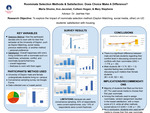
Roommate Selection Methods & Satisfaction: Does Choice Make A Difference?
Colleen G Hogan, Ava Jacomet, Maria Shomo, Mary Stephens
This study examines the relationship between the roommate selection method and student satisfaction with their housing experience at the University of Dayton. Specifically, it investigates whether students who choose their roommates through Dayton Matching, social media, or other means report higher levels of satisfaction with their living conditions. By analyzing these factors, this research aims to provide insight into how different selection methods influence students’ housing experiences and whether having control over the choice of a roommate leads to greater satisfaction.
-

Seamless AR Safety Training
Abhijeet Gupta
The construction industry remains one of the most hazardous sectors, with a worker losing their life every 99 minutes due to work-related incidents. Despite ongoing advancements in safety protocols, training programs, and regulations, the industry continues to struggle with preventable hazards, particularly falls, electrocutions, and struck-by incidents. Traditional safety measures, including PPE, signage, and worker training, often fall short due to complacency, distractions, and limited real-time hazard awareness. To address these challenges, technology-driven safety solutions are becoming increasingly essential. This study aims to develop an advanced construction safety framework that leverages Augmented Reality (AR) simulations to enhance hazard recognition and safety training. By creating realistic, interactive hazard scenarios, workers can experience high-risk situations in a controlled, immersive environment, leading to improved hazard awareness and response. The AR simulations will focus on four primary hazards—falling, tripping, electrocution, and falling objects—using computer vision and AI-driven hazard detection for real-time safety training. In addition to developing the AR-based framework, this research will systematically review and evaluate twelve emerging safety technologies to assess their effectiveness in preventing construction hazards. These include – Building Information Modeling (BIM), Augmented Reality (AR) & Virtual Reality (VR), Drones, Computer Vision, Wearable Sensors, Internet of Things (IoT) Devices, Predictive Analytics, Proximity Alert Systems, AI/Machine Learning (AI/ML), Safety Management Systems, Digital Twins, Robotics & Automation. The study will construct a technology taxonomy to categorize these solutions and conduct a comparative analysis of pre-2020 and post-2020 research, highlighting how recent advancements have addressed prior limitations. By integrating real-time hazard detection using AR with a comprehensive review of emerging safety technologies, this research aims to provide insights for improving construction safety standards, reducing major workplace fatalities, and enhancing worker training and preparedness.
-
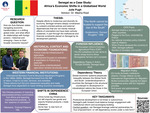
Senegal as a Case Study: Africa’s Economic Shifts in a Globalized World
Julie Pugh
This presentation examines the economic transformation of Senegal, focusing specifically on how the state is navigating its evolving relationships with foreign influences such as France, China, and international institutions. As a former French colony, Senegal continues to confront structural economic dependencies that tie its success to the West, particularly through its currency and the presence of French multinational corporations. At the same time, rising world powers, such as China, have become increasingly important in the region as they aim to exert influence previously held by colonial powers through infrastructure deals and trade partnerships that impact Senegal’s economic policies, investments, and labor markets –raising new questions about economic sovereignty. These external pressures loom large as Senegal pursues economic diversification, labor market reforms, and regional integration in response to demographic changes and in an attempt to assert greater control over its economic future. Previous research on postcolonial African economies has examined structural dependencies and foreign investment patterns, but this presentation seeks both to provide a contemporary perspective on how Senegal is responding to shifts in global power and looking to promote a sustainable economic future. In doing so, this presentation draws on a range of sources, including economic and policy reports from international organizations, scholarly analyses of African economic development, and recent news and think tank publications. Ultimately, this presentation seeks to utilize Senegal as a valuable lens through which broader conclusions on Africa’s economic modernization and position in a shifting global order can be drawn.
-

Shielded RL: A Safe Reinforcement Learning Concept
Shruti Singh
Artificial Intelligence (AI) continues to be a part of our everyday life in ways one thoughtimpossible. From instantly curated music playlists and virtual experiences to autonomousvehicles on the roads, everyday life has become intertwined with AI’s remarkablecapabilities. A significant driving force behind these advancements is reinforcement learning(RL), a field of AI that excels at conquering challenging tasks through interactions withdynamic environments. Its adaptability has inspired solutions—from steering driverless carsand maneuvering robot fleets to managing warehouse logistics and guiding patienttreatments—reinforcement learning effortlessly demonstrates its power across diversedomains. Unfortunately, similar to any popular field, RL-based systems also draw theattention of malicious actors who look for cracks in these sophisticated models. Inhigh-stakes situations, malicious noise injected at precisely the right time can compromisethe integrity of an RL system, leading to potentially disastrous outcomes. Think of aself-driving car receiving deceptive signals about obstacles or lane markings—turning whatshould be a smooth journey into a hazard for passengers and pedestrians alike. This kind ofstrategic tampering, known as an adversarial attack, can derail an RL agent if we fail to usetailored defense mechanisms. Although there is no universal, foolproof remedy foradversarial onslaughts, developing strategies that detect, evaluate, and counter suchthreats—based on the specific needs and vulnerabilities of a given system—forms thebedrock of robust protection. This brings us to the idea of shielded reinforcement learning(shielded RL), which acts like a security gate that stands between the learning agent andpotential disaster. Much like the way we described adversarial attacks in everyday terms,shielded RL can be understood as a “safety net” for the agent: it continually monitorspossible actions and prevents reckless or unsafe choices before they become catastrophic.In other words, while the RL agent learns by trial and error, the shield remainsever-vigilant—subtly guiding it around pitfalls and ensuring that it does not stray intodangerous territory. By embracing shielded RL, we can build robust reinforcement learningsystems that not only perform impressively, but also stay safe against determined attackers.
-

SHIFT: Portfolio Show at Stander Symposium
Avery Bocock, Kevin Brun, Noah Davisson, Sebastian De Leon Osorio, Mary Dent, Elaina Doggett, Erin Doherty, Isa Evans, Jillian Fahey, Kevin Figueroa, Laurel Grelle, Maggie Grunden, Quinn Heisey, Emily Kintz, Katherine Lawlor, Elaina Lear, John Maloney, Ava Mendenhall, Lucy Miles, Jordan Mitchell, Maddison Mitchell, Catherine Orban, Jacob Owens, Jonathan Quiroz, Hannah Schultz, Madelyn Selong, Isabella Winkler
This Capstone event includes all 25 seniors graduating in 2025 with a degree in Graphic Design presenting the culmination of their coursework within and beyond the Department of Art and Design. Students will share their portfolios—research, creative process, and outcomes—in the context of a formal presentation of both classroom and real-world projects. Work will be shared simultaneously.
-
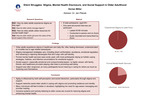
Silent Struggles: Stigma, Mental Health Disclosure, and Social Support in Older Adulthood
Dori Miller
As the global population ages, mental health concerns among older adults have become an increasingly important public health issue. Despite growing awareness of mental health stigma, little research has explored how older adults navigate stigma, selective disclosure, and social support in the context of mental health. Stigma, including both public and internalized stigma, can significantly impact older adults' willingness to seek mental health support, often leading to selective disclosure—the decision to reveal or conceal mental health struggles based on concerns about social acceptance. This study applies Stigma Management Communication (SMC) theory (Meisenbach, 2010) and the conceptual framework of social support (Taylor, 2011) to examine how older adults manage disclosure and the role of social networks in shaping these decisions.Using qualitative methods, this research employs semi-structured interviews with adults aged 65 and older to explore their lived experiences with mental health stigma, disclosure strategies, and social support. This approach provides an in-depth understanding of how stigma influences help-seeking behaviors and interpersonal relationships. Findings from this study will contribute to a more nuanced understanding of how older adults negotiate mental health disclosure, maintain social connections, and mitigate stigma’s negative effects.Addressing this gap in the literature is critical for developing stigma-reduction strategies and ensuring that mental health interventions are inclusive and effective for older adults. Without addressing these challenges, older adults may continue to experience barriers to care, leading to increased isolation and unmet mental health needs. By shedding light on these issues, this study aims to inform policies, healthcare practices, and social support initiatives that foster a more supportive environment for aging individuals. Ultimately, this research seeks to promote mental health equity, social inclusion, and improved well-being for older adults navigating mental health challenges in later life.
-
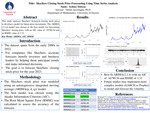
Skechers Closing Stock Price Forecasting Using Time Series Analysis
Sydney Dobyns
This study analyzes the historical closing stock price of Skechers to develop a predictive model for future price movements. The dataset spans from the early 2000s to December 31, 2019, and we will forecast stock closing price for the period 2020-2023. Analyzing the dataset reveals that the original time series is non-stationary which requires transformation before applying forecasting models. Various time series models are evaluated based on performance metrics such as Akaike Information Criterion (AIC), Root Mean Square Error (RMSE), Mean Absolute Error (MAE), Mean Percentage Error (MPE), and Mean Absolute Percentage Error (MAPE). By comparing these models we aim to determine the most accurate approach for predicting Skechers' future stock prices. Given the ever-changing nature of the retail industry, where consumer trends, economic conditions, and competition continuously fluctuates. It is important to develop a reliable forecasting method. Accurate predictions can assist investors, business leaders, and analysts in making informed decisions, allowing them to better navigate market uncertainties and strategize for future growth.
-
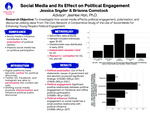
Social Media and Its Effect on Political Engagement
Brianna Comstock, Jessica Snyder
This research investigates how social media effects political engagement, polarization, and discourse. It is a secondary study that utilizes data from The Civic Network: A Comparative Study of the Use of Social Media for Enhancing Young People's Political Engagement (Australia, United Kingdom, and United States, 2013).
-

Social Science in Action: Student Reflections on Experiential Learning in International Development, Immigration Advocacy, and Family Law Internships
Ryan Ballou, Gabriella Grant, Abigail Ulery
The University of Dayton provides extensive pathways for students to participate in experiential learning and community engagement opportunities. These experiences are often transformative and shape students’ future careers trajectories. Yet there are few venues to learn from students about how these experiences deepen and intersect with their academic courses of study. This is a missed opportunity to interrogate the intersection of theory and praxis. In this panel, three students who have completed an internship related to their social science course of study will discuss their internship work, what they learned, and how it shapes their future vocation. They will also reflect on connections to our current political moment, as the social sciences are being threatened by several external forces. One student will discuss her off-campus work in the international development sector at a Washington DC internship (Counterpart International). Another student will discuss her on-campus work at the UD Law School Immigration Clinic, where she worked on gender-based asylum cases. Finally, one student will discuss his work as a research assistant for a sociology project on divorce law in Kentucky. Collectively, they also reflect on what their social science education has meant to them over their undergraduate career.
-
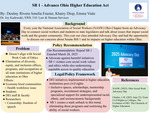
Social Work Advocacy Day: SB 1 - Advance Ohio Higher Education Act
Oumoulkhairy Diop, Amelia Frazier, Destiny Rivera, Emma Viale
In this project prepared for SWK 310, we share our reflections and insights gained from our experience participating in the Social Work Advocacy Day in Columbus, Ohio in March 2025. During our trip we attended advocacy training and planning sessions and met with state legislators and/or their staff. This presentation details our experiences at Advocacy Day, outlines an area of advocacy, and describes how we advocated for change through the lens of the Social Work framework.
-
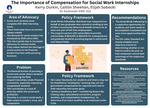
Social Work Advocacy Day: The Importance of Compensation for Social Work Internships
Kerry Durkin, Tyler Leffew, Caitlin Sheehan, Elijah Sobecki
In this project prepared for SWK 310, we share our reflections and insights gained from our experience participating in the Social Work Advocacy Day in Columbus, Ohio in March 2025. During our trip we attended advocacy training and planning sessions and met with state legislators and/or their staff. This presentation details our experiences at Advocacy Day, outlines an area of advocacy, and describes how we advocated for change through the lens of the Social Work framework.
-
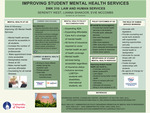
Social Work Advocacy on Campus: Applying the Social Work Framework to Evaluate Student Mental Health Policy
Evie McCombs, Lianna Shakoor, Serenity West
In this project prepared for SWK 310, we evaluate a law/policy that impacts the campus community through the lens of the Social Work framework. We discuss the impact of these policies on the campus community as well as on relevant human services, we review the history of the law/policy, and we lay out a recommendation and advocacy plan to promote positive change.
-
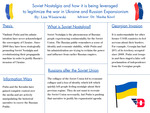
Soviet Nostalgia and how it is being leveraged to legitimize the war in Ukraine and Russian Expansionism
Liza Wisniewski
The collapse of the USSR has remained prevalent in Vladimir Putin’s political strategy throughout his career. In his extended presidency, he has worked hand in hand with the Kremlin to promote a newly revised history of the past century. His administration can be seen using the concept of nostalgia for the Soviet Union to justify the violence of Russian Expansion in the 21st century. This research paper will dive into case studies surrounding the war in Ukraine and the occupation of Georgian Territories. The main goal of this research is to understand the manipulation tactics of the Russian government and how they are shaping public opinion through tactical historical changes in order to gain support for the ongoing wars and occupation. Vladimir Putin has taken the collective memory of the Russian people and strategically reshaped it to attempt to serve expansionist ideologies. This research is being conducted by consulting peer-reviewed academic journals and observing current trends and news stories coming out of Russian media. Observing the narratives and framing techniques used in Russian news sources and comparing them with peer-reviewed academic journals provides the primary evidence for this research. This research recognizes many patterns of disinformation. These patterns support the claim that Soviet Nostalgia and World War II rhetoric are being used as propaganda to justify the war to the Global community. The significance of this work is directly related to the current geopolitical landscape with Russia in its third year of the Ukrainian invasion. The concept of Soviet nostalgia and how it is being used for manipulation can be seen plainly throughout Putin’s administration. Understanding the phenomenon is crucial in analyzing the geopolitical movements shaping the international community today.
-
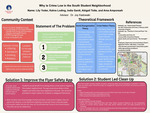
S.S.S.S.: Student South Side Safety
Ama Amponsah, India Gantt, Kahra Loding, Abigail Totte, Lily Yoder
In this class project for SOC 324: Communities & Crime, we worked to identify a crime problem or a plan to promote safety that is pertinent to our own community. We applied relevant social science theories in order to understand how to promote continued safety in Campus South Apartments. Based on these theoretical explanations, we offer strategies to to enhance community safety, as well as an action plan to implement our recommended solutions.
-

Standardizing Magnetic Bead-Based PCR for Analyzing Quantitative Gene Expression, Followed by Sequencing
Malabika Bhowmik, Tracy Dentu, Jason Galaska, Tooba Momin, Sheilah Njoka, Grace Van Kerkhove
Digital PCR (dPCR) is an advanced molecular technique that enables the absolute quantification of nucleic acids with high sensitivity, precision, and reproducibility. Unlike conventional quantitative PCR (qPCR), dPCR does not rely on standard curves. Instead, it partitions the sample into thousands of individual reactions, where target DNA or cDNA (for RNA) molecules are amplified and detected in a binary (positive/negative) manner. The fraction of positive partitions can then be analyzed using Poisson statistics to determine the absolute copy number of the target sequence.This study aims to integrate magnetic bead-based PCR with dPCR. Magnetic beads provide a solid-phase support for nucleic acid binding, reducing sample loss and allowing the amplified product to be further analyzed for nucleotide sequencing. In this study, we utilized streptavidin-coated Dynabeads (1 µm diameter). A biotinylated forward primer targeting the human coronavirus OC43 (HCoV-OC43) spike protein gene was immobilized onto the Dynabeads, followed by PCR amplification.Our results showed efficient binding of the forward primer to the Dynabeads (45.22 ± 4.11% binding efficiency). The PCR product was successfully amplified on the beads, as confirmed by gel electrophoresis following the elution of DNA from the microbeads. Overall, our findings indicate that Dynabead-bound PCR products can be effectively utilized for digital PCR, followed by nucleotide sequencing using an ion-sensitive photonic field-effect waveguide (ISPFEW) chip.
-

Static Scenes with Dynamic Perceptions
Kunal Agrawal
In this paper, we explore how computers can recognize motion illusions in static images—pictures that trick our eyes into seeing movement. To study this, we created a new dataset called MISS, which includes images with and without motion illusions. We tested advanced deep learning models to see how well they could identify these illusions and also checked whether color plays an important role. Our results show that these models are good at spotting motion illusions, especially when the images are in color. This highlights the importance of color in helping machines understand motion in still pictures.
Printing is not supported at the primary Gallery Thumbnail page. Please first navigate to a specific Image before printing.