

-
The regulation of the Drosophila melanogaster pale gene and its evolution during the origin of a dimorphic pigmentation trait
Devon Seibert, Ashley Williams
The coordinated expressions of trait building, so-called “realizator”, genes in the appropriate cell types and developmental stages are two impressive outcomes of the genetic and molecular mechanisms of morphological evolution. For each realizator gene, its pattern of expression is anticipated to result from the interaction of a combination of transcription factors to binding sites within one or more cis-regulatory element (CRE). A question that remains murky is to what extent these similar patterns of realizator expression require their CREs to be bound by similar combinations of transcription factors. One model trait that may shed light on this question is the sexually dimorphic pattern abdomen pigmentation that evolved in the lineage of Drosophila (D.) melanogaster fruit flies. This male-specific pattern of melanic pigmentation on the posterior abdomen results from the spatial-, temporal-, and sex-specific deployment of a pathway of metabolic genes. While the CREs for several of these pathway genes have been well-studied, the biochemically first acting gene, known as pale, has received little attention. Here, we will share insights from studies on the regulation of the D. melanogaster pale gene and how this regulation and pale expression evolved during the origin and diversification of this pigmentation trait.
-
The Rise of the Far Right in France & Impact on French Immigration Policy
Rose Philbin
The National Rally, France’s right-wing populist and nationalist party, has seen swift growth in recent years under the leadership of Parliamentary Party Leader, Marine Le Pen. Formerly a party on the political outskirts, in July of 2024 it won more seats in the French parliament than it has had in any other time in history. This project explores the French political system and the factors that have led the National Rally to gain increased popularity in the last decade. Additionally, it investigates how immigration has impacted France, the French government’s response to it, and how this situation will continue to change in the future. This project addresses the question: what are the factors that have led to the rise of the far right in France and how has this rise impacted French immigration policies? The rise of far-right ideals has historically included ideology that stresses racism, antisemitism, and xenophobia. Being aware of these global political shifts is essential in understanding the future impacts of the far-right in France, as well as its effects worldwide.
-
The Role of Temperature and Transcription Factor CodY in Regulating the Effects of Propionate on Listeria monocytogenes Lactate Dehydrogenase Activity
Emily Backus, Angelina Giannetto
Listeria monocytogenes is a bacterial foodborne pathogen that can cause severe enteric infections with high mortality rates. During transmission, L. monocytogenes is exposed to propionate both as a common additive in food matrices and as a metabolic byproduct of our intestinal microbiota. However, how L. monocytogenes adapts to propionate exposure is not fully understood. In this study, we investigated how propionate exposure regulates the activity of lactate dehydrogenase (LDH). LDH activity is critical for bacteria to maintain redox homeostasis and therefore can be a good indicator for bacterial fitness. Therefore, bacteria grown under different conditions with or without propionate were harvested and lysed. LDH activities were quantified in the resulting lysates using Pierce LDH Cytotoxicity Assay Kit. To investigate how L. monocytogenes LDH activity is regulated by propionate under different environmental conditions, we analyzed the effects of temperature on wildtype L. monocytogenes LDH activity. We compared the results of 0 degrees Celsius, with or without propionate, and then 37 degrees Celsius, with or without propionate. We discovered that there was no statistically significant difference between any of the temperatures and with or without the presence of propionate. Moreover, to explore the molecular mechanism underlying the regulation of LDH activity, we compared the results between wildtype L. monocytogenes and a mutant strain lacking the transcription factor CodY. We found that while propionate didn't significantly change LDH activities, the lack of CodY resulted in a significantly lower LDH activity. These results highlight the potential role of CodY in activating LDH production.
-
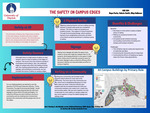
The Safety on Campus Edges
Riley Holkema, Maya Parks, Valerie Smith
In this class project for SOC 324: Communities & Crime, we worked to identify a crime problem or a plan to promote safety that is pertinent to our own community. We applied relevant social science theories in order to understand how to promote safety on campus, especially along campus edges. Based on these theoretical explanations, we offer strategies to address the crime problem and to enhance community safety, as well as an action plan to implement our recommended solutions.
-

The Transformative Role of Art in Education: Cultivating Creativity, Confidence, and Compassion
Cindy Pham
Although often overlooked, art plays a significant role in shaping a holistic education that enhances creativity, fosters confidence, and promotes emotional development among students. In highlighting the instrumental contributions that art has on the educational experience, this project advocates for the continued inclusion of arts within school systems as it is evident that art can immensely support students’ social-emotional maturity and self-efficacy.
-

The Use of Novel Additively Manufactured Electronics Techniques in the Design of Multifunctional 3D Printed Capacitors
Tanner Cuttone, Bridget Gerber, Christopher Ruetschle, Zhe-Yu Yu
Rapid advancements in the emerging field of Additive Manufacturing Electronics (AME) over the past several years provide an innovative and cost-effective solution for the fabrication of multifunctional, frequency-selective composites that can be implemented for a variety of applications in avionics and electronic warfare. The overall aim of this study is to explore two different fabrication techniques (hybrid FDM versus conformal conductive ink) to create a 3D printed antenna and measure the corresponding signal strength, bandwidth, and polarization for each method. New hybrid metal-infused 3D printer feedstock filaments offer a compromise between ultra-lightweight, elastic polymers with relatively low conductivity and melting points, and full metal parts produced through much more expensive additive processes such as laser-powder bed fusion. 3D printing with metal-infused filament comprises an emerging new field coined “metal deposition modeling”, which when combined with dual-extrusion processes, provides an innovative strategy for creating multifunction, multi-layer, multi-material electronic devices with distinct conductive, dielectric, and substrate layers. By comparison, high resolution deposition of thin-film, nanoparticle silver and dielectric inks onto flexible substrate layers provides a revolutionary fabrication technique for flexible, conformal 3D printed circuit boards (PCBs).
-
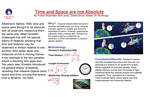
Time and Space are not Absolute
Brett Jones, Andrew Shoemaker, Charles Strunc
Before 1905, it was believed that time and space were absolute. Two observers will measure the same time and space regardless of the frame of reference where measurements are made. However, Albert Einstein challenged this long-held belief after introducing his well known special theory of relativity. This theory transformed how we view the universe as a whole. His theory shows that two observers would measure different times and distances when they move with respect to each other. In particular, time slows down and distance shrinks in moving frames. As an example, in our presentation we will discuss the twin paradox where we will show that the traveling twin will age less. Ten years later (1915), Einstein introduced his general theory of relativity where he shows that massive objects like planets and stars can bend space and time around them, affecting how the fabrics of space-time behave. This idea upends the traditional view of a constant, unchanging reality, showing instead that time and space are dynamic and interwoven in ways we’d never imagined before.
-
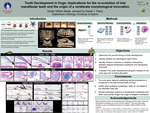
Tooth Development in Frogs: Implications for the Re-Evolution of Lost Mandibular Teeth and the Origin of Vertebrate Morphological Innovation
Kyliah Gilliam-Beale
Teeth have been maintained across most vertebrates for 400 million years, and the core regulatory network underlying tooth formation is deeply conserved in the embryonic jaws of fishes and amniotes. Unlike other vertebrates, frog odontogenesis is delayed, occurring during metamorphosis. Larval anurans possess unique keratinized mouthparts that functionally replace, and potentially inhibit, teeth. The majority of frogs form teeth on the upper jaw but lack lower jaw dentition; however, a single species re-evolved mandibular teeth. The developmental- genetic mechanisms underlying tooth formation is poorly understood in frogs, and it is unknown if an ancestral program is partially maintained in the lower jaw, providing a putative mechanism for recovering lost mandibular teeth. Using a developmental series of a non-model frog, we assessed 1) if the gene network underlying odontogenic competence is conserved in the late- forming teeth of frogs, 2) if keratinized mouthparts of tadpoles impede tooth induction, and 3) if transient tooth rudiments form in the anuran mandible. The frog upper jaw displays dental expression patterns comparable to other vertebrates, supporting the conservation of the tooth development network. Teeth emerge before keratinized mouthparts degenerate, but their location may be spatially constrained by keratin. No evidence of tooth development was found in the mandible, suggesting that frogs are unique in losing teeth without a trace. Overlapping gene expression patterns are present in tadpole keratinized mouthparts and frog teeth. We hypothesize that the novel mouthparts of tadpoles did not arise de novo but originated by partially co-opting the developmental program that typically orchestrates odontogenesis.
-
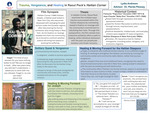
Trauma, Vengeance, and Healing in Haitian Corner
Lydia Andrews
This presentation examines how Raoul Peck’s 1987 film Haitian Corner explores the different ways trauma is processed within the Haitian diaspora, contrasting the protagonist Joseph’s obsession with vengeance against his community’s focus on rebuilding. Joseph, a survivor of the Duvalier dictatorship displaced in New York City, is consumed by his past, isolating himself as he relentlessly pursues his former torturer. Whereas, characters like Sarah and Hegel, who have endured similar trauma, exile, and displacement, focus on establishing stability and creating supportive spaces for their community in New York. While much of the Haitian diaspora prioritizes moving forward, Joseph remains trapped in a cycle of traumatic memories and vengeance. Through this juxtaposition, Peck reveals the complex reality of overcoming trauma: healing occurs in various ways, at different paces, and on different timelines. In this way, Haitian Corner gives insight into the Haitian diaspora’s diverse experiences and can resonate with communities and individuals dealing with similar histories of political violence and displacement. Ultimately, Peck leverages Haitian cinema as historical testimony and a means of reclaiming agency, depicting the diaspora’s struggles and resilience, and contributing to broader discourse on trauma within the Francophone world.
-

Type theory language and space mappings
Joseph Kopp
we explore the integration of constructive type theory within formal mathematical languages, focusing on its implementation in the Lean proof assistant. We delve into the Curry-Howard correspondence, which establishes a profound connection between logic and type theory, enabling propositions to be represented as types and proofs as programs. In particular, those concepts involving mappings between spaces, can be effectively modeled within this formal system.
-
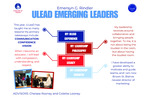
UleaD Emerging Leaders Program Final Projects
Leno Bernardo, Ethan Boatwright, Kiara Boehringer, Benjamin Boyle, Avery L Brewer, Grey Bryant, Annabelle Busch, Emma Comer, Andee Ely, Gianna Frongia, Ryan Gavigan, Marcus Getz, Addison Goare, Sarah Heflin, Susan Joseph, Ella Kohrs, Adam Kolar, Mary Kraus, Grace E Lees, Landon Lesko, Katelyn Mare, Margaret McGovern, Marina Polavieja, Wyatt Rhoades, Emersyn Rindler, Caleb Sellers, Grace Selm, Sophia Smith, Jeevan J Subramaniam, Joe Suer, Madilyn Wicker
The UleaD Emerging Leaders Program, sponsored by the Student Leadership Programs Office, is a cohort-based initiative for first-year students that brings participants together for monthly sessions to develop a range of leadership skills and abilities such as effectively leading change, inclusive leadership, building meaningful relationships, inspiring others to act, and building resilience. Program participants work on their final project posters throughout the spring semester to reflect on what they have learned from the program and present at Stander. Students' final project posters include their leadership philosophy, how they have grown as leaders, what they have learned from the UleaD program, and how they hope to impact the UD community.
-

Understanding Avondale: The Historical Roots of Contemporary Challenges
Alexandra Amrhein
The neighborhood of Avondale in Cincinnati, Ohio is characterized by a puzzling juxtaposition between elegant historic mansions and poverty, unemployment, and crime. Stigmatized for these latter qualities, its people have worked valiantly to revitalize their community, but pushing back against decades of economic depression is a challenge. This project offers a plausible, historically-based explanation for these conditions which have prevented Avondale from flourishing. Presenting research on Cincinnati’s 1930s redlining, the connection between West End and Avondale, the eruption of riots in the 1960s, and the consequent stigmatization of Avondale, I attempt to trace the domino effect that appears to have locked the neighborhood in economic stagnation and bred crime. I then discuss specific problems with which Avondale residents are currently faced. Citing Cincinnati’s census data and most recent Equity Indicators Report, I share statistics on poverty, unemployment, and crime rates that display the contemporary implications of Avondale’s earlier-discussed history. The effects on residents’ health are also concerning, and the link between possible social determinants (access to medication, stress-induced anxiety, and level of health literacy) and health is explored. Finally, I propose potential steps forward for undergraduates, like myself, who are inspired to use their research to help efforts currently underway in communities like Avondale. Though it may seem daunting at first to face such overwhelming issues, the smallest acts of service – as simple as writing a letter – could help set in motion a world of difference.
-

Understanding Calcium Signaling Pathways in 3D Microfluidic Models of Glioblastoma Multiforme
Jenna Abdelhamed
Glioblastoma Multiforme (GBM) is one of the most malignant types of brain cancer and, therefore, highly fatal. Current lines of treatment include surgical resection, radiation, and chemotherapy, all of which GBM resists due to the complexity of GBM tumors, cells, and their microenvironment. Numerous research studies have been conducted to understand the oncogenesis, invasion mechanisms, and cellular characteristics of GBM. One specific mechanism that has caught the attention of researchers is calcium signaling, which plays a significant role in cell proliferation, resistance to treatment, and metastatic-related processes. Emerging targets for calcium signaling include transient receptor potential channels (TRP), a family of channels that mediate Ca2+ signaling and play a role in GBM development and invasion. This study examines and compares calcium signaling in non-invasive and invasive phenotypes of GBM. This will be done by generating a migrating cell model consisting of GBM spheroids placed into a Polydimethylsiloxane (PDMS) microfluidic device, where I can observe the cells sprouting from the spheroid and traveling through microchannels, monitor migration, and measure cytosolic calcium levels using dye for both the non-invasive and invasive phenotypes. It was hypothesized that more calcium would be associated with the invasive GBM model than the non-invasive one. This hypothesis was tested using spheroids from four different GBM cell lines: A-172, U118MG, LN229, and U-87MG. This allows for the examination of common invasion responses and characteristics across GBM cell lines. This project lays the groundwork for new therapies to limit GBM migration and prevent further metastasis of this cancer by targeting the calcium signaling pathways.
-

Understanding First-Year Experiences of LGBTQ+ Undergraduate Students at the University of Dayton
Eric Litterer
Research shows that LGBTQ+ college students experience a lower sense of belonging in many contexts compared to cisgender and heterosexual students. Recent surveys at the University of Dayton show that around 15-18% of undergraduate students identify as LGBTQ+. This study focuses on the initial experiences of LGBTQ+ students during their first year at the University of Dayton, as well as how their sense of belonging develops over time. I conducted an anonymous survey to give voice to students who are part of a community that has historically been marginalized, and continues to face barriers to their sense of belonging and overall well-being. I find that LGBTQ+ students face experiences such as isolation and microaggressions that negatively impact their sense of belonging. This is especially relevant in relation to students’ first-year experiences. These findings could lead to a better understanding of how to better serve the LGBTQ+ population on campus for staff and administrators.
-

Understanding the Epithelial to Mesenchymal Transition of Glioblastoma Multiforme on a Microfluidic Model
Khadija Fatima
Glioblastoma Multiforme (GBM) is one of the most aggressive and fatal forms of brain cancer. Despite multiple advances in treatment, median survival is only about 15 months upon diagnosis. Hence, numerous studies have been conducted to further our understanding of GBM tumor biology and the mechanisms underlying its malignancy. I am particularly interested in the Epithelial to Mesenchymal Transition (EMT) of GBM cells, which has been shown to enhance their migratory and invasive capabilities. In this study, I aim to investigate the specific effect of the TGFβ inhibitor, SB-431542, on EMT as well as other aberrant outcomes. Using the non-adherent method and microfluidic technology, I can generate a model of three-dimensional GBM spheroids surrounded by physical constrictions, which mimics the GBM tumor microenvironment. The TGFβ inhibitor will be introduced, and the resulting sprouting and migrating behaviors of the invasive cells will be quantified. To enhance the generalizability of my findings, I have expanded my research to include multiple GBM cell lines. I hypothesize a detectable decrease in the level of invasion among the treated spheroids compared to the control. The findings of this proposed study will broaden our knowledge of the complexity of EMT and its role in GBM cancer development and metastasis. Moreover, I hope my work will provide the means to improve therapies that can inhibit cancer cell dissemination in GBM patients.
-

Understanding the Impact of Financial Insecurity and Student Belonging: A Study of University of Dayton Students
Taylor Gallagher
What is the impact of financial insecurity on a student's academic performance and pursuit of educational goals? How does financial insecurity impact a students' psychological and emotional wellbeing and their sense of belonging on campus? By exploring the experiences of undergraduate students at the the University of Dayton through an anonymous survey, this study highlights the ways in which financial instability can hinder a student's academic journey and overall college experience.
-

Unveiling the role of Hippo Interactors in Glioma Progression using Drosophila models
Satya Burugupalli, Maria Theresa El Biri, Grace Leitzel, Arushi Rai
Chronic inflammation has the potential to impact tumorigenesis including gliomagensis. Yorkie (YAP/TAZ in human), downstream effector of Hippo pathway by interacting with its regulatory pathway such as JNK might play critical role in promoting glioma progression. Drosophila is employed as an in-vivo model to study glioma and immune regulation. Presence of diverse evolutionarily conserved cellular pathways and gene homology in Drosophila makes it an ideal and relevant model comparable to higher vertebrates for glioma studies. The preliminary data from transcriptomics, scRNA-seq in primary and recurrent GBM, and immune landscape of GBM associated microglia suggest that activation of NFkB and YAP lead to activation of several transcription factors that together cause cellular and signalling alterations that promote GBM growth. In Drosophila we intend to study the interactions of Yorkie (YAP/TAZ in human) with other pathways and the innate immune system. We will use two well-established glioma models, by constitutively activating EGFR and PI3K in one, and by knocking down PTEN with oncogenic Ras overexpression in another using the Gal4-UAS system in Drosophila CNS. Here we present our progress on changes in expression of cellular markers in the established glioma models. We also investigated for inflammatory markers in GBM and immune invasion in glioma. We will present the data on role of Yorkie interactors and inflammation using immunostainings, qPCR analyses, and western blot of larval brains of both wildtype and glioma models.
-

Unveiling the role of Hippo Interactors in Glioma Progression using Drosophila models.
Satya Burugupalli, Maria El Biri, Grace Leitzel, Arushi Rai
Chronic inflammation has the potential to impact tumorigenesis including gliomagensis. Yorkie (YAP/TAZ in human), downstream effector of Hippo pathway by interacting with its regulatory pathway such as JNK, might play critical roles in promoting glioma progression. We use Drosophila as an in-vivo model to study glioma and immune regulation. Presence of diverse evolutionarily conserved cellular pathways and gene homology in Drosophila makes it an ideal and relevant model comparable to higher vertebrates for glioma studies. The preliminary data from transcriptomics, scRNA-seq in primary and recurrent GBM, and the immune landscape of GBM associated microglia suggest that activation of NFkB and YAP leads to activation of several transcription factors that together cause cellular and signalling alterations that promote GBM growth. In Drosophila, we intend to study the interactions of Yorkie (YAP/TAZ in human) with other pathways and the innate immune system. We will use two well-established glioma models, by constitutively activating EGFR and PI3K in one, and by knocking down PTEN with oncogenic Ras overexpression in another using the Gal4-UAS system in Drosophila CNS. Here we present our progress on changes in expression of cellular markers in the established glioma models. We also investigated for inflammatory markers in GBM and immune invasion in glioma. We will present the data on role of Yorkie interactors and inflammation using immunostainings, qPCR analyses, and western blot of larval brains of both wild-type and glioma models.
-
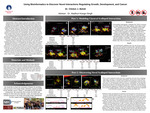
Using Bioinformatics to Discover Novel Interactions Regulating Growth, Development, and Cancer
Clinton Belott
“Bioinformatics” utilizes computer scripts and some degree of artificial intelligence (AI) to constructively break down and process large sets of biological data into tangible results. Using bioinformatics programs like Alphafold3 and AIUPred, it is possible to break down and understand the complex interactions between transcription factors and potential repressors, activators; and the competitive nature between repressors and activators. Alphafold3 predicts three-dimensional protein confirmation and binding between or among proteins all in a probabilistic manner. AIUPred was then used to predict areas of protein-protein binding, motifs, and redox sensitivity. The resulting synergy between Alphafold3 and AIUPred was capable of correctly predicting protein interactions that have been previously empirically demonstrated. Therefore, we sought to leverage these bioinformatic programs to discover novel interactions between transcription factors like Drosophila Scalloped (TEAD in mammals), which forms activator- and repressor-complexes depending on its binding partners that play a major role in growth, development, and cancer. For proteins that are already known to interact, Alphafold3 and AIUPred provided insights at a motif- and/or residue-level, which can be corroborated with molecular level interactions amongst proteins. Furthermore, our results predicted several novel protein interactions, including cross-talk interactions between proteins belonging to two different canonical pathways involved with growth, development, and cancer. Excitingly, we hypothesize that this may shed light on the enigmatic nature of some proteins to act as a repressor in some experimental conditions, or as an activator in others. Lastly, we are currently in the process of experimentally testing these predictions using in cellulo models.
-

Using Mathematics to Understand Politics
Michal Sotak, Luke Walz
Political parties gain and lose members everyday. One way to mathematically depict how the amount of members in a political party change over time is using differential equations. First, we can assume that there are two main political parties that people from a certain population will choose to be a part of. We can depict the amount of people going in and coming out of these two political parties with a system of differential equations using an epidemiological approach. Using MATLAB, the change in membership of political parties and the best way for political parties to gain members over a long period of time can be explored. The results from the analysis of the rates of political party membership show that parties succeed best in the long run when holding ideologies that draw new members into the party while simultaneously catering to current members. We use Runge-Kutta methods (MATLAB built-in solver) for the numerical solution of the model.
-
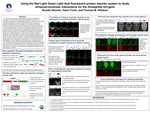
Using the Red Light/Green Light dual fluorescent protein reporter system to study enhancer-promoter interactions for the Drosophila Hr4 gene
Owen Focht, Brooke Nichols
Enhancers are a type of cis-regulatory element that activate gene transcription in spatial and temporal restricted patterns through their interactions with gene-proximal promoter sequences. Enhancers often reside at a distance (distal) to the gene promoter their activity is imparted on. Additional DNA elements may contribute to the selectivity of enhancer-promoter interactions, notably those referred to as remote control elements that can be encoded within enhancers, and tethering elements that can be in or near promoters. However, few of these elements have been found and characterized. Hence, the molecular mechanisms by which these differing elements interact remain poorly understood. The Williams lab previously (Camino et al. 2020) published on a dual reporter transgene system in Drosophila (D.) melanogaster that allows the simultaneous comparison of an enhancer's ability to activate proximal and distal fluorescent reporter genes. Of the enhancers tested in that study, none were found to activate the distal reporter gene. We are testing four enhancers from the Hr4 gene locus of D. melanogaster in this red light/green light dual reporter transgenic system. This includes enhancers that are positioned between 5 and 50 kilobase pairs from the Hr4 gene’s endogenous promoter. The results will inform on whether these distal enhancers can interact with the simple minimal promoter for the reporter gene, or whether a tethering element is additionally needed from the endogenous gene locus.
-

Vaxxed or Relaxed: Flu Vaccine Perceptions and Behaviors at the University of Dayton
Kate Schreel
Flu vaccination is an effective way of preventing illness, hospitalization, and death when one contracts influenza. Flu vaccination is especially important among highly populated residential areas like college campuses. This study examines the factors that influence students’ decision to receive or not receive flu vaccinations at the University of Dayton. 84 students completed the anonymous survey. The top reasons for not receiving a vaccine were: (1) it was not worth the side effects, (2) they don’t get the flu to begin with, and (3) they forgot to get it. The top reasons for receiving a vaccine were: (1) a school/work requirement, (2) to avoid sickness, and (3) to protect the public. Results show that respondents with a higher sense of belonging at the University of Dayton are more likely to receive the flu vaccination. Future efforts should focus on educating the campus population on the importance, benefits, and risks of vaccination against influenza.
-
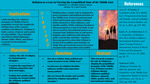
Viewing Middle Eastern Geopolitics Through the Lens of Religion
Abdulaziz Alhadad, Robert Cannon
This research explores how religious identities and beliefs influence political decisions, regional conflicts, and international relations. It examines how religion is both a cultural force and a political tool, highlighting its impact on sectarian tensions and political strategies. By viewing the region through a religious lens, this research provides deeper insight into the complex relationship between faith and politics.
-

Virtual Dunbar House
James Jarvis
Paul Dunbar was a prominent African-American author and poet from Dayton, Ohio. His works and legacy are widely appreciated until today. His Dunbar House is landmark point in Dayton area welcoming thousands of visitors every year. In this project, we develop a virtual Dunbar House with multiple navigation methods in order to bring this Dayton landmark to broader audience. In our framework we simulate the entire Dunbar house within a virtual environment. Certain virtual items such as Dunbar's works or properties can be interacted with to retrieve further information. Four different navigation modes of this application were created and evaluated. The user study reveals that users prefer the teleport mode since it is easy to use and more natural.
-

Virtual Yoga Instructor with Real-Time Feedback
Nikesh Chithambaram, Abhijeet Gupta, Shruti Singh
Yoga is widely recognized for its physical and mental health benefits, but existing resources like video tutorials, mobile apps, and online classes often lack personalized feedback, making it difficult to ensure proper posture and avoid injury. For individuals with disabilities or limited mobility, these challenges are even greater, as traditional resources may not cater to their specific needs. Previous studies show that incorrect posture during yoga can increase the risk of discomfort or injury, high- lighting the importance of proper alignment and personalized feedback for safe practice. In this paper, we introduce the virtual yoga instructor application which consists of a virtual instructor and a feedback module via pose estimation. The virtual instructor, implemented in Unity game engine with an animated 3D humanoid model, demonstrates yoga poses. The feedbackmodule uses pose estimation to detect and analyze human body landmarks, generating scores and providing feedback throughtext and visual markers to guide users in achieving accurate yoga postures. The conducted user evaluations assess the applicationperformance based on the criteria of ease of use, interaction, informativeness, engagement, and retention. The results indicatethat our proposed application was highly rated and consistently preferred by users.
Printing is not supported at the primary Gallery Thumbnail page. Please first navigate to a specific Image before printing.