

-
Senegal as a Case Study: Africa’s Economic Shifts in a Globalized World
Julie Pugh
This presentation examines the economic transformation of Senegal, focusing specifically on how the state is navigating its evolving relationships with foreign influences such as France, China, and international institutions. As a former French colony, Senegal continues to confront structural economic dependencies that tie its success to the West, particularly through its currency and the presence of French multinational corporations. At the same time, rising world powers, such as China, have become increasingly important in the region as they aim to exert influence previously held by colonial powers through infrastructure deals and trade partnerships that impact Senegal’s economic policies, investments, and labor markets –raising new questions about economic sovereignty. These external pressures loom large as Senegal pursues economic diversification, labor market reforms, and regional integration in response to demographic changes and in an attempt to assert greater control over its economic future. Previous research on postcolonial African economies has examined structural dependencies and foreign investment patterns, but this presentation seeks both to provide a contemporary perspective on how Senegal is responding to shifts in global power and looking to promote a sustainable economic future. In doing so, this presentation draws on a range of sources, including economic and policy reports from international organizations, scholarly analyses of African economic development, and recent news and think tank publications. Ultimately, this presentation seeks to utilize Senegal as a valuable lens through which broader conclusions on Africa’s economic modernization and position in a shifting global order can be drawn.
-

Shielded RL: A Safe Reinforcement Learning Concept
Shruti Singh
Artificial Intelligence (AI) continues to be a part of our everyday life in ways one thoughtimpossible. From instantly curated music playlists and virtual experiences to autonomousvehicles on the roads, everyday life has become intertwined with AI’s remarkablecapabilities. A significant driving force behind these advancements is reinforcement learning(RL), a field of AI that excels at conquering challenging tasks through interactions withdynamic environments. Its adaptability has inspired solutions—from steering driverless carsand maneuvering robot fleets to managing warehouse logistics and guiding patienttreatments—reinforcement learning effortlessly demonstrates its power across diversedomains. Unfortunately, similar to any popular field, RL-based systems also draw theattention of malicious actors who look for cracks in these sophisticated models. Inhigh-stakes situations, malicious noise injected at precisely the right time can compromisethe integrity of an RL system, leading to potentially disastrous outcomes. Think of aself-driving car receiving deceptive signals about obstacles or lane markings—turning whatshould be a smooth journey into a hazard for passengers and pedestrians alike. This kind ofstrategic tampering, known as an adversarial attack, can derail an RL agent if we fail to usetailored defense mechanisms. Although there is no universal, foolproof remedy foradversarial onslaughts, developing strategies that detect, evaluate, and counter suchthreats—based on the specific needs and vulnerabilities of a given system—forms thebedrock of robust protection. This brings us to the idea of shielded reinforcement learning(shielded RL), which acts like a security gate that stands between the learning agent andpotential disaster. Much like the way we described adversarial attacks in everyday terms,shielded RL can be understood as a “safety net” for the agent: it continually monitorspossible actions and prevents reckless or unsafe choices before they become catastrophic.In other words, while the RL agent learns by trial and error, the shield remainsever-vigilant—subtly guiding it around pitfalls and ensuring that it does not stray intodangerous territory. By embracing shielded RL, we can build robust reinforcement learningsystems that not only perform impressively, but also stay safe against determined attackers.
-

SHIFT: Portfolio Show at Stander Symposium
Avery Bocock, Kevin Brun, Noah Davisson, Sebastian De Leon Osorio, Mary Dent, Elaina Doggett, Erin Doherty, Isa Evans, Jillian Fahey, Kevin Figueroa, Laurel Grelle, Maggie Grunden, Quinn Heisey, Emily Kintz, Katherine Lawlor, Elaina Lear, John Maloney, Ava Mendenhall, Lucy Miles, Jordan Mitchell, Maddison Mitchell, Catherine Orban, Jacob Owens, Jonathan Quiroz, Hannah Schultz, Madelyn Selong, Isabella Winkler
This Capstone event includes all 25 seniors graduating in 2025 with a degree in Graphic Design presenting the culmination of their coursework within and beyond the Department of Art and Design. Students will share their portfolios—research, creative process, and outcomes—in the context of a formal presentation of both classroom and real-world projects. Work will be shared simultaneously.
-
Silent Struggles: Stigma, Mental Health Disclosure, and Social Support in Older Adulthood
Dori Miller
As the global population ages, mental health concerns among older adults have become an increasingly important public health issue. Despite growing awareness of mental health stigma, little research has explored how older adults navigate stigma, selective disclosure, and social support in the context of mental health. Stigma, including both public and internalized stigma, can significantly impact older adults' willingness to seek mental health support, often leading to selective disclosure—the decision to reveal or conceal mental health struggles based on concerns about social acceptance. This study applies Stigma Management Communication (SMC) theory (Meisenbach, 2010) and the conceptual framework of social support (Taylor, 2011) to examine how older adults manage disclosure and the role of social networks in shaping these decisions.Using qualitative methods, this research employs semi-structured interviews with adults aged 65 and older to explore their lived experiences with mental health stigma, disclosure strategies, and social support. This approach provides an in-depth understanding of how stigma influences help-seeking behaviors and interpersonal relationships. Findings from this study will contribute to a more nuanced understanding of how older adults negotiate mental health disclosure, maintain social connections, and mitigate stigma’s negative effects.Addressing this gap in the literature is critical for developing stigma-reduction strategies and ensuring that mental health interventions are inclusive and effective for older adults. Without addressing these challenges, older adults may continue to experience barriers to care, leading to increased isolation and unmet mental health needs. By shedding light on these issues, this study aims to inform policies, healthcare practices, and social support initiatives that foster a more supportive environment for aging individuals. Ultimately, this research seeks to promote mental health equity, social inclusion, and improved well-being for older adults navigating mental health challenges in later life.
-

Single-ended in-situ atmospheric turbulence strength characterization using deep neural networks.
Prabjeet Saggu
In Free Space Optical (FSO) communication systems, precise characterization of atmospheric turbulence strength is essential for propagation systems. This study investigates the use of Deep Neural Networks (DNNs) to evaluate atmospheric turbulence strength by analyzing scintillation patterns observed in double-pass laser beam propagation scenarios. Objective of this project to develop a DNN-based sensing data processing model capable of predicting the strength of atmospheric turbulence (��_��^2) from simulated scintillation patterns in two distinct scenarios: single pass propagation and double pass propagation systems.
-
Skechers Closing Stock Price Forecasting Using Time Series Analysis
Sydney Dobyns
This study analyzes the historical closing stock price of Skechers to develop a predictive model for future price movements. The dataset spans from the early 2000s to December 31, 2019, and we will forecast stock closing price for the period 2020-2023. Analyzing the dataset reveals that the original time series is non-stationary which requires transformation before applying forecasting models. Various time series models are evaluated based on performance metrics such as Akaike Information Criterion (AIC), Root Mean Square Error (RMSE), Mean Absolute Error (MAE), Mean Percentage Error (MPE), and Mean Absolute Percentage Error (MAPE). By comparing these models we aim to determine the most accurate approach for predicting Skechers' future stock prices. Given the ever-changing nature of the retail industry, where consumer trends, economic conditions, and competition continuously fluctuates. It is important to develop a reliable forecasting method. Accurate predictions can assist investors, business leaders, and analysts in making informed decisions, allowing them to better navigate market uncertainties and strategize for future growth.
-
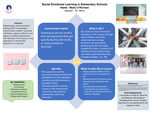
Social Emotional Learning in Elementary School
Molly O'Riordan
Implementing social-emotional learning (SEL) in elementary schools fosters students' emotional well-being, improves behavior, and enhances academic performance. This literature review focuses on the importance of starting SEL programs at a young age. As well as how SEL programs help children develop critical skills such as self-regulation, empathy, and interpersonal communication, leading to a positive classroom environment and better overall student outcomes both academically and socially.
-
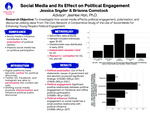
Social Media and Its Effect on Political Engagement
Brianna Comstock, Jessica Snyder
This research investigates how social media effects political engagement, polarization, and discourse. It is a secondary study that utilizes data from The Civic Network: A Comparative Study of the Use of Social Media for Enhancing Young People's Political Engagement (Australia, United Kingdom, and United States, 2013).
-

Social Media Engagement with Traumatic Brain Injury Prevention, Recovery, and Community Re-Entry Resources
Emma Braden
Traumatic Brain Injuries (TBIs) can result in cognitive, physical, and social-emotional effects that last a lifetime. Inefficient resources can be a significant barrier to care. Internet use, particularly social media, has become an effective way to communicate essential and educational information. Social media can foster connection among those affected by TBIs. Researchers evaluated engagement via analytics on three social media sites on three different platforms that shared information on TBI prevention, recovery, and community re-entry resources. The results of an ANOVA indicated significantly higher engagement when posts were boosted (p = <.001). There was also higher engagement across Facebook and Instagram when compared to Twitter/X. No significant differences were found among engagement across content types; therefore, TBI content creators should continue to post resources relating to prevention, post-injury, statistics, and general information. This study indicated that Facebook and Instagram may be the best social media sites suited to disperse boosted traumatic brain injury resources and content, bridging the gap between healthcare and community.
-
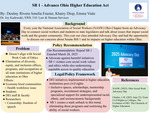
Social Work Advocacy Day: SB 1 - Advance Ohio Higher Education Act
Oumoulkhairy Diop, Amelia Frazier, Destiny Rivera, Emma Viale
In this project prepared for SWK 310, we share our reflections and insights gained from our experience participating in the Social Work Advocacy Day in Columbus, Ohio in March 2025. During our trip we attended advocacy training and planning sessions and met with state legislators and/or their staff. This presentation details our experiences at Advocacy Day, outlines an area of advocacy, and describes how we advocated for change through the lens of the Social Work framework.
-
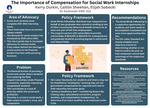
Social Work Advocacy Day: The Importance of Compensation for Social Work Internships
Kerry Durkin, Tyler Leffew, Caitlin Sheehan, Elijah Sobecki
In this project prepared for SWK 310, we share our reflections and insights gained from our experience participating in the Social Work Advocacy Day in Columbus, Ohio in March 2025. During our trip we attended advocacy training and planning sessions and met with state legislators and/or their staff. This presentation details our experiences at Advocacy Day, outlines an area of advocacy, and describes how we advocated for change through the lens of the Social Work framework.
-
Social Work Advocacy on Campus: Applying the Social Work Framework to Evaluate Student Mental Health Policy
Evie McCombs, Lianna Shakoor, Serenity West
In this project prepared for SWK 310, we evaluate a law/policy that impacts the campus community through the lens of the Social Work framework. We discuss the impact of these policies on the campus community as well as on relevant human services, we review the history of the law/policy, and we lay out a recommendation and advocacy plan to promote positive change.
-
Soviet Nostalgia and how it is being leveraged to legitimize the war in Ukraine and Russian Expansionism
Liza Wisniewski
The collapse of the USSR has remained prevalent in Vladimir Putin’s political strategy throughout his career. In his extended presidency, he has worked hand in hand with the Kremlin to promote a newly revised history of the past century. His administration can be seen using the concept of nostalgia for the Soviet Union to justify the violence of Russian Expansion in the 21st century. This research paper will dive into case studies surrounding the war in Ukraine and the occupation of Georgian Territories. The main goal of this research is to understand the manipulation tactics of the Russian government and how they are shaping public opinion through tactical historical changes in order to gain support for the ongoing wars and occupation. Vladimir Putin has taken the collective memory of the Russian people and strategically reshaped it to attempt to serve expansionist ideologies. This research is being conducted by consulting peer-reviewed academic journals and observing current trends and news stories coming out of Russian media. Observing the narratives and framing techniques used in Russian news sources and comparing them with peer-reviewed academic journals provides the primary evidence for this research. This research recognizes many patterns of disinformation. These patterns support the claim that Soviet Nostalgia and World War II rhetoric are being used as propaganda to justify the war to the Global community. The significance of this work is directly related to the current geopolitical landscape with Russia in its third year of the Ukrainian invasion. The concept of Soviet nostalgia and how it is being used for manipulation can be seen plainly throughout Putin’s administration. Understanding the phenomenon is crucial in analyzing the geopolitical movements shaping the international community today.
-
S.S.S.S.: Student South Side Safety
Ama Amponsah, India Gantt, Kahra Loding, Abigail Totte, Lily Yoder
In this class project for SOC 324: Communities & Crime, we worked to identify a crime problem or a plan to promote safety that is pertinent to our own community. We applied relevant social science theories in order to understand how to promote continued safety in Campus South Apartments. Based on these theoretical explanations, we offer strategies to to enhance community safety, as well as an action plan to implement our recommended solutions.
-

Static Scenes with Dynamic Perceptions
Kunal Agrawal
In this paper, we explore how computers can recognize motion illusions in static images—pictures that trick our eyes into seeing movement. To study this, we created a new dataset called MISS, which includes images with and without motion illusions. We tested advanced deep learning models to see how well they could identify these illusions and also checked whether color plays an important role. Our results show that these models are good at spotting motion illusions, especially when the images are in color. This highlights the importance of color in helping machines understand motion in still pictures.
-

Stay with Me! A Qualitative Study on the Retention of Young Adults in a Historically Black Organization
Marnisha Mintlow
This dissertation explores the factors influencing the retention of Black women under 40 in a historically Black nonprofit organization. Using a qualitative approach, surveys were conducted with current members to identify the organizational, social, and personal dynamics that contribute to their continued motivation and engagement. The study examines themes such as inclusion, motivation, engagement and background within the organization. Findings highlight sisterhood, internal values, dedication and the organization's mission statement, offering insights into how historically Black nonprofits can better support and retain this critical demographic, fostering a more inclusive environment. This research aims to inform retention strategies that address both individual aspirations and organizational needs.
-

Strain Sensing with Eutectic Gallium-Indium (EgaIn) for Wearable Electronics
Ashok Rathanlal
EGaIn (Eutectic Gallium-Indium) is a liquid metal alloy composed of gallium and indium, which remains in its liquid state at room temperature. This unique property allows EGaIn to maintain its fluidity and adapt to different shapes, making it highly versatile for various applications. When subjected to strain, EGaIn experiences a change in resistance, with the direction and magnitude of the strain determining the extent of this resistance change. Although the resistance change is relatively small, it can be precisely measured with specialized electronics and careful design. This makes EGaIn ideal for use in flexible and stretchable electronics, where it can be patterned into specific shapes to act as a sensitive strain sensor, opening up possibilities for its integration into wearable technologies.
-
Strength of Faith and its Relationship to Universal Religious Behavior
Yaralin Urena
After searching the advances of religion and behavior there seems to be insufficient research that is inclusive of major worldwide religions when addressing discrepancies between belief and behavior. The main objective of this project is to investigate universal religious practices and how these underlie major world religions. Specifically, it seeks to study the relationship between individual’s identified religious beliefs including, strength of faith (i.e., high vs. low), religious motivation (i.e., intrinsic vs. extrinsic), and their perceived related behavior within ritualistic practices (i.e., high ritualistic involvement vs. low ritualistic involvement) and prosocial behavior (i.e., high altruism vs. low altruism).
-

Stress, Saliva, and Spirits: The Effects of Acute Psychosocial Stress on Alcohol Craving, Motivation to Consume Alcohol, and Physiological Correlates
Olivia Dobiesz
Stress has been identified as an important risk factor for the onset and maintenance of Alcohol Use Disorder (AUD). Accordingly, the present study seeks to explore the link between stress and alcohol-related measures, specifically by analyzing how fluctuations in subjective and biological measures of stress affect craving and choice for alcohol.The present study utilizes a variation of the Trier Social Stress Test (TSST) to acutely induce stress in participants. Participants will be randomly assigned to complete either the TSST or a non-stress equivalent procedure which will serve as the control. Saliva samples will be collected in order to assess fluctuations in the stress biomarker alpha amylase in response to the TSST. Heart rate and heart rate variation will also be measured throughout the experimental session as an additional measure of the physiological stress response. Participants will be asked to fill out a series of questionnaires pertaining to perceived levels of stress, anxiety, and affect before and after completing the TSST. Upon completion of the TSST, participants will complete a series of alcohol-related questionnaires that measure: frequency of alcohol use, magnitude of alcohol craving, risk for developing AUD, anticipated effects of alcohol use, hypothetical alcohol choice behavior, occurrence of negative alcohol-related consequences, and level of engagement in non-drug related activities. We expect to see an increase in subjective and physiological markers of stress post-TSST, correlated with an increase in alcohol craving in those who are at-risk for developing AUD. The aforementioned measures will allow us to identify factors that may influence the decision to consume alcohol or engage in non-alcohol related activities. In turn, this would allow us to develop a more complete understanding of the relationship between stress and alcohol-related behaviors which may relate to the development of AUD.
-

Stretchable Electronic Systems Enabling Rigid Electronic Payloads
Adin Stoller
Recent innovations in the space of Additive Manufacturing (AM) and 3D printing have resulted in increasing print complexity and resolution as well as an ever-expanding library of materials from which to print. While this has dramatic implications for every field supported by AM, the field of Soft and Wearable Robotics (SWR) has considerable potential to benefit from continued innovations in AM. 3D-printing methods, such as Digital Light Processing (DLP) in particular, enable developers to design and print complex structural components for SWR systems. Unlike other AM methods, such as Fused Filament Fabrication (FFF), DLP allows for the selection of a wide range of elastomeric materials optimized for SWR needs (e.g., high strain, extreme temperatures, and self-healing).Additive Manufacturing has long allowed for the creation of basic SWR prototypes, such as pneumatically actuated fingers. With the integration of rigid electronic payloads and stretchable electronic circuits into AM elastomeric substrates (which are inherently insulators), these components will have the ability to sense and react to their environment in unprecedented ways. The next generation of soft robotics will be enabled by novel approaches to adding conductivity to additively manufactured soft robotic structures. With the creation of SWR material systems with embedded electronics, these new “electronic materials” have a wide range of possible applications, including strain sensing, capacitive touch, and stretchable heaters. Thus, developments in the fabrication of these components are necessary to fully realize the capability of SWR systems.
-

Students’ Sense of Belonging on Campus: Balancing Family Dynamics and Academic Success
Emma Viale
This study explores the unique challenges college students face while balancing academic responsibilities with home obligations. It is a complex topic that extends beyond the research documenting the stress of work-life balance in adults. Specifically, it explores how students' individual experiences with family dynamics and home stressors influence their sense of belonging and academic success. Through a combination of existing literature and in-depth interviews, this research seeks to answer the following questions: How do family dynamics and external stressors shape students' sense of belonging and academic achievement? How do students navigate these challenges? Using in-depth qualitative interviews to investigate varying family obligations, household conflicts, and financial pressures, this study provides insights into how these factors contribute to students’ overall success and well-being in college.
-
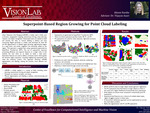
Superpoint-Based Region Growing for Point Cloud Labeling
Alison Hardie
LAser Detection And Ranging (LADAR) is widely used in fields such as forestry, topographic mapping, autonomous driving, urban planning, robotics, and object recognition. Automated tools are needed to label and process this data, as manual labeling is tedious and time consuming. Region growing is a widely used technique for both 2D and 3D segmentation. In seeded region growing, segmentation begins at a seed point, and similar neighbors are iteratively added to the region. This approach is applied here using superpoints generated by SuperPoint Transformer (SPT). The use of superpoints improves processing efficiency and captures features on a larger scale. In this method, the user clicks on an object to select a seed point. Geometric features are used to define a similarity metric which guides the iterative region expansion, including neighboring superpoints that meet the similarity criteria. This approach enhances LADAR segmentation and labeling, making the process more efficient and scalable.
-

Supporting Students with ADHD for Multiple Age Groups
Mark Rutherford
ADHD is attention deficit hyperactivity disorder a commonly identified learning disability amongst the US student population. This project reviews strategies that support students who are identified with ADHD in the classroom and include inviting therapy dogs to the classroom, playing music, dimming the lights, and many others. These strategies can positively affect the student's attention span and productivity in the classroom.
-
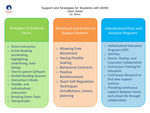
Supports and Strategies for Learners with ADHD
Lillian Setser
Attention-deficit/hyperactivity disorder (ADHD) is one of the most common disorders among school age children. This literature review describes supports and strategies teachers can use to meet the needs of students with ADHD, such as structured routines, clear and detailed instructional techniques, and academic, social, and emotional support systems inside and outside of the classroom. It also highlights the importance of fostering collaboration among teachers, parents, and counseling professionals to create an equitable education for students with ADHD.
-

SURF Cohort - Stable Isotope Analysis on Groundwater-Surface Water Dynamics Reveal Distinct Flow Paths in a Riparian Floodplain
Lizbeth Ramos-Ortiz
Groundwater-surface water dynamics relevant to nutrient fate and transport remain poorly understood regarding factors that influence the recharge and discharge rates of water as it travels between the surface and the ground. We therefore investigated temporal and spatial dynamics of water flow and quality on a plot of agricultural land which borders the Great Miami River in Trenton, Ohio. The site comprises alluvial sediments atop Ordovician shale bedrock, which are synonymous with a low permeability rates and longer groundwater residence times. While farmers rent the site for growing staple crops along the 113 acres of land, consistent rates of precipitation washing out the floodplain raise concerns over nitrogen loading to the aquifer and its surrounding environment. Thus, over a 24 week period, biweekly surface samples were collected along the Great Miami River, Elk Creek (a tributary that connects to the river up gradient to the site), and a man-made lake along the field site. To investigate water sources, collected samples are examined for hydrogen and oxygen stable isotope analysis. These samples are compared to local groundwater, drought index, as well as precipitation data to determine how surface-groundwater interactions and climate conditions interact in terrestrial environments and further inform decisions regarding crop management. Results indicate that extreme weather events, such as Hurricane Helene, disrupt normal surface-groundwater cycling and temporarily alter drought conditions.
Printing is not supported at the primary Gallery Thumbnail page. Please first navigate to a specific Image before printing.