

Research Posters of the Yvonne Sun Lab
-
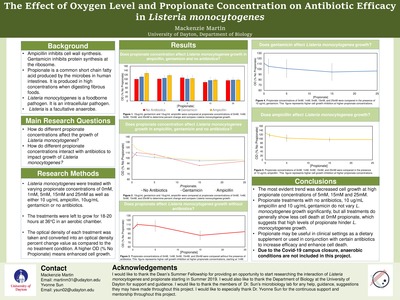
The Effect of Oxygen Level and Propionate Concentration on Antibiotic Efficacy in Listeria monocytogenes
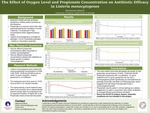
Listeria monocytogenes is an intracellular pathogen known for causing the infection listeriosis, a common foodborne illness associated with many packaged cold foods, raw meats, and dairy products. While anyone exposed to contaminated foods or products is at risk of infection, listeriosis significantly impacts the immunocompromised, pregnant women, children and the elderly with a high mortality rate. This project documents and analyzes the effect of aerobic or anaerobic conditions as well as propionate concentration levels on the efficacy of the antibiotics gentamicin and ampicillin in inhibiting cell growth in Listeria monocytogenes. We observed that the presence of propionate, compared to no propionate control, significantly decrease the aerobic growth of Listeria monocytogenes with 10 ug/mL ampicillin or 10 ug/mL gentamicin. These results suggest that the presence of propionate may enhance the antibiotic efficacy against Listeria monocytogenes under aerobic conditions.
-
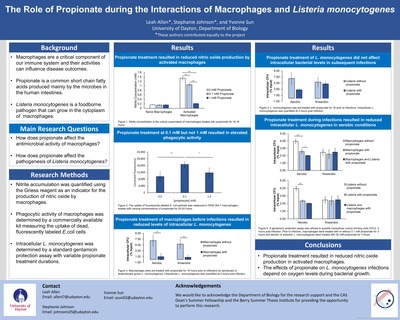
The Role of Propionate During the Interactions Between Macrophages and Listeria monocytogenes
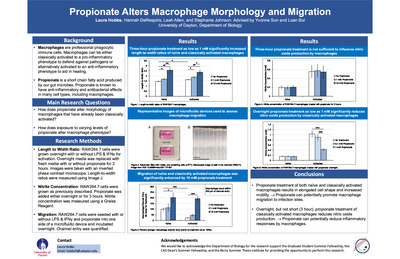
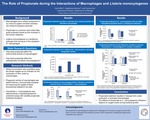
The human gut microbiome is recognized as an important contributor to human health. The functional roles of the gut microbiome are under active investigation to increase our knowledge in human biology and develop novel therapeutics. For example, gut microbes produce short chain fatty acids (SCFAs), which have demonstrated regulatory and nutritional functions in the intestines and peripheral organs. However, how SCFAs contribute to defense against infectious diseases is less understood. Therefore, the overarching goal of our research is to determine the roles of SCFAs during host-pathogen interactions. More specifically, we are investigating how exposure to propionate, a key SCFA found in humans, affects the outcome of Listeria monocytogenes infections in macrophages. L. monocytogenes is an opportunistic pathogen transmitted through contaminated food. In high risk individuals, infections may become life-threatening. One unique aspect of L. monocytogenes that allows the bacterium to act as a human pathogen is its ability to grow inside macrophages without elimination by the antimicrobial arsenal deployed by the macrophages. Therefore, strategies that can compromise the bacterial intracellular growth or strengthen the antimicrobial capacity of macrophages can potentially protect individuals from L. monocytogenes infections. In this study, we investigated how propionate affects nitric oxide production, phagocytic activity, and elimination of intracellular L. monocytogenes in a cell culture model of infection. We found that propionate-treated macrophages, compared to non-treated controls, exhibited a significantly higher phagocytic activity. Moreover, activated macrophages produced decreasing levels of nitric oxide after exposure to increasing levels of propionate. Finally, the presence of propionate during infection resulted in a significantly lower intracellular bacterial numbers. Together, these results suggest that the presence of propionate can alter macrophage functions that lead to restriction of L. monocytogenes intracellular growth, an observation that will need to be further investigated to develop strategies to protect individuals from L. monocytogenes infections.
-

Age-Dependent Effects of Short Chain Fatty Acids on Bacterial Burden In Vivo After Oral Infections with Listeria monocytogenes strains 10403s and 07PF0776
Listeria monocytogenes (LM) is a foodborne pathogen that establishes its intracellular life cycle inside mammalian host cells. In elderly individuals, LM infections can spread to peripheral organs, causing meningitis with high mortality rate. We have previously shown that short chain fatty acids (SCFAs), fermentation acids found in large quantities in the intestinal lumen, exhibit strong regulatory effects on LM virulence gene regulation. In this study, we investigated the effects of SCFAs on LM virulence using an oral feeding model of LM infection with two different LM strains in young (2 months) as well as old (16-18 months) female BALB/c mice. LM strains used in this study include the serotype 1/2a strain 10403s and the cardiotropic serotype 4b strain 07PF0776. Mice were given SCFAs, individually as well as in two different combinations, in drinking water for four weeks, starved for 24 hours, and orally infected with LM-ladened Nutella. At five days post infection, organs (spleens, liver, heart, gallbladder, ileum, and colon) were harvested and homogenized to enumerate LM colony forming units. We found that for both LM strains, SCFA supplements render the young mice more susceptible to infections but prevent old mice from succumbing to infections. Furthermore, low levels of SCFA mixtures led to a decrease in bacterial burden in the heart of old, but not young, animals infected with the cardiotropic strain 07PF0776. To better understand the different infection outcomes by strains 10403s and 07PF0776, we characterized their LLO production in response to SCFAs in vitro under aerobic or anaerobic conditions. We noted that the presence of low levels of SCFA mixture under anaerobic conditions significantly enhanced LLO production in 10403s but not in 07PF0776. These results indicate that there is a strain-dependent difference in LM response to SCFAs. Moreover, there is an age-dependent effect of exogenous SCFAs on the outcome of animal infections.
-
Analyzing Bacterial Soil Isolates for New Antibiotic Production
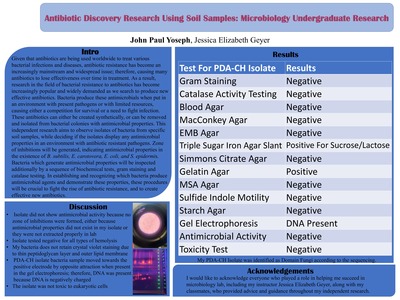
The last class of antibiotics to be discovered was in 1987, and no new antibiotics agents have been identified since. Bacteria have become increasingly resistant to our current stock of antibiotics and these strains have even been found to contain resistance to all known antibiotics. In the search for new antibiotics, the Tiny Earth Network has culminated labs all over the world to encourage students to join the search and learn about how to test and find new antibiotics. We collected soil samples from the University of Dayton and diluted them down to better separate out the individual bacterium. The selected bacteria are screened against various ESKAPE pathogens, specifically Acinetobacter baumannii and Staphylococcus aureus via their safe relatives, A. baylyi and S. epidermidis, respectively. This screening process showed six promising bacteria with significant zones of inhibition. Additional lab testing including Gram staining, catalase testing, triple sugar iron testing, MacConkey agar, motility identification, mannitol salt agar testing, chia seed testing, and finally PCR, extraction, and DNA sequencing will be utilized to determine the identity of the bacteria we discover. This research brings hope to the discovery of a new antibiotic that can be used on the pharmaceutical counter.
-
Antibiotic Producing Bacteria in Soil Samples at the University of Dayton
Within recent years there has been a rise in the number of antibiotic resistant bacterial strains. These resistant strains have no known treatments and thus pose a threat to society. Bacterial strains form resistance by evolving past the mechanisms behind a given antibiotic. With bacteria’s unrelenting ability to evolve and adapt there is an ever present need for new antibiotics. To relieve this need, the Tiny World Initiative was formed to provide students the chance to conduct antibiotic research in the classroom setting. For this in class research experience, an on-campus soil sample was collected and analyzed for possible antibiotic producing microbes. After cultivating and selecting bacterial colonies, samples were tested against two pathogen safe relatives of the ESKAPE pathogens. ESKAPE is an acronym to describe the six most antibiotic resistant opportunistic pathogens which pose a threat to society. The ESKAPE relatives tested against in this experiment were Pseudomonas putida and Staphylococcus epidermidis. After finding seven antibiotic producing colonies the samples were put through multiple classification tests which include a gram stain, catalase test, hemolysis, triple sugar iron, mannitol salt agar, MacConky agar, citrate, gelatinase and a motility test. After classifying the samples they were tested against Eukaryotic cells in the hopes of finding a safe antibiotic treatment.
-
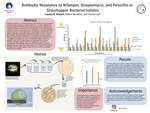
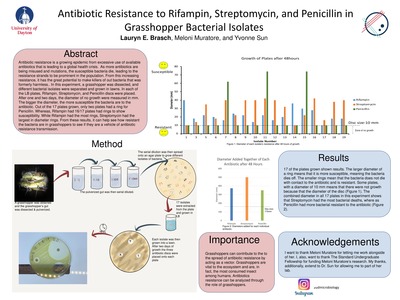
Antibiotic Resistance to Rifampin, Streptomycin, and Penicillin in Grasshopper Bacterial Isolates
Antibiotic resistance is a growing epidemic from excessive use of available antibiotics that is leading to a global health crisis. As more antibiotics are being misused, killing susceptible bacteria, more resistant bacteria grow to be prominent in the population. Given the ability of bacteria to exchange genetic information, high prevalence of antibiotic resistance poses a great threat to make killers out of bacteria that were formerly treatable. Grasshoppers are critical players in the ecosystem serving as a connector between soil, plant, and animal. Grasshoppers are also the most consumed insect by humans. Therefore, if grasshoppers can serve as a vector to spread antibiotic resistance in the environment, they might provide a potential target to halt the antibiotic resistance epidemic. In this study, we examined whether antibiotic resistant bacteria are present in a wild grasshopper. A male grasshopper was dissected and its gut content was diluted and plated on LB agar. Different bacterial isolates were obtained. To test for antibiotic susceptibility in these bacteria, disc diffusion assays were performed by spreading the bacterial isolate on LB agar and placing discs that contain antibiotics Rifampin, Streptomycin, and Penicillin on the agar. After 24 and 48 hours, the diameter of the growth inhibition zone was measured in mm. The bigger the diameter, the more susceptible the bacteria are to the antibiotic. Out of the 17 isolates, only three were susceptible to Penicillin, demonstrating that there was a high level of Penicillin resistance. In contrast, 16 out of 17 isolates show susceptibility to Rifampin. Fewer isolates are susceptible to Streptomycin but the diameter for the zone of inhibition was larger. From these results, it is clear that antibiotic resistant bacteria are indeed present in the grasshopper, potentiating grasshoppers as a vehicle of antibiotic resistance transmission.
-
Antimicrobial Activity of Soil Isolates
Antibiotics have historically been used for the treatment of bacterial infections and diseases, but the rise of antibiotic resistance has rendered many antibiotics ineffective against resistant bacteria. To combat these antibiotic resistant mechanisms, there is a demand for research in the development and production of new antibiotics. Antibiotics are either synthetically produced or isolated from bacteria displaying antimicrobial properties. Antimicrobial properties are observed in the environment as bacteria attempt to increase their fitness and eliminate competition for resources. As part of the Small World Initiative, this research aims to isolate bacteria from soil samples and screen for antimicrobial activity. Antimicrobial activity is detected by zones of inhibitions against Staphylococcus aureus and Enterococcus faecium, common antibiotic resistant pathogens. These zones of inhibition indicate if these pathogens are susceptible to antimicrobial activity. Bacteria that exhibit activity will be further screened for identification by Gram staining, catalase testing, and other biochemical tests. Identifying bacteria displaying antimicrobial activity is important for addressing the antibiotic resistance crisis and contributing toward the development of new antibiotics.
-
Discovering Antibiotics from UD's Soil
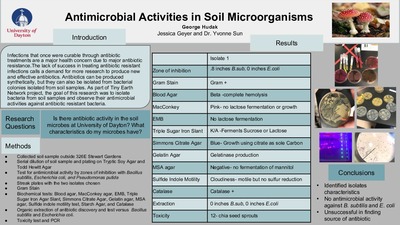
The discovery of antibiotics has helped humans survive many diseases that were once deadly. But with the overuse of antibiotics in the medical field, some “superbugs” have evolved resistance to multiple antibiotics we utilize. The Tiny Earth Network and Small World Initiative have started a coalition of undergraduate students to help discover new antibiotics from different soils around the world. Over the past semester, I have been doing research to find microbes from soil outside of the Adele Center that has antimicrobial effects on known pathogens. This work is important because it could lead to the discovery of new antibiotics that can kill pathogens affecting humans. The bacteria that was collected was tested against the pathogens Acinetobacter baylyi and Enterococcus raffinosus to determine how efficient the antimicrobial properties were. Gram stains and biochemical tests were then used to help identify and characterize the bacteria we were working with. From there, I isolated antibiotic compounds and tested them against pathogens and eukaryotic cells. Overall, this work helps to support the Tiny Earth Network and Small World Initiative and will, hopefully, help to resolve the antibiotic crisis we are currently having.
-
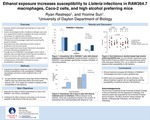
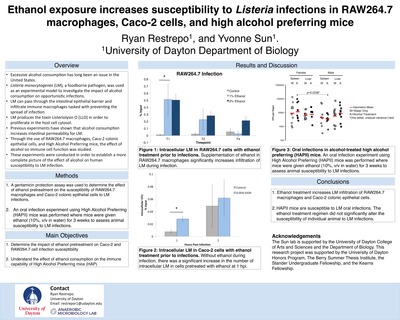
Establishing the Effect of Ethanol on Listeria Infection
Excessive alcohol consumption has long been an issue in the United States. Listeria monocytogenes (LM), a foodborne pathogen, was used as an experimental model to investigate the impact of alcohol consumption on opportunistic infections. During LM infections, LM can pass through the intestinal epithelial barrier and infiltrate immune macrophages tasked with preventing the spread of infection. Once inside the macrophages, LM produces the toxin Listeriolysin O (LLO) in order to proliferate in the host cell cytosol. Previous experiments have shown that alcohol consumption increases intestinal permeability for LM. Furthermore, in the presence of alcohol LM was shown to have a reduced LLO production. Through the use of RAW 264.7 macrophage cell cultures, the effect of alcohol on immune cell function was studied. These experiments were conducted in order to establish a more complete picture of the effect of alcohol on human susceptibility to LM infection.
-
Gas Chromatography Applications: Ethanol concentration and SCFA Detection in Listeria
Gas Chromatography (GC) is a separation technique for volatile compounds that involves the vaporization of a sample through an injector. Then, the vaporized sample is carried by a gas moving through a stationary phase (column) packed with a gel or a solid until reaching a detector. Recently, the CME department acquired a GC system with exchangeable detectors and columns to promote teaching and research within the program. During the 2018 Spring semester, the gas chromatography equipment was mastered by learning its fundamental aspects and correct functioning. This summer, through the SURE program and to enhance interdisciplinary collaboration across Units and Departments within the University of Dayton, this work developed GC analytical methods for use both in the classroom and in research for the identification of various compounds. A method was developed for the Senior level CME Unit Operations course, on which ethanol and water samples from a distillation column are analyzed to determine the composition of the binary mixture. In terms of research, Dr. Vasquez’s NEMlab is also interested in determining the concentration of ethanol in water after liquid-liquid extraction using castor oil and magnetic nanoparticles coated with biopolymers from trees. Additionally, Dr. Sun’s microbiology lab works with a bacteria called Listeria monocytogenes as its model organism, and there is an interested in determining short-chain fatty acids (SCFAs) as a new form of biomarkers whose concentrations can be linked to health. Specifically, the lab is interested in the amount of SCFAs that are produced by Listeria, and requested the development of a GC method for this purpose, which was successfully generated using a new column and a flame ionization detector. Both characterization methods were successfully created and saved on the GC instrument and will have a significant impact in the advancement of interdisciplinary research efforts at UD.
-
Identifying Antibiotic Producing Microbes
Antibiotics were first discovered accidentally in 1928 and then purposefully synthesized to help combat bacterial infections. In the relatively short time since their discovery, many bacterial species have developed resistance mechanisms to these antibiotics. Due to the ability of pathogens to rapidly proliferate, beneficial mutations to increase their fitness in their environment have helped pathogens respond to antibiotics relatively quickly. The importance of discovering novel antibiotics to combat resistant strains is increasingly important. The Small World Initiative utilizes student researchers across the world to isolate new antibiotics to combat the intensifying antibiotic resistance dilemma. The goal of this research is to use bacteria isolated from soil to test their antibiotic producing abilities against a variety of previously known antibiotic resistant pathogens, termed ESKAPE pathogens. The gram-positive pathogen, Enterococcus faecium, specifically demonstrates antibiotic susceptibility to a few of the soil isolates. The susceptibility is confirmed by zones of inhibition which indicate that the isolate is producing antibiotics to which E. faecium is not yet resistant. The isolates that exhibit antimicrobial activity against the pathogens will be identified through a process of Gram staining, catalase testing, and other biochemical tests. The purpose of these tests is to identify new antibiotics that can be used to help combat antibiotic resistant pathogens.
-
Investigating the Potential Antimicrobial Effects of Soil Isolates from UD’s Campus
Throughout this past semester, I have been doing research in BIO 411L (Microbiology Lab) using procedures established by the Small World Initiative. The goal of the research is to isolate bacteria that displays anti-microbial effects on known pathogens. This research could potentially be used to help create new antibiotics to fight against human pathogens. A dirt sample was collected from the side of my house in the UD south student neighborhood. Colonies of bacteria formed on TH and TSA plates. Ten colonies were chosen from each of these types of agar plates. The colonies were plated on dishes streaked with the known pathogens, Pseudomonas aeruginosa and Enterococcus faecium, then later Klebsiella pneumoniae, and Staphylococcus aureus. The colonies that formed zones of inhibition were isolated and further testing was done to determine the species and characteristics of the bacteria. Some of these tests included a gram stain, catalase test, and various other biochemical tests to determine characteristics of the antibiotic producing bacteria. Later this semester, I will perform a chemical extraction for the metabolites of the chosen bacteria as well as observe the interaction between the extract and eukaryotic cells.
-
Isolating Antibiotic Producing Bacteria from Soil
There are many issues within healthcare, with one of the most concerning being antibiotic resistance. Healthcare providers’ over-prescribing of antibiotics artificially selects for antibiotic resistant populations. Over time, bacteria that are selected for have the ability to become resistant to one or many of the antibiotics that are currently used in healthcare. These types of pathogens that can survive antibiotics are called “super bugs” and those are the type that healthcare providers worry about. These “super bugs” are the type of pathogens that are causing the issues, since there has been no new antibiotic class discovered in the last decade or they are still in the FDA approval process. Thus, the goal of my project is to explore the soil for antibiotic producing bacteria. The soil is home to a diverse set of microbes that are constantly competing for nutrients. Most of today’s antibiotics were discovered in the soil. Some bacteria develop the ability to create antibiotics in order to kill their competition. This characteristic is not only beneficial to their survival, but also to us. After soil isolation, we ran several tests for identification, production of antibiotic compounds, and extraction of the compound. The compound was then tested for effectiveness against known pathogens and safety in eukaryotic cells. This process allows for quicker antibiotic discovery in a teaching lab. With the many people working to discover new antibiotic compounds a major issue in the healthcare field can be corrected before all antibiotics become obsolete when treating bacterial infections.
-
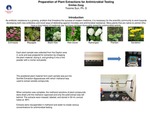
Microbial Resistance to Traditionally Medicinal Plant Extracts
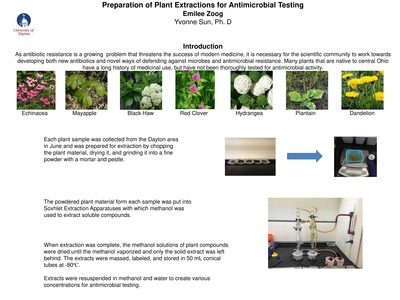
Microbial resistance to pharmaceutical antibiotics is a growing problem in healthcare and animal husbandry that has led to hundreds of deaths from bacterial infections that could once be cured with antibiotics. Scientists are currently studying these resistance mechanisms and formulating novel treatments for bacterial infections, but exhaustive research of the antimicrobial properties of many common plants has yet to be established. In this study, I tested five traditionally medicinal plants common to the Dayton area including wild hydrangea, black haw, dandelion, mayapple (roots), and red clover for antimicrobial action against several strains of the human pathogens Listeria monocytogenes, Staphylococcus aureus, and Escherichia coli, using disk diffusion assays in aerobic and anaerobic environments. Each extract had antimicrobial activity against at least most of the pathogens tested, but each pathogen reacted variably to each extract, though antimicrobial activity in both oxygen environments were comparable. This suggests that there may be active compounds in plants with antimicrobial properties, in which case said compounds should be isolated and tested further in order to better understand bacterial defense mechanisms in plants, and what, if any, benefit these antimicrobial properties could have for humans with bacterial infections.
-
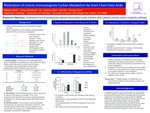
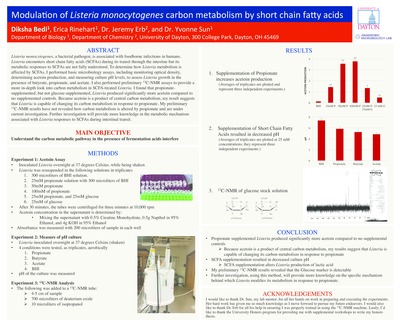
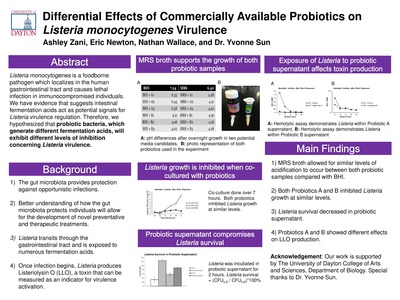
Modulation of Listeria monocytogenes Carbon Metabolism by Short Chain Fatty Acids
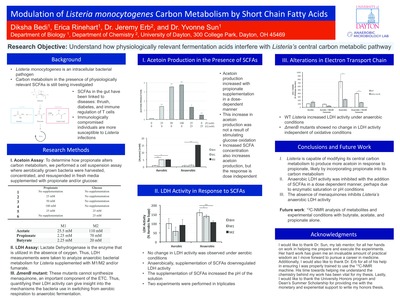
Listeria monocytogenes, a bacterial pathogen, is associated with foodborne infections in humans. Listeria encounters short chain fatty acids (SCFAs) during its transit through the intestine but its metabolic responses to SCFAs are not fully understood. To determine how Listeria metabolism is affected by SCFAs, I performed basic microbiology assays, including monitoring optical density, determining acetoin production, and measuring culture pH levels. I also performed preliminary 13C-NMR assays to provide a more in-depth look into carbon metabolism in SCFA-treated Listeria. I found that propionate-supplemented Listeria produced significantly more acetoin compared to no supplemented controls. Because acetoin is a product of central carbon metabolism, my result suggests that Listeria is capable of changing its carbon metabolism in response to propionate. My preliminary 13C-NMR results have not revealed how carbon metabolism is altered by propionate and are under current investigation. Further investigation will provide more knowledge in the metabolic mechanism associated with Listeria responses to SCFAs during intestinal transit.
-
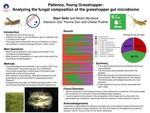
Patience, Young Grasshopper: Identifying the fungal composition of the grasshopper microbiome
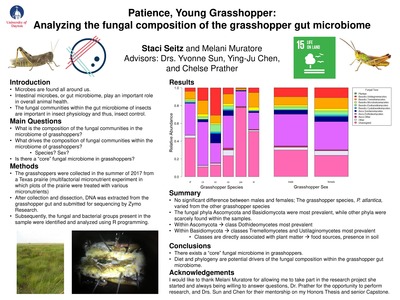
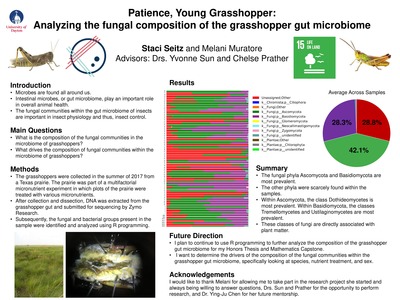
Microbes inhabit many corners of the Earth, including the intestines of all animals. These intestinal microbes, collectively called the “gut microbiome,” provide numerous nutritional and regulatory functions for the animals they live in and thus play an important role in animal health. The fungal communities in insects, specifically, play a diverse, but important role in insect physiology, as well as insect control. The overall goal of this project is to identify the fungal communities in grasshoppers to enrich our knowledge in insect fungal microbiome. Questions that we wanted to answer were: “what is the composition of the fungal communities in the microbiome of grasshoppers?” and “what drives the composition of the fungal communities in the microbiome of grasshoppers?” In this study, we investigated the composition of the fungal community inside grasshoppers. The grasshoppers were collected in the summer of 2017 from a Texas prairie as part of a multifactorial micronutrient experiment. DNA was extracted from the grasshopper gut and submitted for sequencing by Zymo Research. After analyzing the sequencing results, we identified two fungal phyla that were present in all samples: Ascomycota and Basidiomycota. Within Ascomycota, the class Dothideomycetes is most prevalent. Within Basidiomycota, the classes Tremellomycetes and Ustilaginomycetes are most prevalent. Dothideomycetes are typically found as saprobes, or decomposers, that break down dead leaf matter. They are also commonly found on living plants, acting as pathogens or endophytes. Tremellomycetes are a type of pathogenic fungus that acts as a parasite toward insects and plants. Ustilaginomycetes, known as “smut fungi,” act as a parasite toward vascular plants. All of these classes of fungi are directly involved with plant matter. Further statistical investigation will be done to determine the drivers of the diversity of these fungal communities and their significance.
-
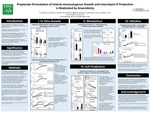
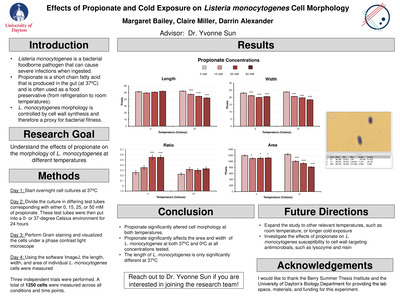
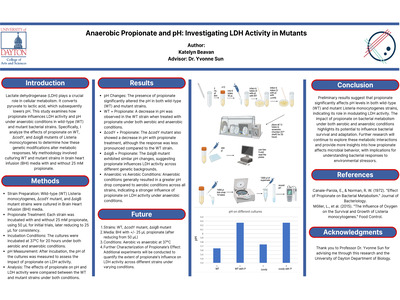
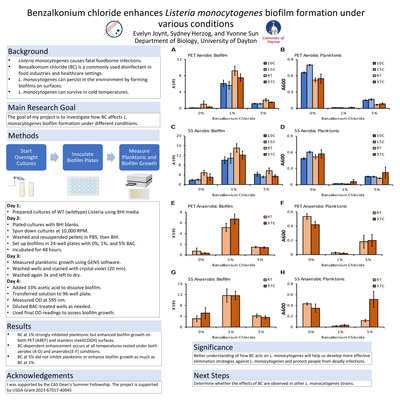
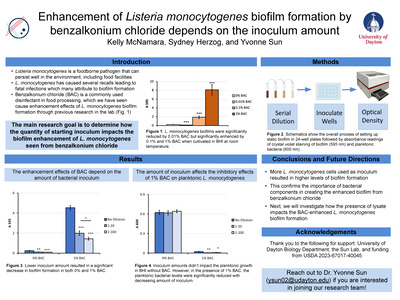
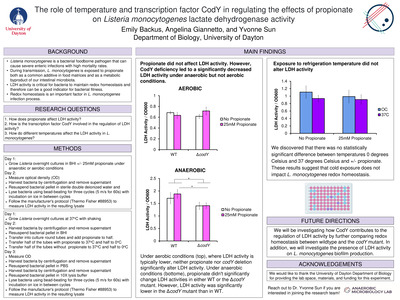
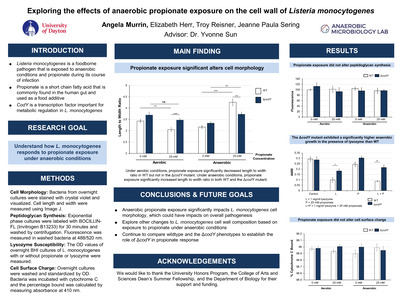
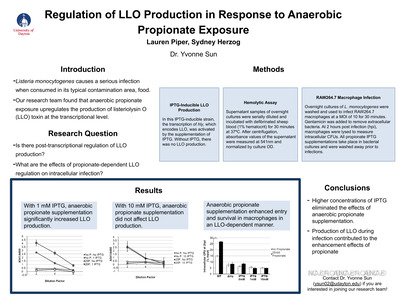
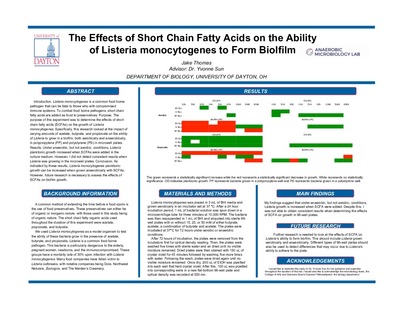
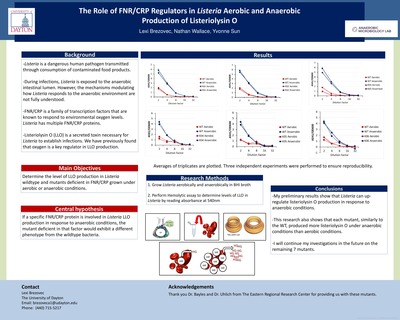
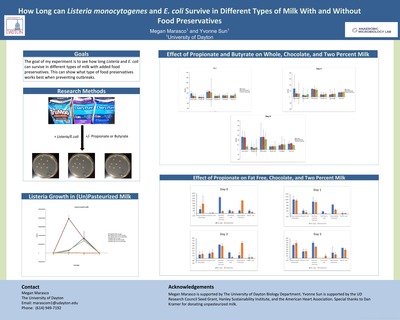
Propionate Perturbation of Listeria monocytogenes Growth and Listeriolysin O Production is Modulated by Anaerobicity
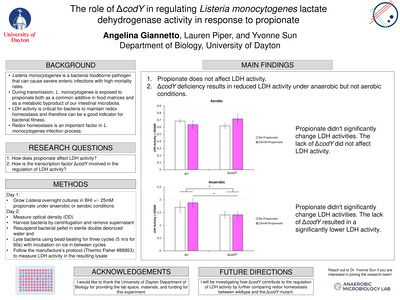
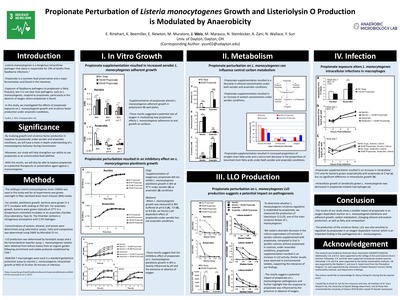
Propionate is a common food preservative and one of the major short chain fatty acids in the human intestines. Therefore, exposure to propionate is a frequent event for foodborne pathogens and likely takes place under suboxic conditions. However, it is not clear whether the absence of oxygen affects how pathogens respond to propionate. In this study, we investigated how propionate exposure affects Listeria monocytogenes growth and virulence factor production under aerobic or anaerobic conditions. Under anaerobic conditions, propionate supplementations had no effect on planktonic growth but resulted in decreased adherent growth. In contrast, under aerobic conditions, propionate supplementations resulted in a pH-dependent inhibition of planktonic growth and increased adherent growth. The effects of propionate on planktonic growth are also temperature-sensitive. At room temperature, propionate supplementation resulted in decreased doubling times under aerobic but not anaerobic conditions. To begin to investigate the effects of oxygen on L. monocytogenes response to propionate, we further noted that supernatant from cultures grown with propionate contained an increased amount of acetoin under aerobic conditions and a decreased amount of ethanol under both aerobic and anaerobic conditions. Moreover, L. monocytogenes grown with propionate exhibited an increased proportion of odd number straight chain fatty acids in a manner that was more pronounced under anaerobic conditions. Finally, aerobic suppression of listeriolysin O (LLO) production and anaerobic induction of LLO production were observed in L. monocytogenes grown with propionate. These results clearly demonstrate for the first time that L. monocytogenes exposure to propionate resulted a variety of physiological and pathogenic responses. Moreover, the presence or absence of oxygen plays a critical role in shaping L. monocytogenes responses to propionate that can potentially impact bacterial survival in the environment and subsequent interactions within host cells.
-
Testing UD Soil Isolates for Antimicrobial Activity
Antibiotics are important in both the prevention and treatment of bacterial infections. However, there has been an increase in antibiotic resistance. Antibiotic resistance is when a microbe counters the effects of the antibiotic, and continues to reproduce. As the spread of antibiotic-resistant infections grow, the bigger the threat to public and global health. The Small World Initiative and the Tiny Earth Network’s mission is to support student research in antibiotic discovery by isolation of unknown bacteria from soil. Over the past semester, I have been conducting research with the aim to find microbes that produce antimicrobial effects on known ESKAPE pathogens from soil collected outside Roesch Library. A soil sample was collected from the gazebo next to Roesch Library. Bacteria colonies were plated on TSA and TH plates. Eleven colonies from the TSA plate and ten colonies from the TH plate were selected to be tested against the known pathogens of Enterococcus faecium and Klebsiella pneumoniae. These pathogens cause similar infections and are transmitted the same way by direct contact. However, Enterococcus faecium is a gram positive bacterium and Klebsiella pneumoniae is a gram negative bacterium. By choosing two different types of bacterium the goal is to discover if there is a difference in antimicrobial activity based on the type of pathogen. Antimicrobial activity is determined by the presence of a zone of inhibition. For the bacteria that show antimicrobial activity, a series of tests, which include gram staining and biochemical testing, were performed to identify the bacterial isolates. Future implications of this research could help create new antibiotics to fight against human pathogens and further improve the public health of the community.
-
The Dirt on Antibiotics at the University of Dayton
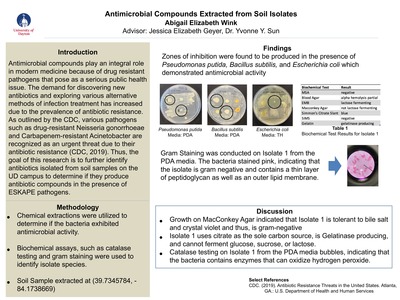
Antibiotics have become a problem as their overuse has led to pathogens resisting the effect of antibiotics. This is an important health matter as once effective antibiotics no longer work to cure some illnesses. The Small World Initiative and the Tiny Earth Network function to discover potential antibiotics in nature by isolating bacteria from soil samples in the environment and testing them against ESKAPE pathogens. The goal of this research is to help support the Small World Initiative by testing soil for the presence of naturally occurring antibiotics on the University of Dayton’s campus. A sample of soil was collected from a backyard on campus grounds and tested against ESKAPE pathogen safe relatives Enterococcus faecium and Enterococcus raffinosus. Antibacterial effects can be quantified by measuring the zones of inhibition on the agar plates. Lab techniques such as aseptic technique, serial dilution, master plates, and spread plates were used to isolate the pure bacterial colonies that showed antibacterial effects on the pathogens. Gram staining and biochemical testing were performed to try to identify the bacterial isolates. The biochemical tests include: catalase, hemolysis, triple sugar iron, mannitol salt agar, MacConkey agar, citrate, gelatinase, and motility. The antibiotic producing chemicals of the pure colonies were then extracted and tested with eukaryotic cells. The findings will help contribute to the mission of the Small World Initiative and the Tiny Earth Network.
-
The effects of L. rhamnosus consumption on rat anxiety-like behavior
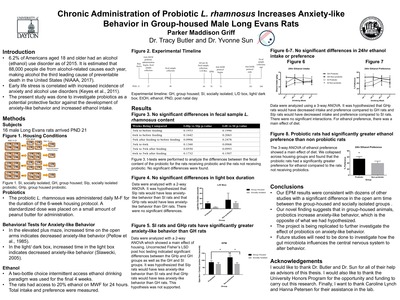
Adolescent stress in humans has been correlated with an increased likelihood of an adult individual to develop addictive behaviors, such as an alcohol use disorder. Literature has demonstrated that rats subjected to adolescent stress tend to show an increased ethanol consumption. Adolescence is a critical time of development and the link between adolescent stressors and alcohol use disorders is not fully understood yet. This study examined the relationship between adolescent stress and alcohol consumption in rats. Probiotics are bacteria with potential health benefits and have been well accepted as a dietary supplement. Literature shows that probiotics could decrease rodent anxiety-like behaviors derived from adolescent stress, such as social isolation. A previous study conducted at the University of Dayton showed that group housed rats that received probiotics exhibited increased anxiety-like behavior. This finding contradicts the positive perception associated with probiotics, showing that probiotics may have a negative impact on affective behaviors. Following two measures of anxiety-like behavior in rats, the Elevated Plus Maze and the Light/Dark Box, we did not find any significant differences between the chronically stressed and the control rats. Additionally, we did not find a difference between the groups in terms of alcohol consumption or preference. Lastly, this study did observe the same trend as our previous study in regards to the anxiety-like behavior demonstrated in the group housed probiotic group. We found that the group housed rats that consumed probiotics showed an increase in anxiety-like behavior. This trend did not include a significant difference between the groups, but was similar to what we observed previously. Moving forward, further research should be done to understand the potential benefits and risks of probiotics.
-
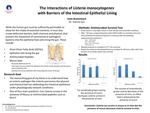
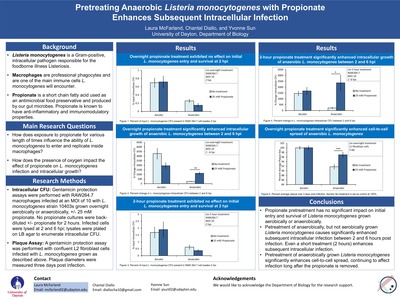
The Effects of Propionate on the Interactions of Listeria monocytogenes with the Mucosal Barrier
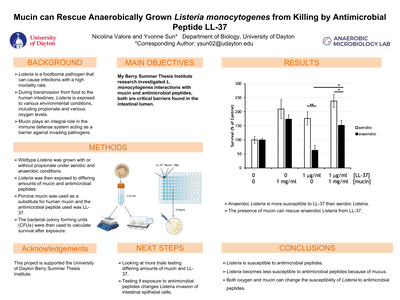
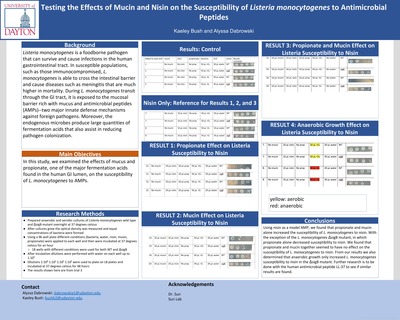
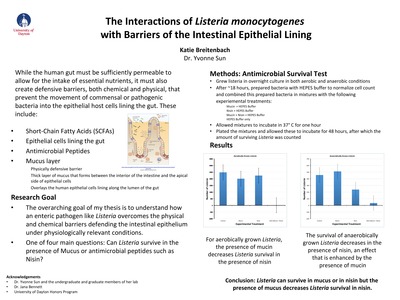
Listeria monocytogenes is a food borne pathogen that is capable of causing the disease listeriosis typically in the elderly, pregnant women, or immunocompromised people. It has a relatively high death rate in the U.S. compared to other foodborne pathogens--about 1 in 5 cases ends in death. The bacterium is an intracellular pathogen, which means it requires entrance into a host cell to carry out its pathogenic activity, grow, and spread. To do this, it must cross the mucosal barrier of the intestinal lining. Through a series of various protocols, this study primarily investigates how anaerobic conditions and short chain fatty acids such as propionate, to which we know Listeria is regularly exposed in the gut, affect the bacterium’s ability to interact with the mucosal barrier. In addition, this study also contributes an understanding of how the disease should be addressed ethically in the U.S. today.
-
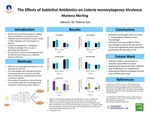
The Effects of Sublethal Ampicillin Exposure on Listeria monocytogenes Virulence
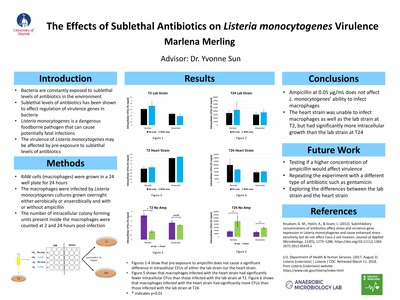
Antibiotics can be found in sublethal levels environmentally as pollution and within the body when used as medication. Antibiotics induce stress responses and sometimes act as signalling molecules in bacteria. In order to better understand the relationship between antibiotics and bacterial infections, the effects of sublethal antibiotic exposure on the ability of Listeria monocytogenes to infect macrophages was studied. Listeria monocytogenes is an intracellular pathogen of the gastrointestinal tract that is facultatively anaerobic. Two strains of Listeria monocytogenes were tested: a lab strain and a clinical cardiotropic strain. The strains were grown in liquid media overnight aerobically or anaerobically with either no antibiotics or with a 0.05 μg/mL concentration of ampicillin, which is the main antibiotic used to treat Listeria infections. Bacteria from the overnight cultures were used to infect RAW264.7 cells (macrophages) at a multiplicity of infection of 10. The number of intracellular colony forming units (CFUs) were measured at 2 and 24 hours post-infection by plating the cellular lysate. Using the number of intracellular CFUs, the percent input was calculated to measure amount of Listeria present inside the macrophages at each timepoint. The results for both strains showed no significant difference in the ability to infect and replicate inside macrophages between Listeria grown with or without ampicillin. Interestingly, the aerobically grown cardiotropic strain had a significantly lower percent input than the lab strain at 2 hours post infection, but there was no significant difference in percent input between the strains at 24 hours post infection. This suggests that although the cardiotropic strain cannot infect macrophages as well as the lab strain, it can either grow better or resist macrophage killing better than the lab strain. Future directions include testing higher levels of antibiotics and exploring the differences in virulence between strains of Listeria monocytogenes.
-
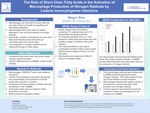
The Role of Short Chain Fatty Acids in the Activation of Macrophage Production of Nitrogen Radicals by Listeria monocytogenes Infections
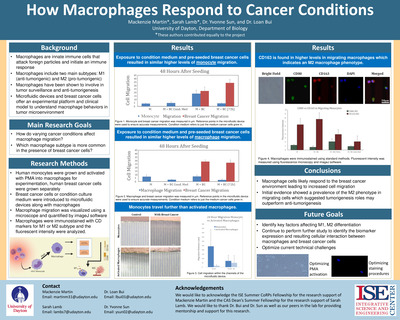
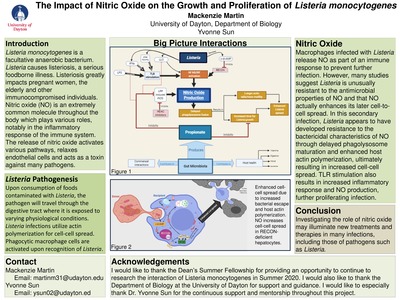
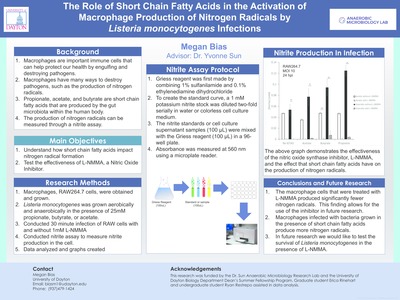
Macrophages are important immune cells that can help protect our health by engulfing and destroying pathogens. For macrophages to work, they must be activated when there is a threat. My study focused on testing the effect of propionate, acetate, and butyrate on the ability of macrophages to produce nitrogen radicals. Propionate, acetate, and butyrate are short chain fatty acids that are present in the human body. They help with regulatory functions that are important for our health. We do not yet know how these short chain fatty acids can affect the macrophages’ ability to destroy possible threats. Macrophages have many ways to destroy pathogens, such as the production of nitrogen radicals. The production of nitrogen radicals can be measured through a nitrite assay. The macrophages were infected with Listeria monocytogenes that had been treated with one of the short chain fatty acids and then we measured the amount of nitrite production in the cell media. High levels of nitrite indicate high nitrogen radical production. Results from my study helped me understand how short chain fatty acids impact susceptibility to infections in the human body.
-
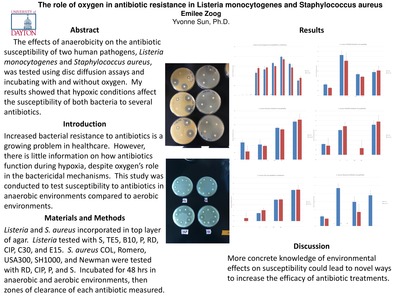
Understanding the development of antibiotic resistance in Listeria monocytogenes
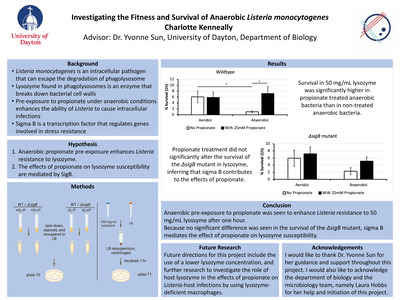
Bacterial antibiotic resistance is on an alarming rise worldwide, thus posing an urgent threat to human health. The rise in antibiotic resistance can be attributed to the overuse and misuse of antibiotics in both the healthcare and agricultural industries. In order to address this concern, this research is aimed to identify environmental conditions that may lead to the development of antibiotic resistance in Listeria monocytogenes. Listeria is a foodborne pathogen capable of causing the disease listeriosis especially in immunocompromised populations. Although infected individuals are treated with antibiotics, an alarmingly high mortality rate of 20 percent still persists; thus, it is important to further understand the impact various environmental conditions may have on the development of antibiotic resistance. Various genetic mutants of Listeria were exposed to antibiotics commonly used to treat Listeria infections, and the susceptibility to these antibiotics was observed under environments with and without oxygen.
-
Using Soil Isolates to Test for Antibiotic Production
Antibiotic Resistance is a global phenomenon that has developed rapidly over the past few decades due to healthcare providers and regular people misusing these medications. Bacterial communities have the ability to become resistant to antibiotics through a number of mechanisms, such as horizontal gene transfer, which can provide members of the community genes that generate proteins to employ a defense mechanism against antibiotics. When antibiotics are introduced into a bacterial community they kill the members of the population that do not have antibiotic resistant genes and select for the ones which do. This creates a population of antibiotic resistant bacteria which are capable of becoming resistant to multiple antibiotics. Many of the known antibiotics were isolated from soil samples, where diverse bacterial communities compete with each other for nutrients and survival. The purpose of this research project is to isolate individual bacterial communities to search for antibiotic producing properties that could be beneficial to the medical and healthcare fields. Soil isolates underwent several biochemical analysis tests, which tested for identification, production of antibiotic properties, and extraction of the compound responsible for production of that compound. The isolates were tested against safe relatives of known pathogens to determine their ability to survive using antibiotics. With the rising wave of antibiotic resistance, there are many reasons why testing for antibiotic producing species is beneficial to the communities of people that are affected by this global crisis.